

💻Best Code Editors Ranked
Code editors shape daily developer workflow, from quick scripts to large projects, directly affecting speed and joy of coding. The right choice compounds productivity over years while the wrong one creates constant friction. Vote to rank them by what matters most to you.
What counts: Best balances ecosystem depth, performance, extensibility and accessibility for real daily use. Figures are approximate.
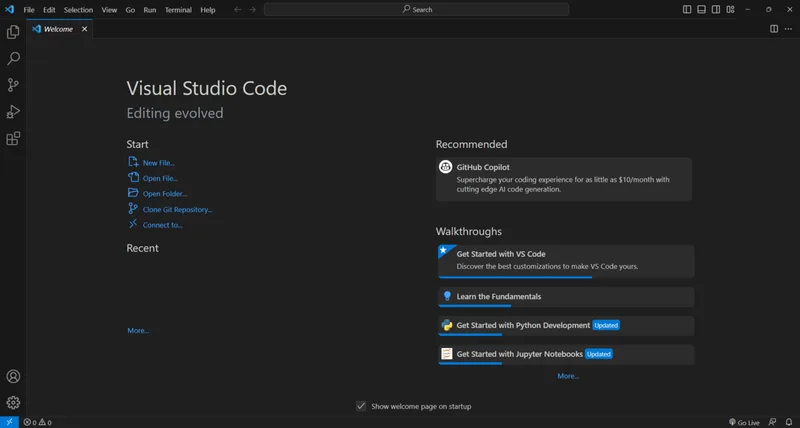
Microsoft's 2015 release rapidly became the default editor by marrying Electron flexibility with first-class language servers and a massive extension store. Its 2018 remote development push sealed dominance for web and cloud teams.
Release Year: 2015Main Platform: Cross-platformExtensibility: 10/10Performance: 7/10Open Source: ✓Popularity: 10/10
added by IJRin 2 rankingsVisual Studio Code
20Released in 2008, Sublime popularized lightning-fast native editing and the famous multiple-cursor workflow that still influences every editor today. Its speed on huge files remains legendary.
Release Year: 2008Main Platform: Cross-platformExtensibility: 8/10Performance: 9/10Open Source: —Popularity: 8/10
added by IJRSublime Text
20Vim▲ Rising
Born in 1991 as an improved vi, Vim's modal editing and tiny footprint have kept it the fastest way to edit remote files for three decades. Its plugin ecosystem still powers many modern tools.
Release Year: 1991Main Platform: Cross-platformExtensibility: 8/10Performance: 10/10Open Source: ✓Popularity: 9/10
added by IJRVim
17Emacs▲ Rising
Since 1976 Emacs has evolved from a simple editor into a full Lisp-powered environment where users live inside their tools. Its unparalleled customization still attracts power users who treat it as an OS.
Release Year: 1976Main Platform: Cross-platformExtensibility: 10/10Performance: 6/10Open Source: ✓Popularity: 7/10
added by IJREmacs
13WebStorm▲ Rising
JetBrains released WebStorm in 2010 as the first IDE purpose-built for JavaScript, delivering instant refactoring and framework awareness that set the bar for frontend tooling.
Release Year: 2010Main Platform: Cross-platformExtensibility: 8/10Performance: 7/10Open Source: —Popularity: 7/10
added by IJR
10Google's official Android IDE based on IntelliJ has driven mobile development since 2013 with instant build feedback and layout preview that transformed app creation.
Release Year: 2013Main Platform: Cross-platformExtensibility: 7/10Performance: 7/10Open Source: ✓Popularity: 8/10
added by IJRAndroid Studio
9JetBrains' flagship since 2001 redefined intelligent code completion and refactoring for JVM languages, later expanding to full-stack web. Its deep static analysis remains unmatched for large codebases.
Release Year: 2001Main Platform: Cross-platformExtensibility: 9/10Performance: 7/10Open Source: —Popularity: 9/10
added by IJRIntelliJ IDEA
8JetBrains spun out PyCharm in 2010 to give Python developers the same intelligent assistance their Java users enjoyed, quickly becoming the reference IDE for data science and web Python.
Release Year: 2010Main Platform: Cross-platformExtensibility: 8/10Performance: 7/10Open Source: —Popularity: 8/10
added by IJRPyCharm
8Atom▲ Rising
GitHub's 2014 hackable editor proved the power of web technologies for desktop tools and introduced easy package development that influenced VS Code. Its 2022 sunset marked the end of an era.
Release Year: 2014Main Platform: Cross-platformExtensibility: 9/10Performance: 5/10Open Source: ✓Popularity: 6/10
added by IJRatom
6Microsoft's flagship since 1995 evolved from a C++ IDE into the comprehensive .NET and C++ powerhouse still used by most enterprise Windows teams.
Release Year: 1995Main Platform: WindowsExtensibility: 8/10Performance: 7/10Open Source: —Popularity: 8/10
added by IJRVisual Studio
3Originally an IBM Java IDE from 2001, Eclipse grew into a massive plugin platform that still powers many enterprise and embedded workflows despite newer rivals.
Release Year: 2001Main Platform: Cross-platformExtensibility: 9/10Performance: 6/10Open Source: ✓Popularity: 6/10
added by IJREclipse
-3KDE's long-running editor since 2000 offers solid syntax highlighting and plugin support while staying native and lightweight on Linux desktops.
Release Year: 2000Main Platform: LinuxExtensibility: 6/10Performance: 8/10Open Source: ✓Popularity: 5/10
added by IJRKate
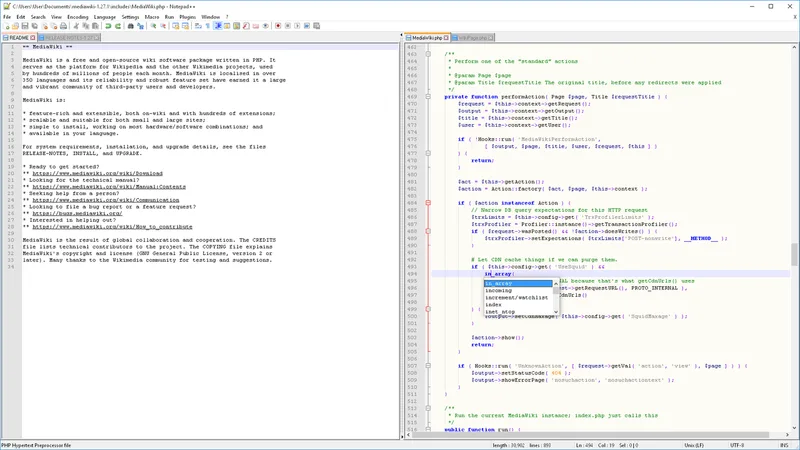
-3Since 2003 this lightweight Windows editor has remained the go-to replacement for basic text editing with powerful plugins and macro support for millions of Windows users.
Release Year: 2003Main Platform: WindowsExtensibility: 7/10Performance: 9/10Open Source: ✓Popularity: 8/10
added by IJRin 2 rankingsNotepad++
-5GoLand▼ Falling
JetBrains shipped GoLand in 2017 to bring its signature code intelligence to Go developers, quickly becoming the premium choice for large Go codebases.
Release Year: 2017Main Platform: Cross-platformExtensibility: 7/10Performance: 8/10Open Source: —Popularity: 5/10
added by IJR
-12RStudio▼ Falling
Posit (formerly RStudio) launched its IDE in 2011 and became the standard environment for R users with integrated notebooks, plots and package management.
Release Year: 2011Main Platform: Cross-platformExtensibility: 7/10Performance: 7/10Open Source: ✓Popularity: 6/10
added by IJRRStudio
-13