Most influential documents ever written
From sacred scriptures to political manifestos, a handful of documents have reshaped civilizations, sparked revolutions, and redefined human rights. These texts didn't just record history—they created it, setting the course for governments, faiths, and ideologies that still shape our world today. Which document do you believe has left the deepest mark on humanity? Cast your vote below.
What counts: Seeded with approximate figures where shown — the crowd's votes decide the order.
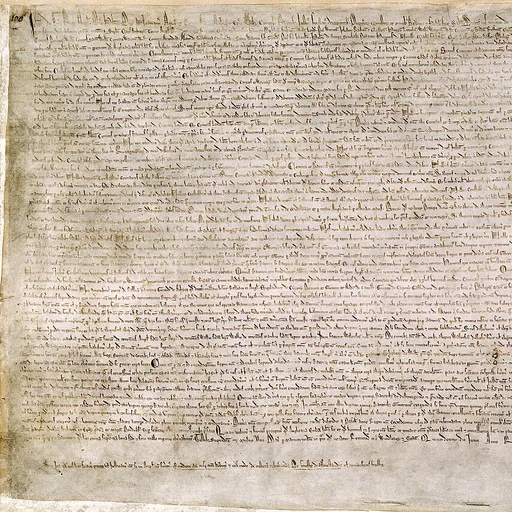
In 1215, a group of rebellious English barons cornered a cash-strapped King John at Runnymede and forced him to accept, in writing, that even the crown was bound by law. Most of its clauses were narrow feudal grievances soon ignored, but the surviving principle—no free man punished except by lawful judgment of his peers—became the DNA of due process, habeas corpus, and constitutional government. Eight centuries later, its phrases still echo in courtrooms from London to Delhi, making it the ultimate proof that a document can outlive its authors' intentions by a thousand years.
Era: 1215
added by Yourlist Editorialin 3 rankingsMagna Carta
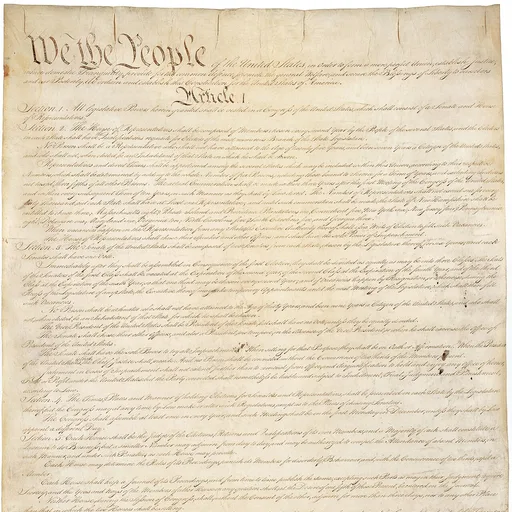
59Drafted in a sweltering Philadelphia room in 1787 by delegates who argued for months over how to divide power without recreating a king, it produced the first written charter to actually engineer a functioning large-scale republic. Its genius was mechanical: checks and balances, federalism, and an amendment process that let a slaveholding 18th-century document eventually abolish slavery and grant suffrage to women, all without being torn up. It has been the template copied, adapted, and argued over by nearly every constitution-writer on earth since, making it arguably the most imitated piece o
Era: 1787
added by Yourlist Editorialin 2 rankingsUnited States Constitution
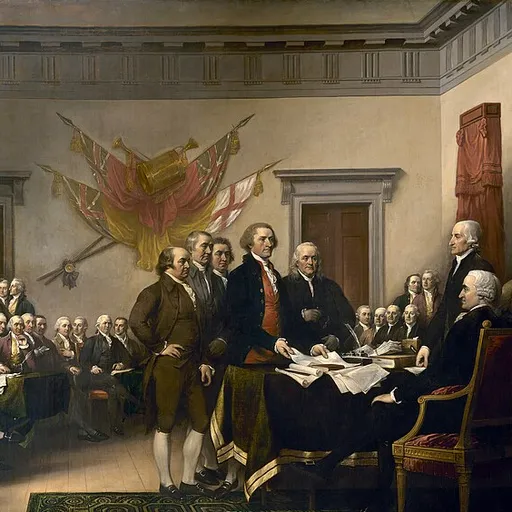
51On July 4, 1776, Jefferson's soaring preamble turned a colonial breakup letter into a universal creed—'all men are created equal' and endowed with unalienable rights—that instantly outgrew its original purpose of justifying tax revolt. It gave revolutionaries from Haiti to Vietnam a borrowed vocabulary for their own liberation movements, and its self-evident truths became a moral IOU that abolitionists, suffragists, and civil rights leaders spent two centuries cashing against the nation that wrote them. Few documents have so successfully weaponized a single sentence into a permanent engine of
Era: 1776
added by Yourlist Editorialdeclaration of independence
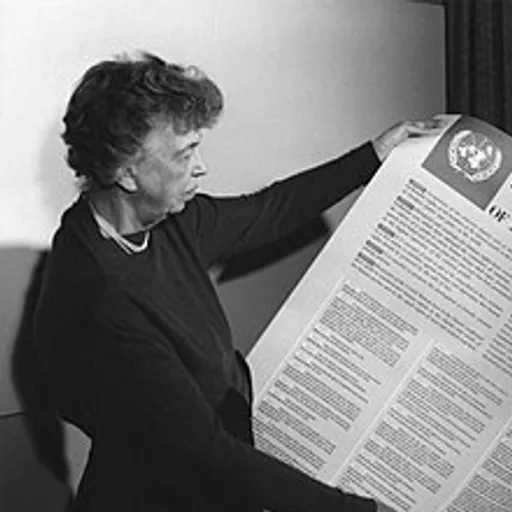
43Universal Declaration of Human Rights
Drafted in the shadow of Auschwitz and Hiroshima, Eleanor Roosevelt shepherded a fractious UN committee in 1948 to produce the first global attempt to say, in thirty articles, what every human being is owed simply by existing. It has no enforcement mechanism and no army, yet it seeded hundreds of national constitutions, international treaties, and the entire modern human rights movement, from anti-apartheid activists to #MeToo. Its influence is the paradox of pure moral authority: a document with zero coercive power that quietly reshaped how nations justify—or fail to justify—their own conduct
Era: 1948
added by Yourlist Editorialin 2 rankingsUniversal Declaration of Human Rights
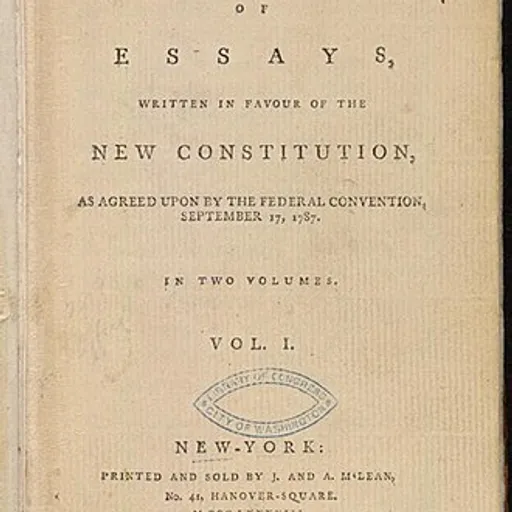
9Between 1787 and 1788, Hamilton, Madison, and Jay fired off 85 anonymous newspaper essays under the pen name 'Publius' to sell a skeptical New York public on ratifying the Constitution. What began as political propaganda became the definitive owner's manual for American government, cited by the Supreme Court more than any other founding-era text to divine what the framers actually meant. It's the rare campaign pamphlet that outlasted the campaign and became scripture.
Era: 1788
added by Yourlist EditorialFederalist Papers
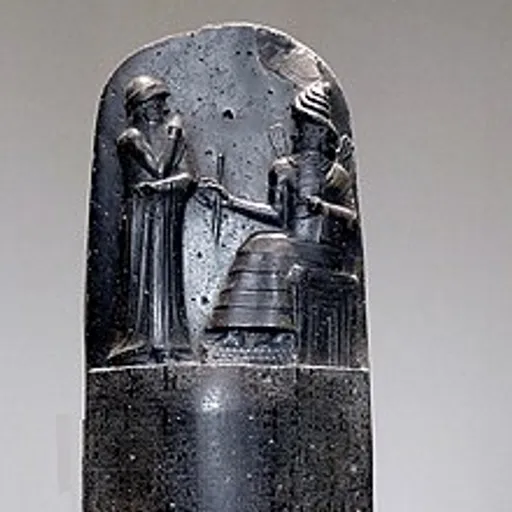
-4Carved onto a nearly eight-foot basalt stele around 1754 BCE, Babylon's king inscribed 282 laws in public view, proclaiming that even a king's justice should be legible and predictable, not arbitrary. 'An eye for an eye' entered civilization here, alongside the radical-for-its-time idea that written law itself, rather than a ruler's whim, could govern society. As the oldest substantially preserved legal code, it's the ancestor of every legal system that followed, proof that the impulse to write laws down is nearly as old as writing itself.
Era: 1750 BC
added by Yourlist Editorialin 2 rankingsCode of Hammurabi
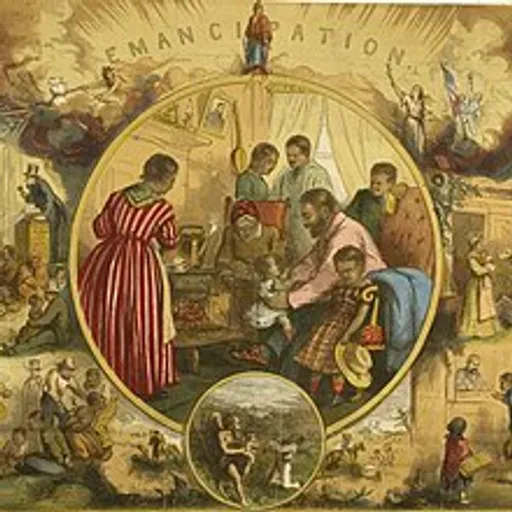
-16Lincoln's January 1, 1863 executive order freed slaves only in Confederate territory he didn't control—a legally cautious, militarily strategic document that freed no one on the day it was signed. Yet it transformed the Civil War's purpose from preserving the Union into a war against slavery itself, opened the door for roughly 200,000 Black soldiers to fight for the Union, and set the political momentum that produced the 13th Amendment. Its power lies in the gap between its narrow legal text and the moral earthquake it unleashed.
Era: 1863
added by Yourlist Editorialin 3 rankingsEmancipation Proclamation
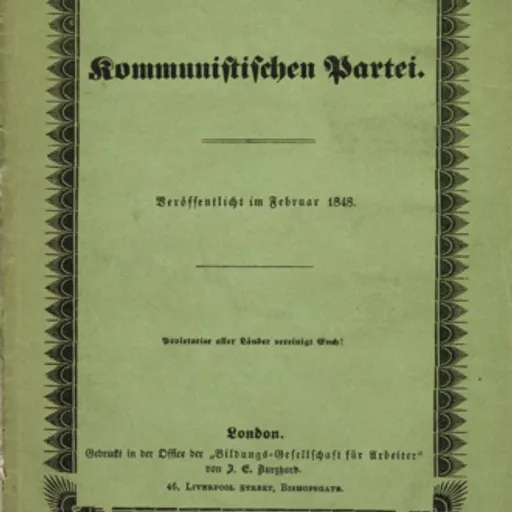
-34Marx and Engels dashed it off in 1848 as a rallying pamphlet for a tiny league of radicals, opening with the line 'A spectre is haunting Europe' and closing with a call for workers of the world to unite. It went on to inspire revolutions on every inhabited continent, birth the Soviet Union and the Chinese Communist Party, and shape roughly a third of the 20th century's political map—for better or catastrophic worse. No pamphlet has ever converted so few words into so much blood, ideology, and upheaval.
Era: 1848
added by Yourlist Editorialin 4 rankingsThe Communist Manifesto
-55