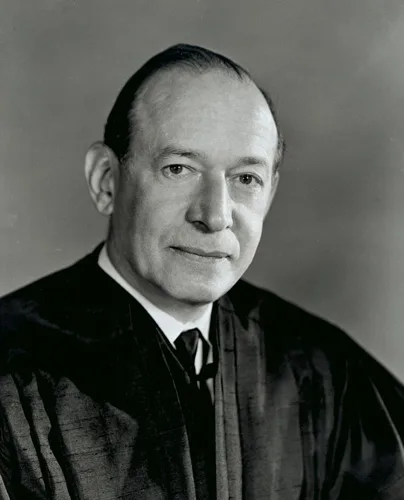
The case concerned whether a state prisoner pursuing federal habeas corpus relief could use interrogatories under Federal Rule of Civil Procedure 33 to obtain discovery about an informant's reliability in challenging a search and seizure. The Supreme Court held that Rule 33 does not apply to habeas proceedings and that 28 U.S.C. § 2246 authorizes interrogatories only in narrow circumstances not present here. Nevertheless, the Court ruled that district courts possess authority under 28 U.S.C. § 2243 to employ suitable discovery tools, including interrogatories, when a petition presents a prima facie case and additional facts are needed to decide the matter as law and justice require. The decision reversed the Ninth Circuit's prohibition on such discovery and remanded for reconsideration by the district court.
In Foster v. California, the petitioner was convicted of armed robbery based on an eyewitness identification obtained through a series of police lineups and confrontations. The Supreme Court held that the identification procedures violated the defendant's due process rights because they were unnecessarily suggestive and likely to lead to mistaken identification. Specifically, the first lineup featured the petitioner as the only tall man in a leather jacket similar to the robber's, followed by a one-on-one confrontation, and then a second lineup where he was the sole repeat participant, making the identification virtually inevitable. The Court reversed the conviction, applying the totality of the circumstances test from prior cases like Stovall v. Denno.
In Johnson v. Avery, a Tennessee prisoner serving a life sentence challenged a prison regulation prohibiting inmates from assisting each other with legal writs or other legal matters, after he was placed in disciplinary confinement for violating it. The Supreme Court held the regulation invalid because it effectively barred access to federal habeas corpus for illiterate or indigent prisoners. The Court reasoned that the writ of habeas corpus is a fundamental constitutional right that states may not obstruct through prison rules, even when those rules aim to maintain discipline and limit unauthorized legal practice, unless adequate alternative assistance is provided.
In Tinker v. Des Moines Independent Community School District, several students were suspended from public schools for wearing black armbands to express opposition to the Vietnam War, pursuant to a newly adopted school policy prohibiting such symbols. The Supreme Court ruled that the suspensions violated the students' First Amendment rights, as incorporated against the states by the Fourteenth Amendment. The Court reasoned that the armbands represented protected symbolic speech akin to pure speech, that students do not shed their constitutional rights at the schoolhouse gate, and that the school could not prohibit the expression absent a showing that it would cause material and substantial interference with school discipline or operations.
This case concerned petitioners affiliated with a white supremacist group who held a rally in Princess Anne, Maryland, and planned to hold another, after which local officials obtained an ex parte restraining order from a state court without notice to petitioners, barring rallies likely to disturb citizens for 10 days and later extended for 10 months. The Maryland Court of Appeals upheld the 10-day order but reversed the longer injunction. The U.S. Supreme Court determined that the case was not moot given the petitioners' ongoing activities and held that the ex parte orders constituted unconstitutional prior restraints on speech, as they were issued without notice or an opportunity for an adversary hearing to address the claimed dangers. The Court emphasized that temporary restraints on First Amendment rights require procedural safeguards to prevent suppression of expression based solely on one party's presentation.
This case involved a challenge to an Arkansas statute that made it illegal for public school teachers to teach the theory of evolution or use textbooks that did so. A high school biology teacher sought a declaration that the law was unconstitutional after a new textbook including evolution was adopted. The U.S. Supreme Court ruled that the statute violated the First Amendment's Establishment Clause, incorporated through the Fourteenth Amendment. The Court reasoned that the law was enacted to promote a particular religious viewpoint by suppressing the teaching of evolution, rather than serving a secular educational purpose.