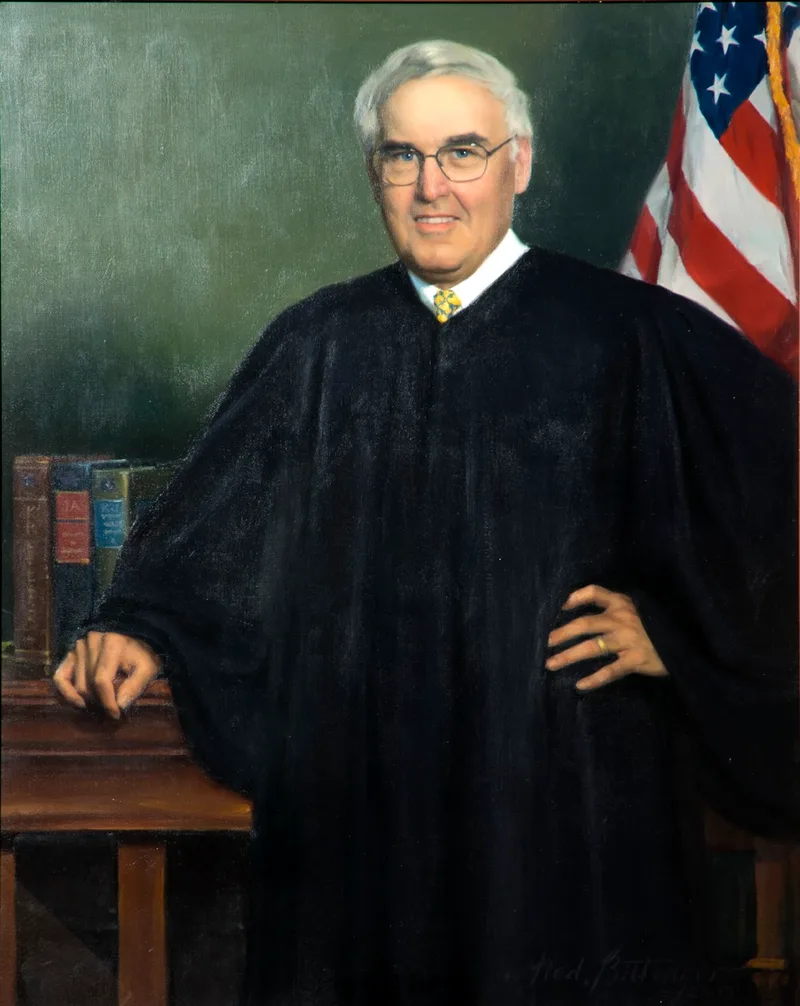
The case concerned a Baltimore ordinance requiring 'limited-service pregnancy centers'—organizations providing pregnancy counseling but not abortions or certain birth-control referrals—to post a conspicuous sign stating that they do not provide or refer for such services. Plaintiffs, including a Catholic-affiliated center operating rent-free on church property, sued the city to enjoin enforcement, claiming the law violated their constitutional rights. The court granted summary judgment to the plaintiffs on their free speech claim, holding the ordinance facially invalid and unenforceable under the First Amendment. It reasoned that the government may not compel providers of pregnancy-related services to post government-drafted disclosures about abortion and birth control, as the choice of when and how to discuss those topics belongs to the provider rather than the state. The court dismissed other claims or parties on standing or mootness grounds but focused its ruling on the compelled-speech violation.
The case involves the United States government alleging that Westvaco Corporation violated the Clean Air Act at its Luke Mill kraft pulp and paper facility by making major modifications to two power boilers during 1980s expansion projects without obtaining Prevention of Significant Deterioration permits or installing best available control technology for emissions of sulfur dioxide and other pollutants. The court conducted the first phase of the trial to address these specific modifications and the applicability of the New Source Review program under the Clean Air Act, including the grandfathering of existing sources and the definition of modifications that trigger permitting obligations. Based on its evaluation of the evidence, the court issued findings of fact and conclusions of law under Federal Rule of Civil Procedure 52(a) regarding the projects, the facility's location near Class I areas, and the regulatory framework of the State Implementation Plan and federal oversight.
In this bankruptcy appeal, SunTrust Bank challenged the bankruptcy court's order allowing Chapter 13 debtors, the Millards, to avoid its second-position lien on their principal residence under 11 U.S.C. § 506. The residence was valued at $599,000, which was less than the amount owed on the first lien, rendering SunTrust's lien wholly unsecured. SunTrust argued that the anti-modification provision in 11 U.S.C. § 1322(b)(2) barred avoidance of the lien, relying on the Supreme Court's decision in Nobelman v. American Savings Bank. The district court reviewed the legal issue de novo, noted the debtors' failure to file an appellate brief but declined to impose sanctions, and affirmed the bankruptcy court's decision by following the majority view that wholly unsecured junior liens on a primary residence may be avoided. The court distinguished Nobelman as applying to undersecured rather than wholly unsecured claims and upheld the lien avoidance conditioned on the debtors' discharge.
This case involves plaintiff Frederick Bouchat's claim that the Baltimore Ravens and NFL infringed his copyright in the "Shield Drawing" by continuing to display images and memorabilia from the team's 1996-98 seasons featuring the "Flying B Logo" derived from his artwork. Bouchat had previously established infringement but received no damages and now seeks an injunction against these displays. The court, after a bench trial, held that the defendants' uses constitute fair use under 17 U.S.C. § 107 and thus do not infringe the copyright. The decision was based on the specific historical and non-commercial context of the displays, without determining broader applications.
This case involved a health plan administrator, MAMSI, seeking reimbursement for $62,053 in medical expenses it paid on behalf of participant Mary Do after she was injured in a car accident with uninsured motorists. Do's lawyers recovered $100,000 in settlements from insurers, retaining fees and disbursing funds while placing some in escrow, but the plan's subrogation provision required reimbursement from third-party recoveries. MAMSI brought an ERISA claim against Do to enforce the plan terms and state-law claims for conversion and tortious interference against her lawyers. The court denied the defendants' motions to dismiss, finding ERISA jurisdiction over the claim against Do and supplemental jurisdiction over the state claims against the lawyers, which were not preempted. It granted MAMSI partial summary judgment, awarding the escrowed funds but denying it as to other traceable amounts without further evidence.
The case concerns copyright infringement claims by Frederick Bouchat against Champion Products and other downstream licensees of the Baltimore Ravens for their use of the Flying B Logo on merchandise, which a jury in a prior case (Bouchat I) found infringed Bouchat's Shield Drawing. The court addressed multiple summary judgment motions on damages, including whether Bouchat could recover profits, actual damages, or statutory damages in this and related follow-on suits. The court held that Bouchat was precluded from seeking statutory damages because he had not pursued them against the primary infringers in the initial bifurcated action, and it limited recoverable profits to specific licensed merchandise revenues tied to the infringement. The reasoning relied on the Copyright Act's provisions under 17 U.S.C. § 504, the need to avoid claim-splitting across multiple lawsuits against joint infringers, and the fact that liability had already been established in Bouchat I.