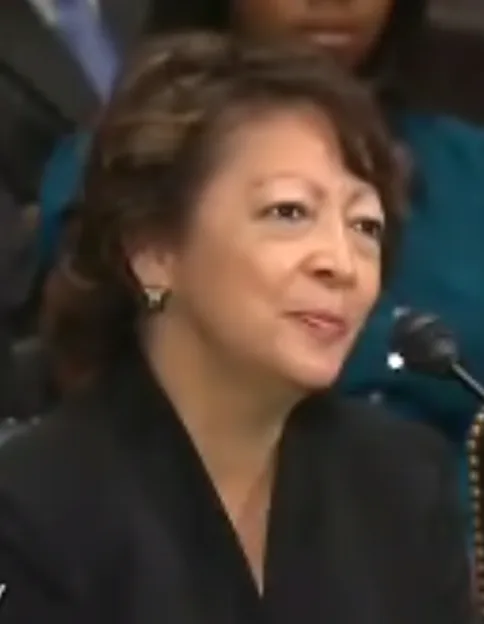
Christine M. Arguello
Judge, District Court, D. Colorado · Born 1955 · Thatcher, CO
Judge, District Court, D. Colorado · Born 1955 · Thatcher, CO
Zeman v. Waterman (In Re Waterman)
District Court, D. Colorado · 2012-03-13 · cited 6×
This case involved a Chapter 13 debtor who had received a Chapter 7 discharge less than four years earlier and sought to confirm a plan that would strip off a wholly unsecured junior lien on his primary residence. The bankruptcy court confirmed the plan, finding the lien could be stripped under 11 U.S.C. § 506 because it was wholly unsecured, and the district court affirmed on appeal. The court reasoned that the anti-modification provision in § 1322(b)(2) does not apply to unsecured claims, that no other Bankruptcy Code provision bars lien stripping by a debtor ineligible for discharge under § 1328(f)(1), and that the plan otherwise met confirmation requirements including good faith. The decision resolved a split among bankruptcy courts on the permissibility of lien stripping in such "Chapter 20" cases.
business & regulatorypropertyprocedure
Atkins v. Garcia
District Court, D. Colorado · 2011-09-08 · cited 4×
The case involved federal prisoner John Louis Atkins filing a habeas corpus petition under 28 U.S.C. § 2241 challenging the execution of his sentence for felon in possession of a firearm, specifically the Bureau of Prisons' failure to apply presentence jail credit under 18 U.S.C. § 3585(b)(2) and its denial of individualized consideration for residential re-entry center (RRC) placement. The court granted Claims One and Four after dismissing the others, finding that the BOP had not properly credited the applicant's state jail time and had relied on a categorical time limitation rather than an individualized evaluation required by the Second Chance Act under 18 U.S.C. §§ 3624(c) and 3621(b). The core reasoning was that the BOP's actions violated statutory mandates for sentence computation and RRC decisions, leading to an order for a new individualized RRC assessment within thirty days and proper documentation of compliance.
criminal lawprocedure
Barlow v. C.R. England, Inc.
District Court, D. Colorado · 2011-09-07 · cited 3×
This case arose from the termination of plaintiff Willie Barlow from his position as a security guard and the end of an oral contract with his janitorial company by defendant C.R. England, Inc. Plaintiff brought claims for racial discrimination under 42 U.S.C. § 1981 and Title VII, violation of the Americans with Disabilities Act, wrongful discharge in violation of public policy, and violation of the Fair Labor Standards Act. The court granted the defendant's motion for summary judgment and vacated the trial dates. The ruling rested on the absence of evidence showing discriminatory animus, failure to request disability accommodations, inconsistencies in plaintiff's allegations regarding job modifications, and legitimate non-discriminatory reasons for the terminations such as concerns about malingering and policy violations.
labor & employmentcivil rights
Doshay v. Global Credit Collection Corp.
District Court, D. Colorado · 2011-07-07 · cited 6×
In Doshay v. Global Credit Collection Corp., the plaintiff sued a debt collection company for violations of the Fair Debt Collection Practices Act after receiving a voicemail that failed to identify the caller as a debt collector or disclose that its purpose was to collect a debt. The court granted the plaintiff's motion for partial summary judgment as to liability. The ruling rested on undisputed facts showing the message lacked the meaningful disclosure required by 15 U.S.C. §§ 1692d(6) and 1692e(11), which the FDCPA treats as a strict-liability violation, so only one such breach needed to be established. The case will proceed to trial solely on the issue of damages.
business & regulatory
Hawkins v. COUNTY OF BENT, COLO.
District Court, D. Colorado · 2011-07-06 · cited 6×
This case involved a plaintiff who sued a county and a nursing home official for violating her rights under the Federal Nursing Homes Reform Amendments (FNHRA) by failing to properly treat a pressure sore during her stay at a county healthcare center. The court granted the defendants' motion to dismiss the complaint. The core reasoning was that the FNHRA does not create a private right of action enforceable through 42 U.S.C. § 1983, as Congress did not unambiguously intend to confer such an enforceable right on individuals based on the statute's language and overall structure.
civil rightshealthcare
DM Capital, Inc. v. Gronewoller (In Re Mascio)
District Court, D. Colorado · 2011-03-30 · cited 6×
This case concerns an appeal from a bankruptcy court's ruling that a debt arising from an investment in a financial advisory business was nondischargeable under 11 U.S.C. § 523(a)(2)(A) because the debtor fraudulently misrepresented the SEC registration status of his company and failed to disclose a de-registration letter. The district court affirmed the finding of nondischargeability but reversed the bankruptcy court's determination that the creditor suffered zero benefit-of-the-bargain damages under Colorado law, holding that the court failed to account for multiple higher values of the company as represented by the debtor. The case was remanded to the bankruptcy court to recalculate damages as the difference between the represented values and the actual value of the assets contributed.
business & regulatoryproceduretorts & liability
Mandelbaum v. Fiserv, Inc.
District Court, D. Colorado · 2011-03-29 · cited 16×
This case was a putative class action brought by holders of self-directed IRAs administered by the defendant trust companies and related entities, whose funds were lost after being directed to Bernard Madoff's brokerage firm as part of his Ponzi scheme. The plaintiffs alleged breach of contract, negligence, breach of fiduciary duty, and related claims under federal common law, state common law, and ERISA, asserting that the defendants failed to safeguard assets, verify holdings, or report accurately. The court granted the defendants' motions to dismiss all claims against all defendants, including under the Securities Litigation Uniform Standards Act (SLUSA), and denied as moot a motion regarding arbitration rights. The core reasoning centered on the explicit terms of the IRA agreements, which placed sole investment responsibility on the plaintiffs, provided indemnification to the trustees, and limited the defendants' duties to nominal administrative tasks without any obligation to provide advice, conduct due diligence, or retain custody of assets.
business & regulatoryprocedure
Flowers v. Life Insurance Co. of North America
District Court, D. Colorado · 2011-03-15 · cited 2×
This case involved plaintiffs seeking damages under Colorado statutes for alleged unreasonable delays by defendants in paying life insurance and accidental death benefits under an employee welfare benefit plan sponsored by the decedent's employer. The defendants removed the action from state court to federal court, asserting that the claims were governed by ERISA, and moved to dismiss. The court denied the plaintiffs' motion to remand, finding that ERISA completely preempted the state-law claims and thus conferred federal question jurisdiction. It granted the motion to dismiss with prejudice, reasoning that the state claims were displaced by ERISA and that the plaintiffs had no remaining remedies under ERISA because the benefits had already been paid in full.
federal powerlabor & employmentbusiness & regulatory
Wamsley v. Astrue
District Court, D. Colorado · 2011-01-31
The case involved Katie L. Wamsley appealing the Social Security Commissioner's denial of her claims for Disability Insurance Benefits and Supplemental Security Income based on her reflex sympathetic dystrophy and complex regional pain syndrome affecting her right arm, along with related psychological issues. The district court reversed the Administrative Law Judge's decision denying benefits, finding that the ALJ had improperly weighed medical opinions, assessed the plaintiff's credibility regarding her pain and limitations, and failed to adequately consider her mental impairments. The court remanded the case for further proceedings, including obtaining additional medical evidence, ensuring review by a qualified mental health professional, and reassessing whether her conditions meet listed impairments.
healthcarefederal powerprocedure
Memorial Health System v. Aetna Health, Inc.
District Court, D. Colorado · 2010-08-05 · cited 2×
This case involves a dispute between Memorial Health System, a healthcare provider, and Aetna Health, Inc., an insurer, over whether Aetna underpaid for medical services under their Hospital Agreement by improperly bundling claims. Memorial sued in state court for breach of contract, and Aetna removed to federal court claiming the claim was preempted by ERISA. The court granted the motion to remand to state court, finding that the breach of contract claim was not completely preempted by ERISA section 502(a) because it was based on an independent duty from the provider agreement rather than ERISA plan terms, and thus federal jurisdiction did not exist. The court denied fees and costs associated with the remand motion.
healthcarefederal powerprocedurebusiness & regulatory
Ajjarapu v. AE Biofuels, Inc.
District Court, D. Colorado · 2010-07-23 · cited 3×
This case arose from a dispute following a 2007 reverse merger in which plaintiffs, who held shares in AE Biofuels, sought to have restrictive legends removed from their stock certificates under SEC Rule 144 so they could sell the shares; defendants AE, its transfer agent CST, and its counsel Crone allegedly refused or delayed removal based on their interpretation of the rule and the company's SEC filing status, prompting claims for securities fraud under Rule 10b-5, breach of fiduciary duty, conversion, and a Nevada statute. The court considered AE's motion to dismiss under Rule 12(b)(6) and Crone's motion under Rules 12(b)(2) and (6), first determining that Nevada law governed the tort claims via the Restatement (Second) of Conflict of Laws' most-significant-relationship test based on the parties' contacts and the location of the conduct. It then examined whether the complaint adequately pleaded the elements of a Rule 10b-5 claim, including material misstatements and reliance, while also assessing preemption of common-law tort claims by the UCC and the sufficiency of allegations supporting injunctive relief.
business & regulatorytorts & liability
Bellco Credit Union v. United States
District Court, D. Colorado · 2010-04-02 · cited 1×
This case concerns whether Bellco Credit Union must pay unrelated business income tax on revenue from credit life and disability insurance and accidental death and dismemberment insurance products sold to its members. Following summary judgment on some issues, the district court conducted a bench trial to determine tax liability for the insurance income in tax years 2000, 2001, and 2003. The court examined Bellco's structure as a member-owned cooperative, the purpose of the insurance in protecting loans and encouraging thrift, and the relationship between the activities and the credit union's tax-exempt status under IRC section 501(c)(14)(A), ultimately issuing findings on whether the income constituted unrelated business income.
taxes
Ivar v. Elk River Partners, LLC
District Court, D. Colorado · 2010-03-30 · cited 13×
This case involves plaintiffs who bought undeveloped lots in a Steamboat Springs, Colorado subdivision, alleging that seller defendants and M&I Bank conspired to fraudulently inflate property values by recording inflated sales prices, misrepresenting built-in equity and appraisals, and offering financing based on those inflated values, while concealing actual discounted prices paid by prior buyers. Plaintiffs asserted federal claims under RICO, the Interstate Land Sales Full Disclosure Act, and the Securities Act of 1933, plus state claims for fraudulent and negligent misrepresentation and violation of the Colorado Consumer Protection Act. The court granted the motions to dismiss in part, dismissing the RICO claims for lack of a cognizable injury because plaintiffs paid the lower actual prices rather than the recorded amounts, and barring certain state-law claims against the bank under the credit agreement statute of frauds, while denying dismissal of other claims. The core reasoning focused on standing requirements for RICO, the sufficiency of pleaded misrepresentations, and contractual disclaimers and statutes of frauds limiting liability.
criminal lawbusiness & regulatorypropertyprocedure
Smith v. Pizza Hut, Inc.
District Court, D. Colorado · 2010-03-11 · cited 21×
This case involved claims by Pizza Hut delivery drivers under the Fair Labor Standards Act and Colorado Minimum Wage of Workers Act, alleging that the company's failure to reimburse vehicle expenses, uniform purchases, and maintenance costs resulted in sub-minimum wages. The court granted the defendant's Rule 12 motion to dismiss the complaint. The decision rested on the complaint's lack of clarity regarding the specific claims asserted and its reliance on conclusory allegations that did not meet the plausibility standard under Ashcroft v. Iqbal and Bell Atlantic v. Twombly, such as by failing to allege specific wage rates, expense amounts, or reimbursement details. Plaintiffs were granted leave to file an amended complaint within twenty-one days.
labor & employmentprocedure
Cleary Building Corp. v. David A. Dame, Inc.
District Court, D. Colorado · 2009-12-01 · cited 6×
This case involves a trademark dispute in which plaintiff Cleary Building Corp. sued defendant David A. Dame after a contract for construction of a building led to disagreements and Dame's subsequent online advertising and website use of Cleary's marks and plans. Cleary alleged federal claims including cybersquatting, trademark infringement, dilution, unfair competition, and false advertising under the Lanham Act, plus state claims for common-law trademark infringement, unfair trade practices, defamation, trade disparagement, and breach of contract. The court granted the defendant's motion to dismiss under Rule 12(b)(6), dismissing the first seven claims with prejudice for failure to state a claim upon which relief can be granted. It retained jurisdiction over the remaining three claims under diversity jurisdiction. The decision rested on the conclusion that the complaint did not allege facts sufficient to support the dismissed claims.
business & regulatoryprocedure
Bellco Credit Union v. United States
District Court, D. Colorado · 2009-11-12
Bellco Credit Union, a tax-exempt state-chartered entity, sued the United States over whether income from credit life and disability insurance, financial services products, and accidental death and dismemberment insurance qualified as taxable unrelated business income. The court granted in part and denied in part the parties' cross-motions for summary judgment, resolving some issues where facts were undisputed but finding that other questions required trial. Core reasoning centered on evaluating each income source under the facts-and-circumstances test to determine if it was substantially related to Bellco's exempt purpose of promoting thrift and providing credit to members, or alternatively qualified as excludable royalties, with distinctions drawn between direct lending, indirect lending programs, and specific product structures.
taxesbusiness & regulatory
Knight v. Astrue
District Court, D. Colorado · 2009-10-05
In Knight v. Astrue, plaintiff Charles Knight appealed under 42 U.S.C. § 405(g) from the Social Security Commissioner's denial of disability benefits, claiming severe impairments including depression, OCD, personality disorder, eczema, and reactive airway disease prevented him from working. The ALJ had determined after a hearing that Knight was not disabled under the Social Security Act because he retained the capacity for gainful employment in the regional and national economies. The district court affirmed the ALJ's decision, finding it supported by substantial evidence and free of legal error. Core reasoning centered on inconsistencies between Knight's treating physician Dr. Campbell's records (showing consistent alertness and functionality despite medication adjustments) and the more restrictive opinions from counselor Mr. Estep, which the ALJ properly discounted, along with Knight's history of noncompliance with treatment.
healthcarefederal power
Escobar v. Reid
District Court, D. Colorado · 2009-09-17 · cited 16×
This case involves a pro se prisoner plaintiff bringing multiple constitutional claims under Section 1983 against various prison officials, alleging issues such as interference with grievances, inadequate medical care, and due process violations during disciplinary proceedings. The district court adopted the magistrate judge's recommendations after de novo review, granting in part and denying in part the defendants' motions for summary judgment, denying their combined summary judgment motion, and granting their motion for judgment on the pleadings as to the supplemental complaint. The court dismissed certain claims as barred by the two-year statute of limitations, finding no basis for equitable tolling because the defendants' actions were not wrongful or did not demonstrably prevent timely filing. It also dismissed claims against several individual defendants for lack of personal participation in the alleged violations.
criminal lawcivil rightsprocedure
Fuller v. SEAGATE TECHNOLOGY, LLC
District Court, D. Colorado · 2009-08-19 · cited 3×
This case involves a former employee, Rex Fuller, suing his employer Seagate Technology for age discrimination after his termination in 2006. Fuller brought claims under the Colorado Anti-Discrimination Act and the federal Age Discrimination in Employment Act, alleging that his firing was based on his age rather than performance issues. The court granted Seagate's motion for summary judgment, dismissing both claims. The decision rested on the plaintiff's failure to present sufficient evidence of pretext in the employer's stated reasons for termination, which included documented communication problems and a performance improvement plan, under the McDonnell Douglas burden-shifting framework.
labor & employmentcivil rightsprocedure
Smith v. Krieger
District Court, D. Colorado · 2009-08-03 · cited 26×
In Smith v. Krieger, a pro se plaintiff sued various federal and state courts and judges, alleging violations of his Fifth, Fourteenth, and First Amendment rights arising from the denial of his application to the Colorado Bar and subsequent lawsuits. The plaintiff sought declaratory and injunctive relief to prohibit the issuance of unpublished opinions and certain other judicial practices. The district court adopted the magistrate judge's recommendation and granted the defendants' motions to dismiss, finding that sovereign immunity, judicial immunity, the Eleventh Amendment, the Rooker-Feldman doctrine, and lack of standing barred the claims, and thus denied the motion for preliminary injunction.
civil rightsprocedurefederal power