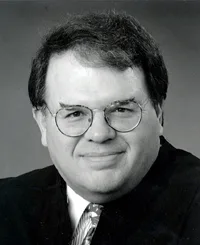
Richard J. Leon
Judge, District Court, District of Columbia · Born 1949 · South Natick, MA
Judge, District Court, District of Columbia · Born 1949 · South Natick, MA
Citizens for Responsibility and Ethics in Washington v. U.S. Department of Justice
District Court, District of Columbia · 2026-06-23
The case involved a challenge by the nonprofit Citizens for Responsibility and Ethics in Washington (CREW) to the Department of Justice's May 2026 settlement agreement and order establishing a $1.776 billion Anti-Weaponization Fund to compensate individuals for alleged government targeting. CREW sought a temporary restraining order, stay under 5 U.S.C. § 705, and preliminary injunction, claiming the Fund violated separation of powers, the Administrative Procedure Act, statutory authority, and the First Amendment. After the Acting Attorney General stated in congressional testimony that the DOJ would not proceed with the Fund, and with no contrary evidence presented, the court denied the motion. It held the case likely moot under the presumption of regularity or, alternatively, not ripe for review due to significant uncertainty about any implementation. The court found no justiciable controversy or cognizable hardship warranting immediate judicial intervention.
federal powerprocedure
L.C. v. Trump
District Court, District of Columbia · 2026-05-20
This case involves plaintiffs L.C., a minor, and her father Massimiliano Cali challenging actions by defendants including President Trump related to the designation of an individual named Albanese, which affected the plaintiffs' rights. The court had previously granted a preliminary injunction, and defendants moved for a stay of that order pending appeal or alternatively a short administrative stay. The court denied the motion after applying the four-factor test for stays pending appeal, finding that defendants failed to show a likelihood of success on the merits because the First Amendment applies due to substantial U.S. connections, the injunction does not improperly interfere with executive foreign affairs authority, and it is not overbroad. The court also determined that equitable factors, including irreparable harm to plaintiffs' travel, property, and family rights, did not support a stay.
free speechcivil rightsfederal power
L.C. v. Trump
District Court, District of Columbia · 2026-05-13
In L.C. v. Trump, the plaintiffs—a minor U.S. citizen child and her Italian father—challenged federal sanctions imposed on the child's mother and father's wife, Francesca Albanese, an Italian scholar serving as a UN Special Rapporteur on Palestinian human rights. Albanese had recommended that the International Criminal Court investigate war crimes by Israeli and American nationals and companies in connection with the Israeli-Palestinian conflict. The U.S. District Court for the District of Columbia granted the plaintiffs' motion for a preliminary injunction. The court reasoned that the sanctions, issued under an executive order targeting support for ICC actions, were triggered solely by Albanese's protected speech rather than any direct involvement in ICC enforcement, imposing undue burdens on the family through restrictions on U.S. travel, banking, and property. It concluded that the policy was overbroad under the First Amendment, that the equities favored relief, and that enjoining the designation was necessary to provide complete relief.
free speechcivil rightsfederal power
National Trust for Historic Preservation in the United States v. National Park Service
District Court, District of Columbia · 2026-04-16
The case concerns a preliminary injunction halting construction of a new ballroom on White House grounds, which the court had previously ruled was ultra vires absent congressional authorization. The National Trust for Historic Preservation sought clarification after defendants argued that the injunction's safety-and-security exception permitted the entire project to continue. The court clarified and amended the order to prohibit only above-ground construction of the ballroom itself, while allowing below-ground work on national security facilities, presidential security measures, and site protection. This distinction was based on the original opinion's focus on visible construction as the source of irreparable harm to historic preservation interests, combined with deference to executive security needs. The court provided notice that any non-compliant above-ground work during a brief stay period could be subject to later removal.
federal powerpropertyprocedure
National Trust for Historic Preservation in the United States v. National Park Service
District Court, District of Columbia · 2026-03-31
The case concerned whether President Trump had statutory authority to construct a large East Wing ballroom addition to the White House using private funds without new congressional approval. The National Trust for Historic Preservation sued the National Park Service and related defendants, seeking a preliminary injunction to halt the project on the grounds that it lacked legal authorization and risked irreparable harm to the historic structure. The district court granted the injunction, concluding that the plaintiff was likely to succeed on the merits because no existing statute—such as those governing White House maintenance, repairs, or appropriations—granted the President the claimed power to proceed with new construction. The court emphasized that Congress has long exercised control over White House modifications through specific legislation and that the project must stop until Congress provides express authorization.
federal powerproperty
United States v. Vanterpool
District Court, District of Columbia · 2026-03-24
In this criminal case, defendant Dremale Vanterpool moved to dismiss federal drug and firearm charges arising from a June 2023 incident in Washington, D.C., arguing that the government violated his speedy trial rights and Federal Rule of Criminal Procedure 16 by failing to preserve body-worn camera footage, and that bringing federal charges after dismissing similar state charges was vindictive prosecution. The district court denied the motion to dismiss, finding no constitutional violation or basis for exercising supervisory powers to dismiss the case with prejudice. The court reasoned that the government's explanation for the federal charges under a new "Make D.C. Safe Again" gun initiative provided a lawful, non-retaliatory motivation, consistent with circuit precedent on similar policy-driven transfers from D.C. Superior Court. However, the court reserved judgment on whether to impose lesser sanctions due to the strength of the defendant's arguments regarding evidence preservation.
criminal lawgunsprocedure
Rural Development Innovations Limited v. Marocco
District Court, District of Columbia · 2026-03-13
The case concerned whether President Trump could appoint Pete Marocco as acting Chair of the Board of the U.S. African Development Foundation without Senate confirmation, and Marocco's subsequent actions in terminating employees, grants, and contracts. The U.S. District Court for the District of Columbia held that the appointment violated the Constitution's Appointments Clause and the Federal Vacancies Reform Act. The court granted in part the plaintiffs' motion for summary judgment, issuing declaratory and injunctive relief to prevent Marocco from exercising authority over the agency and to restore communication and operations for the plaintiff grantee. The reasoning centered on the constitutional requirement for Senate advice and consent for officers, the lack of statutory authorization for the acting appointment, and the need for equitable relief to address the harms from unlawful actions.
federal power
National Trust for Historic Preservation in the United States v. National Park Service
District Court, District of Columbia · 2026-02-26
The case involved the National Trust for Historic Preservation challenging the President's demolition of the White House East Wing and planned construction of a new ballroom without prior congressional approval and using private funds. The plaintiff relied on claims under the Administrative Procedure Act and the Constitution. The court denied the motion for a preliminary injunction, holding that the White House is not an agency subject to APA review and that the plaintiff had not asserted an ultra vires claim to challenge the President's claimed statutory authority. The core reasoning was that absent the proper cause of action, the court could not reach the merits of the statutory arguments regarding the construction project.
federal powerprocedure
Kelly v. Hegseth
District Court, District of Columbia · 2026-02-12
In Kelly v. Hegseth, United States Senator and retired Navy Captain Mark Kelly sued Secretary of Defense Pete Hegseth and other defendants after facing censure, potential reduction in retirement rank and pay, and threats of criminal prosecution for publicly criticizing certain Trump Administration military deployments and strikes. The district court granted Kelly's motion for a preliminary injunction on his First Amendment claim, finding the dispute justiciable despite arguments that military personnel decisions are exempt from review or require exhaustion of military appeals processes. The court reasoned that precedents limiting First Amendment protections for active-duty servicemembers due to needs for discipline and obedience do not extend to retired servicemembers, particularly one serving in Congress with oversight duties, and that Kelly showed likely success on the merits along with irreparable harm. The ruling emphasized that retired veterans' contributions to public discourse on military policy warrant strong constitutional protection.
free speechcivil rightsfederal power
United States v. Grabinski
District Court, District of Columbia · 2026-01-16
The case involved Benjamin Grabinski, who was charged with attempted destruction of property used by foreign governments and attempted arson after allegedly throwing an unlit Molotov cocktail at the Chinese Embassy. The defendant filed a motion to dismiss the indictment, citing violations of the Speedy Trial Act, the Insanity Defense Reform Act, and the Sixth Amendment due to prolonged delays in competency proceedings. The court granted the motion and dismissed the indictment with prejudice, reasoning that the government's negligence caused excessive delays totaling over 43 months of incarceration without proper handling of the competency restoration process, violating the defendant's speedy trial rights.
criminal lawprocedure
U.S. Equal Employment Opportunity Commission v. Camden Development, Inc.
District Court, District of Columbia · 2025-12-22
The U.S. Equal Employment Opportunity Commission (EEOC) filed an application to enforce an administrative subpoena against Camden Development, Inc., seeking a companywide roster of employees with contact information as part of its investigation into a former employee's Title VII charge alleging sexual harassment and retaliation tied to a company orientation video promoting hugging. Camden had refused to provide the information beyond its Washington, D.C. employees, arguing the request was unduly burdensome. The district court granted the EEOC's application and ordered compliance with the subpoena, while denying the EEOC's request for costs. The court reasoned that the EEOC has authority to issue subpoenas for relevant evidence in Title VII investigations, that the requested materials could cast light on potential unlawful practices and were not limited to the original charge's specifics, and that Camden failed to show the subpoena was overly vague or imposed an excessive burden on its operations.
labor & employmentcivil rightsfederal powerprocedure
Sociedad Aeroportuaria Kuntur Wasi S.A. v. Republic of Peru
District Court, District of Columbia · 2025-12-22
This case involved a Peruvian company that won an ICSID arbitration award against the Republic of Peru for breaching agreements related to the construction and operation of an airport in the Cuzco region. The plaintiff filed suit in U.S. District Court to confirm the award under the ICSID Convention, and Peru, after being properly served, failed to appear. The court granted the motion for default judgment, confirming the award of over $91 million plus interest, because the plaintiff established subject matter jurisdiction under the Foreign Sovereign Immunities Act, personal jurisdiction through proper service, and the authenticity of the award.
business & regulatoryprocedure
Shapley v. Lowell
District Court, District of Columbia · 2025-10-16
This case involves a defamation lawsuit brought by IRS special agents Gary Shapley and Joseph Ziegler against Abbe Lowell, an attorney for Hunter Biden. The plaintiffs alleged that Lowell made defamatory statements in letters to congressional committees, accusing them of violating federal laws on grand jury secrecy and taxpayer confidentiality by disclosing information about the Hunter Biden tax investigation to Congress and the media. The U.S. District Court for the District of Columbia granted Lowell's motion to dismiss the complaint for failure to state a claim and denied the plaintiffs' motion for leave to amend as futile. The court reasoned that the challenged statements constituted protected legal opinions rather than actionable false statements of fact, and the plaintiffs failed to plausibly allege actual malice. The decision rested on First Amendment principles limiting defamation claims based on opinions about legal violations.
criminal lawfree speechtaxestorts & liability
United States v. Gatling
District Court, District of Columbia · 2025-09-03
The case concerned whether a police Terry stop of defendant Gatling escalated into a full arrest before officers discovered a handgun in his satchel during a pat-down. The court held that the encounter remained a Terry stop rather than an arrest until the weapon was found, based on the brief duration of under five minutes, the officer's statements that it was an investigation, the lack of probing questions, and the fact that any extension resulted from Gatling's resistance to the pat-down and handcuffs. It applied objective and subjective factors from precedent, including the officer's intent, the impression conveyed to the citizen, the length of the stop, and the extent of the intrusion, to reach this conclusion.
criminal lawprocedureguns
United States v. Richardson
District Court, District of Columbia · 2025-08-29
The case involved defendant Bazile Richardson, charged with one count of conspiracy to violate the International Emergency Economic Powers Act by allegedly funding a specially designated national and armed gang leader in Haiti. Following arrest in Texas, a magistrate judge ordered pretrial detention, which Richardson appealed to the U.S. District Court for the District of Columbia seeking revocation. The court granted the motion and ordered release with conditions, holding that the government had not met its burden under the Bail Reform Act to show by a preponderance of the evidence that the defendant posed an unmanageable flight risk or by clear and convincing evidence that he posed a danger to the community. The decision rested on an assessment of the statutory factors, including the defendant's U.S. citizenship and family ties, lack of criminal record, and the feasibility of conditions such as prohibiting contact with the designated individual.
criminal lawprocedure
Appalachian Voices v. United States Environmental Protection Agency
District Court, District of Columbia · 2025-08-29
The case involved twenty-three recipients of Environmental and Climate Justice Block Grants suing the EPA and its administrator for terminating their grants following executive orders, claiming violations of separation of powers, the Presentment Clause, and the Administrative Procedure Act. The court granted the defendants' motion to dismiss, denied the preliminary injunction, and denied class certification. The reasoning was that the plaintiffs' constitutional claims were actually statutory violations that could not be reframed to circumvent the Tucker Act and APA's limitations, as established in Dalton v. Specter.
environmentfederal powerprocedure
Nb v. District of Columbia
District Court, District of Columbia · 2025-08-07
This case involves a class of D.C. Medicaid recipients who sued the District of Columbia, alleging that its policies and practices violated their Due Process rights by failing to provide individualized written notice when prescriptions were denied coverage under the Medicaid program. The plaintiffs sought declaratory and injunctive relief to address what they described as a widespread issue affecting beneficiaries across fee-for-service and managed care plans. The court granted the plaintiffs' motion for class certification under Federal Rule of Civil Procedure 23, finding that the proposed class satisfied the requirements of numerosity, commonality, typicality, and adequacy, as well as the criteria for injunctive relief under Rule 23(b)(2). The decision rested on the uniform nature of the challenged notice practices and the cohesiveness of the class for purposes of obtaining systemic relief, while also appointing plaintiffs' counsel as class counsel based on their experience and resources.
civil rightshealthcareprocedure
Hargrove v. Medstar Washington Hospital Center
District Court, District of Columbia · 2025-08-07
In this case, plaintiff Kevin Welch, through his power of attorney, sued MedStar Washington Hospital Center and three doctors for medical malpractice, alleging that they negligently failed to diagnose and treat his post-operative strokes after surgery to repair an aortic dissection, including delays in obtaining an MRI, not adjusting blood pressure, and not placing a lumbar drain. The defendants filed motions in limine to exclude the testimony of two of the plaintiff's experts on proximate causation, arguing untimely or inadequate disclosures, and a motion for summary judgment. The court granted the motions to exclude the experts' causation testimony because the disclosures were not substantially justified or harmless and discovery had closed. The court then granted summary judgment to the defendants because causation is an essential element of a medical malpractice claim that requires expert testimony, and without the excluded experts the plaintiff could not establish it. The court noted that the plaintiff had no other experts available to address causation.
torts & liabilityprocedurehealthcare
America First Legal Foundation v. Merrick Garland
District Court, District of Columbia · 2025-08-05
The case involved a nonprofit organization suing the Department of Justice and Attorney General to compel them to register certain entities as foreign agents under the Foreign Agents Registration Act (FARA) for allegedly acting on behalf of Palestinian organizations. The plaintiff claimed the defendants had abdicated their enforcement duties under the Administrative Procedure Act (APA). The court granted the defendants' motion to dismiss with prejudice, finding that the plaintiff lacked standing because it failed to demonstrate injury in fact and redressability, as the court could not mandate specific enforcement actions or predict outcomes of potential future litigation. The court also granted the motion to excuse production of the administrative record since the dismissal was based on threshold legal issues.
criminal lawfederal powerprocedure
Medina v. National Labor Relations Board
District Court, District of Columbia · 2025-07-17
In Medina v. National Labor Relations Board, plaintiff Nelson Medina, who had filed unfair labor practice charges with the NLRB, sued the Board and its officials claiming that the multi-layered removal protections for NLRB administrative law judges violate the separation of powers and Article II by limiting presidential authority. The plaintiff sought a declaration that the protections are unconstitutional before his scheduled hearing could proceed. The court granted the defendants' motion to dismiss and denied the plaintiff's summary judgment motion as moot, dismissing the amended complaint without prejudice. The core reasoning was that the plaintiff failed to demonstrate any concrete harm caused by the removal restrictions, as he had not yet appeared before an ALJ and could not show that the protections had affected or would affect his case.
labor & employmentfederal power