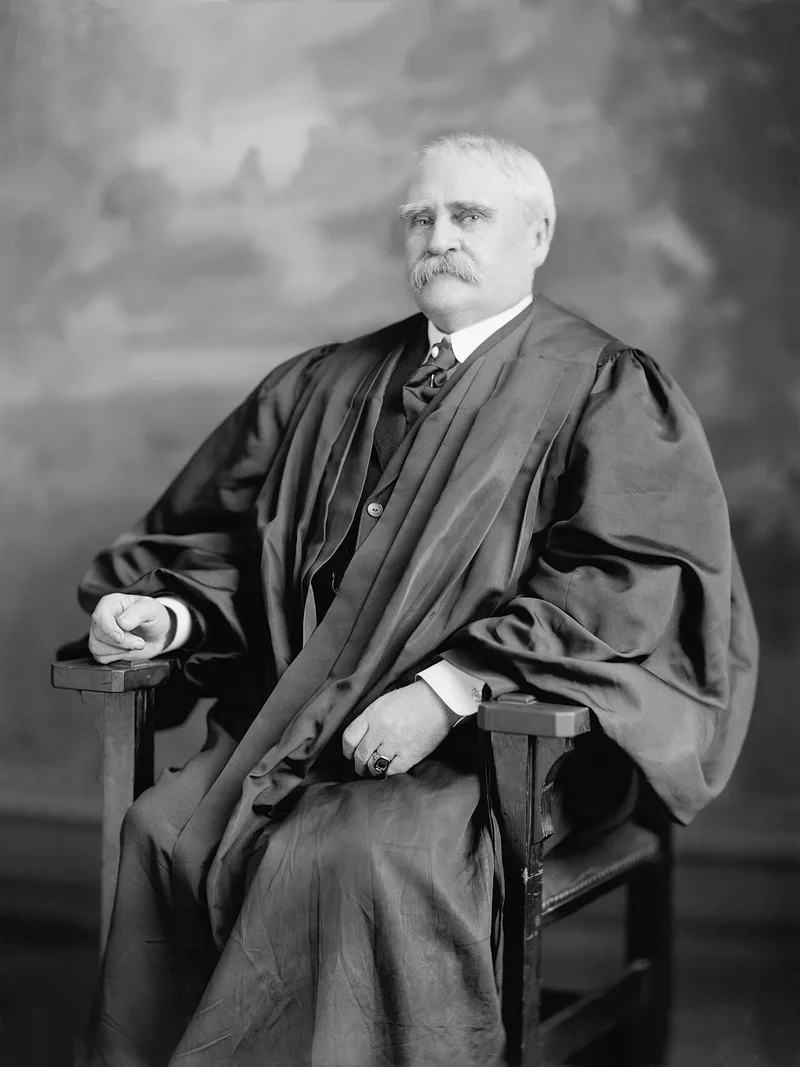
In Louisiana v. McAdoo, the State of Louisiana sought to file an original jurisdiction suit in the Supreme Court against the Secretary and Assistant Secretary of the Treasury, alleging that their instructions to customs officials improperly applied a 20% preferential tariff rate to Cuban sugar imports under the 1902 commercial treaty and related statutes, rather than a higher rate that would benefit Louisiana's state-operated sugar plantations. The United States opposed the filing, arguing the suit was effectively against the federal government without its consent. The Court denied leave to file, holding that the United States was the real party in interest because any judgment would control federal tariff collection, and that the Secretary's duties in interpreting and applying customs laws involved executive judgment and discretion rather than purely ministerial acts, making judicial interference inappropriate absent congressional authorization.
This case involved a dispute over the inheritance of land owned by John Jones, a freedman who died intestate in 1889 without children. His widow claimed the property under a Tennessee statute allowing spouses to inherit when there are no heirs capable of inheriting, while the plaintiff, claiming through the intestate's siblings born into slavery, argued that those siblings qualified as heirs under the state's descent laws. The Tennessee courts ruled for the widow, and the U.S. Supreme Court affirmed, holding that slaves and their collateral relatives lacked inheritable blood under longstanding state law, which had only been extended post-emancipation to lineal descendants. The Court reasoned that inheritance is governed by state statutes, not federal constitutional requirements, and found no violation of the Equal Protection Clause of the Fourteenth Amendment, as the rules applied similarly to other categories like aliens and illegitimates.
The case involved a construction company's claim to a mechanic's lien on the property of an insolvent Indiana traction company in receivership under a general creditors' bill, seeking priority over a mortgage securing bonds. The District Court denied the lien based on Indiana law and ordered the debt paid as a general unsecured claim. On direct appeal, the Supreme Court held that it lacked jurisdiction because the dispute arose under diversity jurisdiction and did not require construction or application of the U.S. Constitution, even though the appellant argued that a change in Indiana Supreme Court decisions impaired its contract rights under the contract clause. The Court reasoned that a shift in judicial interpretation of a state statute is not a state "law" impairing contracts, so review should have proceeded through the Circuit Court of Appeals.
The case involved a contract between the United States and Stone, Sand and Gravel Co. for harbor excavation work in Vicksburg, Mississippi, under which the contractor agreed to begin work by a specified date with a minimum monthly output. The government annulled the contract after the contractor failed to assemble the required force and plant on time, relet the work at a higher price, and sued the contractor and its surety to recover the excess costs of completion. The Supreme Court held that under the contract's clause A, which authorizes annulment for failure to commence work and limits recovery to forfeiture of any money due to the contractor, the government could not recover the excess costs provided for in clause B. The Court reasoned that the parties had expressly addressed this specific breach scenario in clause A, distinguishing it from cases where work had already begun and the annulment was based on inadequate progress.
This case concerned an order by the Interstate Commerce Commission directing certain railroads to cease paying allowances to Arbuckle Brothers for operating the Jay Street Terminal and performing lighterage services in New York Harbor, on the ground that the payments constituted an unlawful preference over the Federal Sugar Refining Company. The Commerce Court held the order invalid and enjoined its enforcement, a decision the Supreme Court affirmed on appeal. The Court reasoned that the payments were reasonable compensation for maintaining a public freight station and providing transportation-related services that the railroads held themselves out as offering within their published lighterage zone, without any showing of favoritism beyond the companies' respective locations. It further noted that the arrangement did not violate the Act to Regulate Commerce merely because Arbuckle Brothers shipped their own goods through the terminal.
The case concerned a downstream irrigator's suit against an upstream copper mining company whose ore reduction operations discharged tailings, slimes, and waste into tributaries of the Gila River, which then deposited on the plaintiff's land and damaged crops when used for irrigation. The trial court enjoined the company from allowing such material to reach the river, and the territorial supreme court modified the decree to permit the company to install settling basins at its own expense to prevent the deposits. The U.S. Supreme Court affirmed, holding that prior appropriators of water for irrigation hold rights to both sufficient quantity and usable quality, that the mining statute conferred no implied right to pollute and injure lower users, and that the plaintiff's special injury entitled him to injunctive relief even if the pollution also constituted a public nuisance. The Court noted that the modified decree reasonably accommodated the mining operations while protecting established water rights.