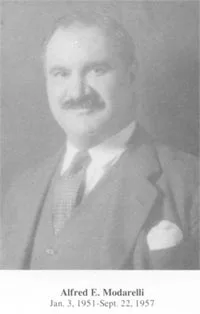
The case involved a dispute over lien priority between a mortgage held by the United States General Services Administration on mining properties in New Jersey and subsequent municipal tax liens held by the Borough of Ringwood. After the property owner defaulted on both the mortgage and taxes, the Borough acquired a tax sale certificate, and the United States foreclosed on the mortgage. The court examined whether the federal mortgage lien had priority under 31 U.S.C.A. § 191 or the first-in-time principle, or if the New Jersey statute granting tax liens first priority controlled. The government abandoned the federal priority statute argument, and the opinion analyzed the applicability of state law to federal claims, referencing Supreme Court precedents on lien priority.
The case involved a newspaper publisher seeking a preliminary injunction under the Sherman and Clayton Acts against a group of newspaper carriers who had organized into an association and threatened to boycott deliveries over disputes regarding route territories, delivery prices, and the publisher's use of newsboys. The defendants argued that their actions addressed inadequate wages and unfair competition, raising defenses including unclean hands, free speech concerns, and the applicability of the Norris-La Guardia Act as a labor dispute. The court denied the motion for a preliminary injunction, finding that the evidence consisted of conflicting affidavits creating disputed issues of fact and law, that the plaintiff had not demonstrated irreparable injury, and that such extraordinary relief is inappropriate when material facts and legal questions remain unresolved pending a full hearing. The decision relied on Third Circuit precedents emphasizing caution in granting preliminary injunctions based solely on affidavits and the principle that doubts warrant denial of such relief.
In Dorney v. Dairymen's League Cooperative Ass'n, a New Jersey clergyman and executive director of a dairy farmers' guild sued a New York dairy cooperative for libel over a 1956 editorial in its newspaper that criticized his advocacy for higher milk prices, his transition from union organizer to minister, and his association with another union figure, portraying their efforts as disruptive to established cooperatives. The plaintiff sought substantial compensatory and punitive damages without pleading special damages. The court granted the defendant's motion to dismiss under Rule 12(b)(6), holding that the editorial was not libelous per se under New York law. The reasoning was that, read as a whole, the piece addressed a matter of public concern through permissible rhetorical and metaphorical language without imputing moral unfitness or degrading the plaintiff's ministerial or professional role, and general abuse or economic criticism alone does not support a defamation claim absent special damages.
This case involved a seaman who sued his employer under the Jones Act, claiming damages for negligence and breach of the warranty of seaworthiness after he became ill from oil fumes and suffered an abdominal injury while working on an oil tanker, along with a separate claim for maintenance and cure. The court found that the vessel was seaworthy, that the plaintiff's illness and injury resulted from his own ordinary negligence rather than any fault by the defendant, and that the defendant's onboard medical care met accepted standards, leading to denial of the negligence claim. However, the court awarded the plaintiff maintenance at $8 per day for his outpatient treatment period plus reimbursement for transportation costs to a public health service hospital, reasoning that a seaman's right to maintenance and cure persists after discharge from the vessel and requires the employer to provide actual means of reaching medical care rather than just issuing a hospital ticket.
In this case, pro se plaintiff Sigmund Pollack, editor of a New York publication, sued the City of Newark, its police chief, a lieutenant, and other officers under 42 U.S.C. §§ 1983 and 1985, claiming they conspired to violate his constitutional rights through fraud, duress, threats, and mistreatment after he was stopped while distributing circulars on a Newark street in 1955 and directed to police headquarters for a permit. Both parties moved for summary judgment. The court denied the plaintiff's motion and granted summary judgment to the defendants, finding no genuine issue of material fact based on the pleadings, affidavits, and deposition; the plaintiff's allegations were unsupported by competent evidence, often contradictory, and included irrelevant or incompetent statements. The court concluded the defendants were entitled to judgment as a matter of law.
The case involved defendant Saul A. Keller, who was convicted by a jury of aiding and abetting the filing of a false Federal Housing Administration Certificate in violation of 18 U.S.C. § 1010. Keller moved for a judgment of acquittal or a new trial, primarily arguing that newly discovered evidence from a handwriting expert indicated that the signatures on the certificate were forged by the government's witness J.J. Ginter rather than Keller, and that this evidence warranted a retrial under standards for newly discovered evidence. The court denied the motion, finding that the evidence was not newly discovered because the defendant had the opportunity to seek such expert testimony during the trial, that it was merely cumulative and impeaching, and that the court was not satisfied that the witness's testimony was false as required by applicable precedents.