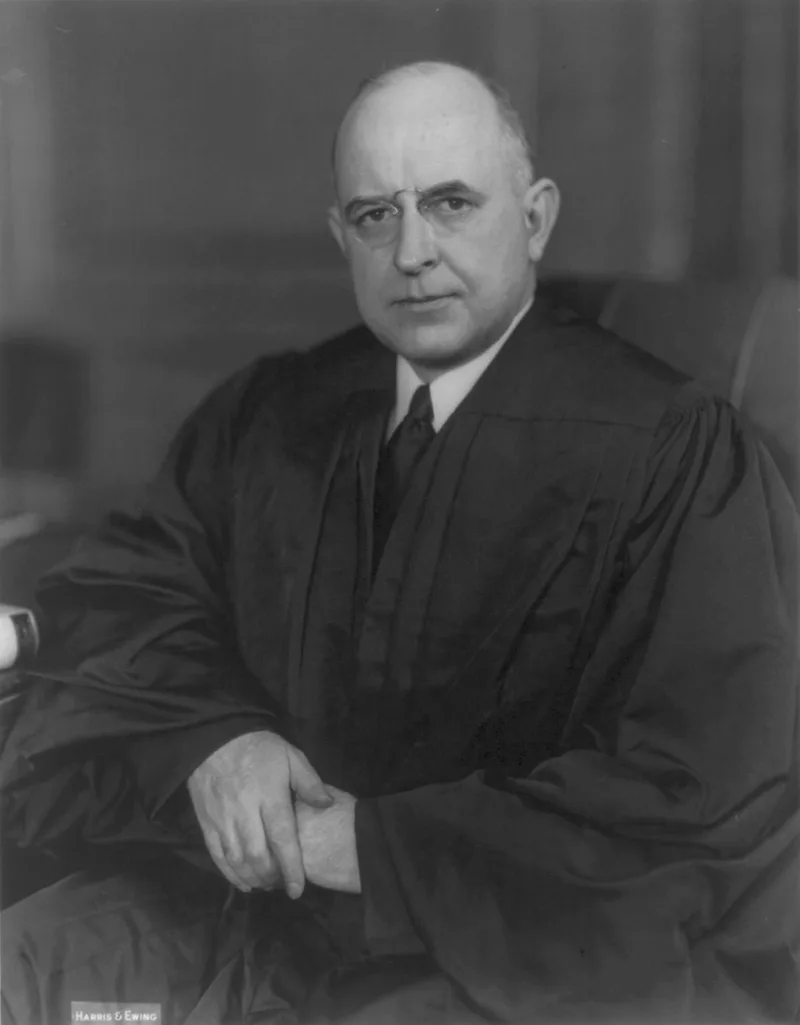
This case concerned a handyman employed on a dredge who suffered injuries from a stove explosion while storing signal lanterns ashore and sued his employer under the Jones Act for damages as a seaman. The Supreme Court held that the jury's finding of crew membership was supported by sufficient evidence, reversing the state appellate court's determination that the employee was not a member of a crew under the Longshoremen's Act. The reasoning centered on the petitioner's duties of deck maintenance, supply handling, and general upkeep of the vessel, which allowed a reasonable inference that he was permanently attached to the dredge and responsible for its seaworthiness, regardless of the vessel being anchored or the injury occurring on land. The Court emphasized that crew status is a factual question for the jury based on the nature of the employment.
This case concerned the validity of a 1954 federal prison sentence imposed on petitioner Thomas Pollard after he pleaded guilty in 1952 to embezzling a U.S. Treasury check. Following the guilty plea, the district court attempted to place Pollard on probation in 1952 while he was absent from the courtroom, an order the government conceded was invalid under Federal Rule of Criminal Procedure 43; nearly two years later, after a reported probation violation, the court vacated that order and sentenced him to two years' imprisonment. The Supreme Court upheld the 1954 sentence, concluding it was a valid initial sentencing for the embezzlement offense itself rather than punishment for violating the invalid probation, and that the proceedings did not violate Pollard's rights to prompt or proper sentencing.
In Re Groban concerned whether two witnesses subpoenaed by the Ohio State Fire Marshal to testify privately about the cause of a fire had a Fourteenth Amendment due process right to the presence of their own counsel during the administrative investigation. The Supreme Court held that no such right existed, affirming the denial of habeas corpus relief after the witnesses refused to testify without counsel and were jailed for noncompliance. The Court reasoned that the proceeding was a non-adjudicative fact-finding inquiry into fire causes, akin to a grand jury investigation, rather than a criminal prosecution where the right to counsel would apply; witnesses' protection in this setting was limited to the privilege against self-incrimination.
The case involved a federal criminal charge against Ludenia Howard under the Black Bass Act for delivering fish for interstate transportation in violation of Florida Game and Fresh Water Fish Commission rules, which were enforced by a state statute making violations misdemeanors. The district court quashed the information, ruling that agency regulations did not qualify as the "law of the State" under the federal Act. The Supreme Court reversed, holding that the regulations constituted state law because the Florida constitution delegated regulatory authority to the Commission, the legislature authorized and penalized violations of its rules, and precedents establish that state administrative orders can have the force of law. The Court distinguished United States v. Eaton and noted that congressional intent, supported by legislative history, favored federal enforcement of such state conservation measures at state borders.
The case concerned whether railroads serving the port of Norfolk, Virginia, were obligated to pay the United States an allowance for wharfage and handling services that the Army performed itself on military export freight at government-controlled piers. The Army had complained to the Interstate Commerce Commission that the railroads' refusal to make such payments—while providing the services without extra charge to commercial shippers using public piers—violated sections 1, 2, 3, and 6 of the Interstate Commerce Act by creating unjust discrimination and unreasonable practices. The Commission dismissed the complaint, finding the circumstances dissimilar because the Army used its own facilities and required special handling, and the district court upheld that order. The Supreme Court affirmed, holding that railroads have no statutory duty to furnish piers or unloading services, that their tariffs applied only to shippers conforming to the specified facilities, and that section 22 of the Act did not compel allowances in these circumstances.
General Box Co. sued the United States under the Tucker Act to recover the value of timber it owned on batture land along the Mississippi River that federal contractors destroyed while enlarging a levee. The Supreme Court held that the United States was not liable. Louisiana law subjects batture to a riparian servitude allowing the state to use the land for levee purposes without compensation, and the state had authorized the federal project to proceed under that servitude at no cost. The Court reasoned that the timber destruction occurred in connection with a valid levee project, so neither notice to the owner nor payment was required.