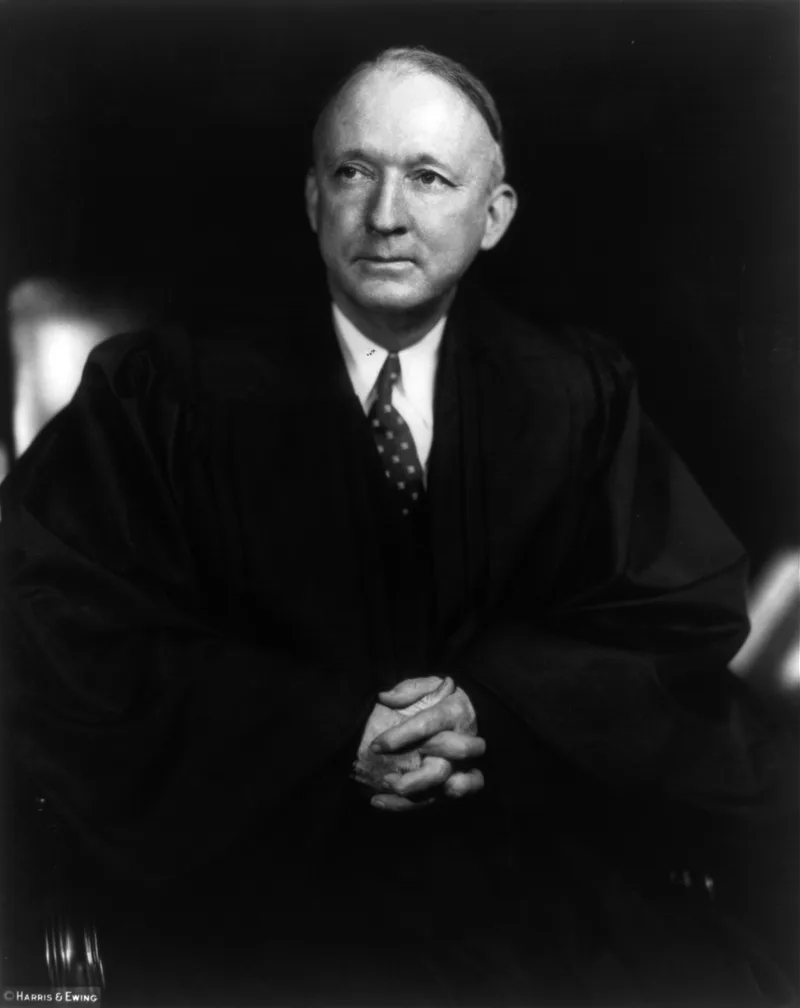
In Palmer v. Thompson, the city of Jackson, Mississippi, closed its public swimming pools rather than operating them on a desegregated basis following a court ruling that racial segregation in public facilities violated the Equal Protection Clause. Petitioners, Negro citizens, sued to compel the city to reopen and desegregate the pools. The Supreme Court affirmed the lower courts' decisions, holding that the city's action did not deny equal protection because it closed the facilities to all races equally, without providing alternatives or maintaining segregation, and states have no affirmative duty under the Fourteenth Amendment to operate swimming pools. The Court distinguished the case from precedents like Griffin v. County School Board, noting the absence of state-supported private segregated facilities or other discriminatory schemes.
The case concerned Danish immigrant Otto Astrup, who in 1950 signed a form seeking exemption from U.S. military service under the Selective Service Act of 1948 in exchange for permanent ineligibility for citizenship; after Congress repealed the exemption, the government tried to draft him but found him physically unfit, then denied his naturalization petition. The Supreme Court reversed the district court and Ninth Circuit rulings that had barred him from citizenship. It reasoned that Section 315 of the Immigration and Nationality Act of 1952 imposes a two-pronged requirement—both applying for and actually being relieved from service—and that temporary or ineffective relief due to changed law and medical disqualification did not trigger the bar, distinguishing prior precedent under the 1917 Act.
This case involved a challenge to Louisiana laws that prevented an acknowledged illegitimate child from inheriting equally from her father's intestate estate, unlike legitimate children. The Supreme Court upheld the constitutionality of these laws, ruling that they did not violate the Due Process or Equal Protection Clauses. The Court reasoned that states have wide latitude to regulate the distribution of property through inheritance laws and that the distinctions drawn between legitimate and illegitimate children were not arbitrary but served legitimate state interests, distinguishing this from prior cases involving tort recoveries.
This case involved challenges to Article XXXIV of the California Constitution, which required majority voter approval in a referendum before any low-rent public housing project could be developed with federal or state assistance. Plaintiffs, eligible for such housing in areas where referendums had failed, argued that the provision violated the Supremacy Clause, Privileges and Immunities Clause, and Equal Protection Clause of the U.S. Constitution. The Supreme Court reversed the district court's ruling that the article denied equal protection, holding that unlike racial classifications in prior cases, this referendum requirement applied generally to low-income housing decisions without creating suspect racial distinctions. The Court reasoned that the federal Housing Act does not prohibit local referendums and that California's process reflects a valid exercise of the people's initiative and referendum powers over legislative matters.
The case concerned whether Yee Chien Woo, who fled mainland China in 1953 and lived in Hong Kong for six years before entering the United States as a visitor, qualified for a refugee preference visa under § 203(a)(7) of the Immigration and Nationality Act. Immigration officials denied the application on the ground that Woo had firmly resettled in Hong Kong, making his presence in the United States unrelated to his original flight from persecution. The District Court found no firm resettlement, and the Ninth Circuit held that resettlement was irrelevant because Woo remained stateless and a national of Communist China. The Supreme Court held that the firmly resettled concept is relevant under the statute, which was intended to benefit those whose presence in the United States is a direct consequence of fleeing persecution rather than those who had established roots elsewhere before seeking entry. The Court remanded for further review under the proper legal standard without deciding whether Woo himself had resettled.
The case involved a physician indicted under the District of Columbia abortion statute for performing abortions; the district court dismissed the indictments, ruling the law unconstitutionally vague. The Supreme Court first addressed jurisdiction under the Criminal Appeals Act and held that it had authority to hear the direct appeal because the D.C. law qualified as a statute enacted by Congress. On the merits, the Court concluded the statute was not unconstitutionally vague, as its terms provided adequate notice of prohibited conduct and permitted abortions when necessary to preserve the mother's life or health, and therefore reversed the dismissal.