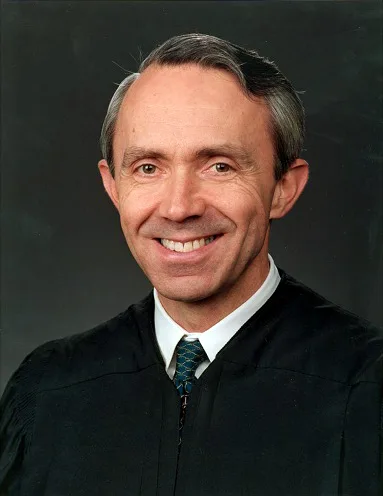
The case arose from the 1989 Exxon Valdez oil spill in Prince William Sound, Alaska, where plaintiffs sought compensatory and punitive damages for economic losses after Exxon's supertanker ran aground due to the actions of its captain and crew. The jury found recklessness and awarded $287 million in compensatory damages plus $5 billion in punitive damages against Exxon. The Supreme Court held that the Clean Water Act does not preempt punitive damages under maritime law and left undisturbed the lower court's ruling on corporate liability for such damages. It further ruled that the punitive award was excessive as a matter of maritime common law and limited it to a 1:1 ratio with compensatory damages to achieve consistency and fairness in maritime cases.
In this case, older employees laid off during a workforce reduction at a government contractor sued under the Age Discrimination in Employment Act, alleging that the employer's use of subjective manager ratings for performance, flexibility, and critical skills had a disparate impact on workers age 40 and over. The Supreme Court held that the employer bears both the burden of production and the burden of persuasion to prove the statutory affirmative defense that the challenged employment action was based on reasonable factors other than age. The Court reached this conclusion from the ADEA's text and structure, which place the RFOA exemption alongside the BFOQ defense in a separate provision from the general prohibitions, following the longstanding rule that the party claiming an exemption must prove it, consistent with FLSA enforcement precedents. The decision rejected the business-necessity test as inapplicable to ADEA disparate-impact claims and clarified that the RFOA defense focuses on the reasonableness of the non-age factor rather than negating liability.
The case involved a dispute between Hall Street Associates and Mattel over whether an arbitration agreement could allow a court to review an arbitrator's legal conclusions for errors, in addition to the grounds specified in the Federal Arbitration Act (FAA). The Supreme Court decided that the FAA's provisions for vacating or modifying arbitration awards are exclusive and cannot be expanded by private agreement when parties seek the expedited review process under the Act. The Court reasoned that the statutory text, particularly section 9's requirement to confirm awards unless vacated or modified as prescribed in sections 10 and 11, precludes broader contractual review standards. This interpretation aligns with the FAA's goal of providing limited judicial oversight to maintain arbitration's efficiency in resolving disputes.
The case involved Michael Boulware, who was charged with criminal tax evasion under 26 U.S.C. §7201 for diverting funds from his closely held corporation, HIE. Boulware sought to introduce evidence that the corporation had no earnings and profits, arguing the diversions qualified as nontaxable returns of capital under §§301 and 316(a) up to his stock basis. The district court and Ninth Circuit, following the Miller precedent, excluded this evidence because Boulware failed to show a contemporaneous intent to treat the distributions as returns of capital. The Supreme Court reversed, holding that a defendant in a criminal tax evasion case may rely on return-of-capital treatment without evidence of such intent at the time of the distribution. The Court reasoned that tax classifications under §§301 and 316(a) turn on objective facts like the existence of earnings and profits and the shareholder's basis, not on subjective intent, consistent with the economic realities of the transaction.
The case involved a Wyoming ranch owner who refused to grant the federal government an easement across his property after discovering that a prior easement had not been recorded. He alleged that Bureau of Land Management officials then engaged in a pattern of harassment and retaliatory actions, including administrative charges, permit revocations, and other measures, prompting claims under RICO for extortion and a Bivens action for violations of Fourth and Fifth Amendment rights. The Supreme Court held that no Bivens damages remedy was available for the alleged retaliation against the exercise of property rights. The Court reasoned that alternative administrative and judicial processes existed to address the grievances and that special factors, including the risk of expanding litigation against federal officials, counseled against creating a new remedy. The Court also rejected the RICO claim.
In Brendlin v. California, police stopped a vehicle without suspicion of unlawful operation, recognized passenger Brendlin as a parole violator, arrested him, and discovered methamphetamine evidence during a search. Brendlin moved to suppress the evidence, claiming the stop was an unconstitutional seizure of his person under the Fourth Amendment. The Supreme Court held that a passenger in a vehicle is seized during a traffic stop and therefore may challenge the stop's constitutionality. The Court reasoned that a reasonable passenger would not feel free to terminate the encounter, as the stop diverts both driver and passenger from traffic and subjects them to police authority and potential scrutiny. The case was remanded for further proceedings on whether suppression was warranted on other grounds.