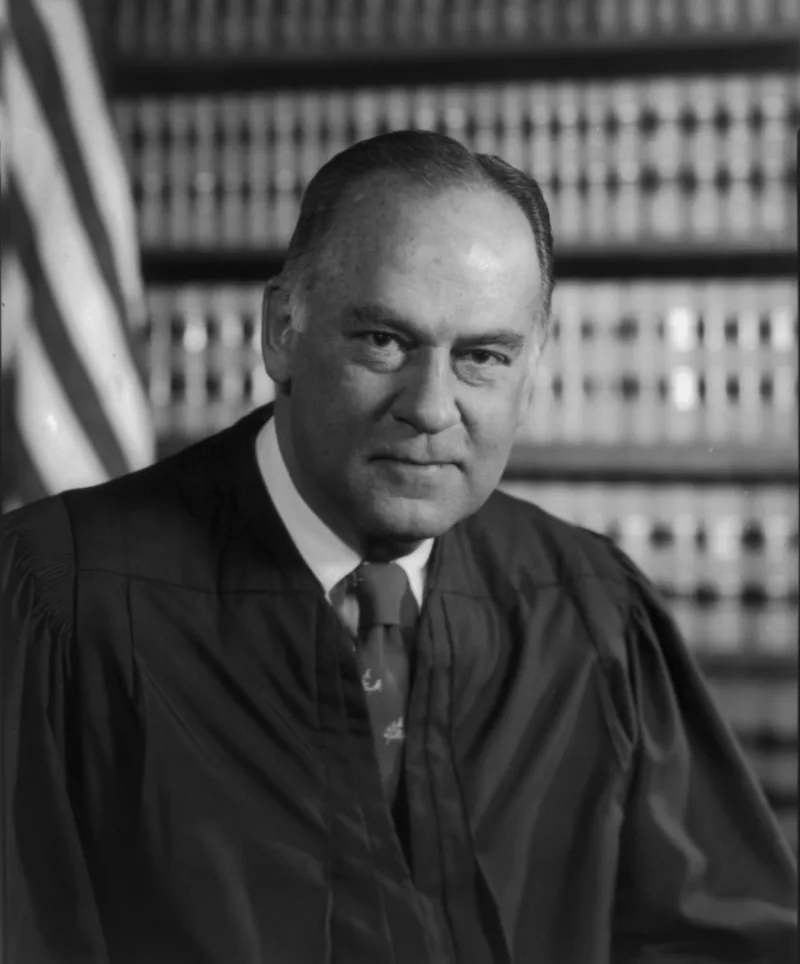
In New York v. Belton, a state trooper stopped a speeding car, arrested its four occupants after smelling marijuana and seeing related evidence, and then searched the passenger compartment, discovering cocaine in the pocket of a jacket on the back seat. The defendant moved to suppress the cocaine, arguing the search exceeded the permissible scope under the Fourth Amendment. The Supreme Court held that a lawful custodial arrest of a vehicle occupant permits a warrantless search of the entire passenger compartment, including containers within it. This ruling extends the Chimel v. California standard by treating the passenger area as within the arrestee's immediate control, allowing searches to ensure officer safety and prevent evidence destruction. The decision applies only to the interior passenger space and excludes the trunk.
The case involved Abby Gail Lassiter, an indigent mother serving a prison sentence for second-degree murder, whose parental rights to her son were petitioned for termination by the Durham County Department of Social Services on grounds of no contact since 1975 and failure to address the conditions that led to the child's removal from her custody. The trial court denied her request for appointed counsel at the termination hearing, allowed her to proceed pro se, and ultimately terminated her rights after hearing testimony from a social worker and Lassiter herself. The Supreme Court held that the Due Process Clause does not require appointment of counsel for indigent parents in every state-initiated parental rights termination proceeding. The core reasoning was that whether due process mandates counsel must instead be determined case by case, balancing the parent's interest against the state's interest and the risk of erroneous deprivation without counsel.
The case concerned whether an employer's appointed trustees for employee pension and welfare trust funds under §302(c)(5) of the Labor Management Relations Act qualify as employer "representatives" for collective bargaining or grievance adjustment under §8(b)(1)(B) of the National Labor Relations Act, and thus whether a union could lawfully bargain to impasse and strike to require an employer like Amax Coal to participate in national union trust funds rather than its own plan. The Supreme Court held that such trustees are not "representatives" within the meaning of §8(b)(1)(B), so the union's conduct did not constitute an unfair labor practice. The Court reasoned that trust fund trustees owe fiduciary duties of undivided loyalty to the beneficiaries under trust law, rather than serving as agents of the appointing party as in collective bargaining. It distinguished the trustees' role from that of true bargaining representatives, noting that Congress created separate statutory frameworks for each and that the union's demands fell within permitted bargaining over terms and conditions of employment. The decision affirmed the NLRB's ruling that the union had not violated the Act.
The case concerned whether a plaintiff suing the federal government for age discrimination under section 15(c) of the Age Discrimination in Employment Act has a right to a jury trial. The Supreme Court held that no such right exists in suits against the United States. The Court reasoned that the Seventh Amendment right to jury trial does not apply in actions against the federal government, that Congress must expressly authorize jury trials when waiving sovereign immunity, and that the statute's reference to 'legal or equitable relief' does not imply a jury-trial right, unlike the explicit provision added for private-sector suits under section 7(c).
The case concerned whether federal law under the Vietnam Era Veterans' Readjustment Assistance Act required an employer to give a military reservist employee preferential work scheduling to accommodate weekend training absences, beyond granting unpaid leaves. The Supreme Court held that 38 U.S.C. § 2021(b)(3) imposes no such duty, ruling instead that employers need only treat reservists equally with other employees regarding schedules, shift exchanges, and other incidents of employment. The Court reasoned from the statutory text and legislative history that the provision bars discrimination on account of reserve obligations but does not mandate special accommodations or compensation for missed hours that non-reservists do not receive. The employer had complied by allowing leaves and permitting the same shift-swapping opportunities available to all workers.
This case involved a dispute over whether the Crow Tribe of Montana could regulate hunting and fishing by non-Indians on fee-owned lands within the reservation boundaries and who owned the bed of the Big Horn River. The Supreme Court held that the Tribe lacked authority to prohibit or regulate such activities by nonmembers on non-Indian property and that the riverbed belonged to the State of Montana. The Court reasoned that while tribes possess inherent powers of sovereignty, these are diminished with respect to nonmembers on lands alienated through allotment acts, and treaties did not clearly convey exclusive regulatory rights or the riverbed, which presumptively passes to states upon admission to the Union under precedents like United States v. Holt State Bank.