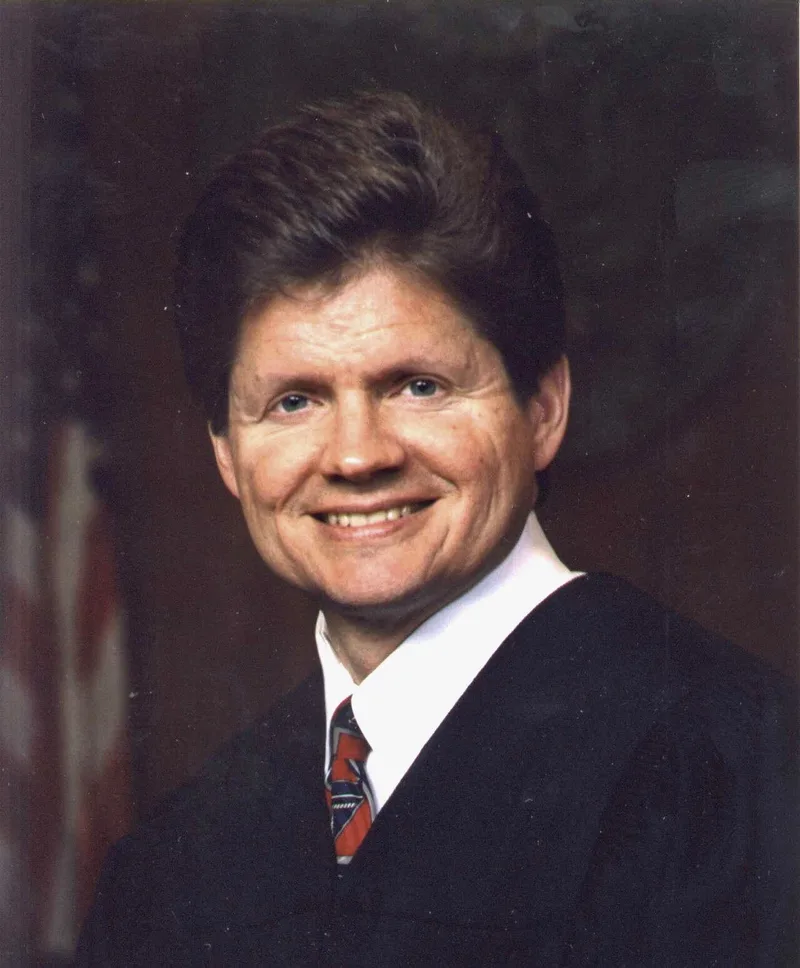
John R. Tunheim
Judge, District Court, D. Minnesota · Born 1953 · Thief River Falls, MN
Judge, District Court, D. Minnesota · Born 1953 · Thief River Falls, MN
Bartos v. Kloeppner (In Re Kloeppner)
District Court, D. Minnesota · 2011-10-24 · cited 4×
This case involved Darían Bartos's appeal of a bankruptcy court ruling that allowed Kelly Kloeppner to discharge in Chapter 7 bankruptcy a state court judgment requiring her to repay over $10,000 in child support and related costs that Bartos had paid for a child he later learned was not his biological child. The district court affirmed the bankruptcy court's grant of summary judgment to Kloeppner, holding that the debt was dischargeable. The court reasoned that the obligation did not qualify as a nondischargeable domestic support obligation under 11 U.S.C. § 523(a)(5) or (15) because Bartos was never married to Kloeppner and did not fall within the statutory categories of spouse, former spouse, or child; the award was a repayment of funds wrongfully paid rather than support in nature; and it did not arise from a separation agreement, divorce decree, or similar court order connected to marital dissolution.
family law
Schedin v. Ortho-McNeil-Janssen Pharmaceuticals, Inc.
District Court, D. Minnesota · 2011-08-26 · cited 11×
The case involved plaintiff John Schedin suing brand-name drug manufacturer Ortho-McNeil-Janssen Pharmaceuticals for failure to adequately warn about the risk of tendon rupture associated with its antibiotic Levaquin, after Schedin suffered bilateral Achilles tendon ruptures following an eight-day course of the drug. A jury awarded Schedin compensatory and punitive damages on the failure-to-warn claim. Ortho-McNeil moved for a new trial and judgment as a matter of law, arguing that the verdicts were against the weight of the evidence, that it was denied a fair trial due to evidentiary rulings and closing arguments, and that the claims were preempted by federal law under the Supreme Court's recent decision in PLIVA v. Mensing. The court denied both motions, concluding that Mensing's impossibility preemption analysis does not apply to brand-name manufacturers, that the evidence supported the verdicts, and that the trial was fair.
torts & liabilityhealthcarebusiness & regulatory
JAZME, LLC v. Wendt Corp.
District Court, D. Minnesota · 2011-08-12 · cited 2×
JAZME, LLC sued Wendt Corporation for breach of contract, breach of express warranties, unjust enrichment, and fraudulent inducement stemming from a contract to purchase metal recovery equipment for processing scrap metal and automobile shredder residue. The court denied Wendt's motion for summary judgment on the breach of contract and breach of express warranties claims because the contract contained ambiguous terms regarding the equipment's intended use and performance. However, the court granted summary judgment to Wendt on the unjust enrichment and fraudulent inducement claims, as the contract explicitly disclaimed any extra-contractual representations about the equipment. The court also granted summary judgment on consequential and incidental damages due to the contract's liability limitations, which were upheld under New York law after the fraud claims were dismissed.
business & regulatoryprocedure
Muhonen v. Cingular Wireless Employee Services, LLC
District Court, D. Minnesota · 2011-07-18 · cited 4×
The case involved plaintiff Leanda Muhonen, a former Cingular Wireless employee and union steward, who sued her employer Cingular and her union Local 7200 for breach of the collective bargaining agreement and breach of the union's duty of fair representation. Muhonen alleged that Cingular discriminated against her based on disability and failed to address safety concerns related to coworker incidents, and that the union failed to properly file grievances on her behalf regarding discipline and termination. The court granted the defendants' motions for summary judgment. It reasoned that Muhonen's claims were time-barred because they were filed more than six months after she knew or should have known that no grievance had been filed, and that the union's conduct was not shown to be arbitrary, discriminatory, or in bad faith; as a result, both the hybrid claims against the union and the dependent claims against the employer failed.
labor & employmentcivil rightsprocedure
United States v. Sybaritic, Inc.
District Court, D. Minnesota · 2011-05-27 · cited 1×
The case concerned a consent decree between the United States and Sybaritic, Inc. and related defendants that barred domestic sales of certain aesthetic and fitness devices until FDA compliance and permitted exports only if they met the requirements of 21 U.S.C. § 381(e). After an inspection, the FDA issued a cessation order halting further exports of seven listed devices and assessing liquidated damages for violations of the decree. Defendants moved to vacate the order or, alternatively, to modify or dissolve the consent decree. The court reviewed the FDA action under the arbitrary-and-capricious standard of 5 U.S.C. § 706(2)(A) and found the agency's decision supported by the record of noncompliance; it further held that defendants had not demonstrated a change in facts or law, a grievous wrong, or exceptional circumstances sufficient to justify relief from the decree under Rule 60(b). The court therefore denied the motion in its entirety.
business & regulatoryhealthcare
Minnesota Made Hockey, Inc. v. Minnesota Hockey, Inc.
District Court, D. Minnesota · 2011-05-12
The case involved a lawsuit by Minnesota Made Hockey, Inc., a for-profit youth hockey program, against Minnesota Hockey, Inc., its District 6 division, director Brad Hewitt, and local associations. The plaintiff challenged a 2010 rule adopted by District 6 that prohibited players from participating in outside leagues during the winter season, alleging violations of federal and state antitrust laws along with tortious interference with contracts and business. The court denied the motion to dismiss the antitrust claims against Minnesota Hockey, District 6, and Hewitt, finding sufficient facts pleaded to support allegations of anticompetitive conduct. It dismissed the conspiracy claims against all defendants because they functioned as a single unilateral actor under the Amateur Sports Act structure, and it dismissed all claims against the local associations due to insufficient factual allegations of their involvement beyond informing players of the rule.
business & regulatory
Cenveo Corp. v. Southern Graphic Systems, Inc.
District Court, D. Minnesota · 2011-03-25 · cited 12×
This case involves Cenveo Corporation suing its competitor Southern Graphic Systems (SGS) and several former Cenveo employees who left to join SGS, primarily over the handling of the Target account. Cenveo alleged claims including breach of duty of loyalty, tortious interference with clients and employment contracts, fraud, misappropriation of trade secrets, and unfair competition. The court granted summary judgment to defendants Shawn Austin, Tom Austin, Paul Pederson, and Susan Spears on all counts due to lack of supporting material facts, and also granted summary judgment to the remaining defendants on fraud, trade secrets misappropriation, unfair competition, and some interference claims. However, it denied summary judgment to SGS, Mike Austin, and Emily Ryan on breach of duty of loyalty, tortious interference with business clients, and unjust enrichment, finding sufficient factual support for those claims to proceed. The reasoning centered on whether disputed facts existed that could allow a reasonable jury to find liability based on the employees' pre-departure actions and SGS's recruitment efforts.
business & regulatorylabor & employmenttorts & liability
Al-Rifahe v. Mayorkas
District Court, D. Minnesota · 2011-03-07 · cited 12×
Nassir Al-Rifahe, granted asylum in 1997 after involvement with U.S. forces in Iraq, filed suit against USCIS, DHS, and FBI officials to compel adjudication of his 1998 I-485 application for lawful permanent residency, which remained pending for over thirteen years because of his membership in the Iraqi National Congress, classified as a Tier III terrorist organization. The government moved to dismiss or for summary judgment, citing lack of standing against the FBI, statutory bars to jurisdiction, and the discretionary nature of the delay. The court dismissed only the claims against the FBI as moot and denied the remainder of the motion, holding that the prolonged delay, paired with a 2010 policy memorandum exempting certain INC activities from inadmissibility, supported a claim that USCIS had unreasonably withheld action in violation of the APA and had failed to follow required procedures for withholding adjudication under 8 C.F.R. § 103.2(b)(18).
immigrationprocedure
SCHEDIN v. ORTHO-McNEIL-JANSSEN PHARMACEUTICALS, INC.
District Court, D. Minnesota · 2011-03-04 · cited 5×
The case involved plaintiff John Schedin suing Ortho-McNeil-Janssen Pharmaceuticals for failure to adequately warn about the risk of tendon rupture from its antibiotic Levaquin, after he suffered bilateral Achilles tendon ruptures following an eight-day course of the drug in 2008; this was the first trial in a multi-district litigation. The jury found for Schedin on his state-law failure-to-warn and punitive damages claims, and the defendant moved for judgment as a matter of law, arguing that the claims were preempted by FDA regulations under the FDCA because the agency-approved label could not be unilaterally changed and the punitive claim amounted to a fraud-on-the-FDA theory. The court denied the motion, holding that the state claims were not preempted because the defendant had multiple available options to strengthen warnings, such as Dear Doctor letters or sales representative communications, even if a black-box warning required FDA approval; it also found that the punitive damages claim did not depend on proving fraud on the FDA and thus was not barred under Buckman. The decision rested on conflict-preemption principles, the Supremacy Clause, and the conclusion that compliance with both state and federal requirements was not physically impossible.
business & regulatoryhealthcaretorts & liabilityfederal power
Meyer v. FIA CARD SERVICES, NA
District Court, D. Minnesota · 2011-02-01 · cited 7×
Nancy Meyer sued FIA Card Services, N.A., alleging that the company violated the Fair Credit Reporting Act by failing to conduct a reasonable investigation after she reported that her then-fiancé had forged convenience checks on two of her credit card accounts, resulting in over $24,000 in fraudulent charges that FIA reported as delinquent to credit agencies. FIA had denied her fraud claim after verifying only that the checks were deposited into her own bank account and, despite specific requests from credit reporting agencies to compare signatures on the checks, followed its standard procedures without further inquiry. The district court denied FIA's motion for summary judgment, concluding that genuine issues of material fact remained as to whether FIA's investigation was reasonable under the FCRA and whether Meyer could establish actual or punitive damages.
business & regulatory
Minnesota Made Hockey, Inc. v. Minnesota Hockey, Inc.
District Court, D. Minnesota · 2011-01-04 · cited 2×
In this case, Minnesota Made Hockey, Inc., a for-profit youth hockey program operator, challenged a rule adopted by defendant District 6 of Minnesota Hockey, Inc., that prohibited players registered with District 6 from participating in outside league play during the winter season. The plaintiff sought a preliminary injunction to prevent enforcement of the rule, alleging violations of federal and state antitrust laws, as well as tortious interference with contracts and prospective business relations. The court found that the plaintiff had shown a likelihood of success on its antitrust monopolization claims but denied the motion because the plaintiff failed to demonstrate irreparable harm, an essential element for injunctive relief. The court reasoned that any harm to the plaintiff, such as lost revenue from departing players, was compensable through monetary damages, making a preliminary injunction unwarranted. The decision also addressed related procedural and public interest factors but ultimately balanced them in favor of denying the drastic remedy requested.
business & regulatoryproceduretorts & liability
Sandoval v. American Building Maintenance Industries, Inc.
District Court, D. Minnesota · 2010-12-21 · cited 4×
This case involves claims by multiple employees against American Building Maintenance Industries, Inc. (ABMI) and its subsidiary American Building Maintenance Co. of Kentucky (ABMK) for sexual harassment, sex discrimination, and retaliation under Title VII and the Minnesota Human Rights Act. After an appeal and remand from the Eighth Circuit, the district court addressed cross-motions for summary judgment on whether ABMI and ABMK constituted an integrated enterprise (making ABMI the plaintiffs' employer) and on the merits of the remaining hostile work environment and related claims. The court denied the plaintiffs' motion for summary judgment and granted the defendants' motion in full. The core reasoning centered on insufficient evidence of centralized control for an integrated enterprise and the plaintiffs' failure to demonstrate genuine issues of material fact on the elements of their discrimination and harassment claims, including constructive notice to the employer.
civil rightslabor & employmentprocedure
In Re Levaquin Products Liability Litigation
District Court, D. Minnesota · 2010-11-08 · cited 21×
This multidistrict litigation involves several Minnesota plaintiffs who sued Johnson & Johnson and related companies, alleging tendon injuries from the antibiotic Levaquin due to inadequate warnings about heightened risks for older patients and those using corticosteroids. Defendants moved for partial judgment on the pleadings in five consolidated cases. The court granted the motions in part, dismissing with prejudice the claims for breach of implied warranty and deceptive trade practices, while denying the motions as to breach of express warranty and unjust enrichment claims for certain plaintiffs. The rulings rested on Minnesota law governing the sufficiency of pleaded allegations, the scope of statutory remedies, and precedents interpreting warranty and consumer protection claims in product liability actions.
torts & liabilityhealthcarebusiness & regulatory
Spine Imaging MRI, LLC v. Liberty Mutual Insurance
District Court, D. Minnesota · 2010-09-30 · cited 3×
Spine Imaging MRI, a provider of MRI services, sued several automobile insurers for breach of contract, declaratory judgment, and unjust enrichment after the insurers stopped reimbursing it for imaging provided to their no-fault policyholders. The insurers refused payment on the ground that Spine Imaging's corporate structure violated Minnesota's common-law corporate practice of medicine doctrine; one insurer also filed counterclaims seeking a declaration of violation and recovery of prior payments. The court granted in part and denied in part the insurers' motions to dismiss, holding that Spine Imaging lacked standing to pursue certain contract and unjust-enrichment claims against two defendants, dismissing one fraud-based counterclaim for failure to plead with particularity, and allowing the remaining claims and amended pleadings to proceed. The rulings rested on Article III standing requirements, Rule 9(b) pleading standards, and the scope of no-fault arbitration versus federal diversity jurisdiction.
business & regulatoryhealthcareprocedure
Merchant & Gould, Pc v. Premiere Global Services, Inc.
District Court, D. Minnesota · 2010-08-25 · cited 1×
This case involves plaintiff Merchant & Gould, P.C. suing defendant Premiere Global Services, Inc. (PGSI) under the Telephone Consumer Protection Act for allegedly sending over 200 unsolicited commercial fax advertisements to the plaintiff's fax machines without an established business relationship. PGSI filed a third-party complaint against Advanstar Communications Inc., alleging that Advanstar was responsible under a service agreement for any unlawful faxes sent via PGSI's subsidiary. The court adopted the magistrate judge's report and recommendation, granting Advanstar's motion for summary judgment and dismissing the third-party complaint with prejudice, denying PGSI's motion to dismiss as moot, and granting the plaintiff leave to file an amended complaint by a set deadline. The core reasoning was that the service agreement placed responsibility on Advanstar for ensuring lawful distribution lists and compliance, but the claims against it failed as a matter of law under the applicable standards for judgment on the pleadings and summary judgment.
business & regulatoryprocedure
Safco Products Co. v. Welcom Products, Inc.
District Court, D. Minnesota · 2010-08-03 · cited 4×
This case involves a patent infringement lawsuit brought by Minnesota-based Safco Products Co. against California corporation WelCom Products, Inc. and its officers Kerry Welsh and John Evanthes, alleging direct, contributory, and induced infringement of U.S. Patent No. D522,708 for a folding pushcart. After jurisdictional discovery, Welsh and Evanthes moved to dismiss for lack of personal jurisdiction and improper venue. The court denied the motion, finding that the individual defendants had sufficient minimum contacts with Minnesota through multiple emails, conference calls, and an in-person meeting with Safco regarding the patent and potential cooperation. Venue was also proper because the officers' alleged acts were tied to the corporation's activities in the district or supported personal liability claims.
procedurebusiness & regulatory
In Re Levaquin Products Liability Litigation
District Court, D. Minnesota · 2010-07-26 · cited 3×
Edward Karkoska sued the manufacturers of the antibiotic Levaquin after suffering an Achilles tendon rupture, claiming the drug caused his injury. The defendants sought summary judgment, arguing that under Minnesota's learned intermediary doctrine, the plaintiff could not prove proximate causation because the prescribing physician was aware of the tendon risks. The court denied the motion, finding that the physician's deposition testimony raised genuine issues of material fact about whether he would have prescribed the drug differently with additional warnings from the defendants. The court also denied summary judgment on other claims without prejudice pending further discovery.
torts & liabilityhealthcare
Equal Employment Opportunity Commission v. Schwan's Home Service
District Court, D. Minnesota · 2010-06-30 · cited 10×
The case involved the EEOC seeking to enforce a subpoena against Schwan's Home Service for employment records related to a sex discrimination and retaliation charge filed by a former trainee. The district court overruled Schwan's objections and ordered compliance with the subpoena. The court reasoned that the requested information was relevant to the underlying charge because it could provide context for determining whether discrimination occurred, consistent with the broad scope of EEOC investigations. Schwan's failed to demonstrate that compliance would be unduly burdensome.
labor & employmentcivil rightsprocedure
Gay-Lesbian-Bisexual-Transgender Pride/Twin Cities v. Minneapolis Park & Recreation Board
District Court, D. Minnesota · 2010-06-25 · cited 2×
The case involved Twin Cities Pride, a nonprofit organizing an annual festival in Loring Park (a traditional public forum), seeking a temporary restraining order under 42 U.S.C. § 1983 against the Minneapolis Park and Recreation Board to enforce rules limiting all expressive activities by sponsors, vendors, exhibitors, and attendees to designated booths. Intervenor Brian Johnson sought to distribute literature and engage in other speech outside those areas. The court denied the motion for a temporary restraining order, holding that the park was a public forum and that Twin Cities Pride's content-neutral restrictions on protected First Amendment activities were not narrowly tailored to serve significant government interests in crowd control, litter reduction, or revenue collection, while still allowing Twin Cities Pride to control its official participants and message.
free speechcivil rights
In Re RBC Dain Rauscher Overtime Litigation
District Court, D. Minnesota · 2010-03-31 · cited 7×
Former RBC securities brokers sued their employer in a putative collective and class action, alleging FLSA overtime and minimum wage violations along with ERISA and state labor law claims, while RBC asserted various FLSA exemptions applied and moved for summary judgment on each plaintiff. After examining the individualized duties, compensation structures, licensing requirements, and work activities of the ten plaintiffs, the court granted summary judgment in full for three Florida plaintiffs and in part for the remaining plaintiffs based on whether their roles qualified for exemptions. The court granted conditional certification for the FLSA collective action but denied class certification for the state-law claims due to differences in state laws, plaintiff circumstances, and predominance issues.
labor & employmentprocedure