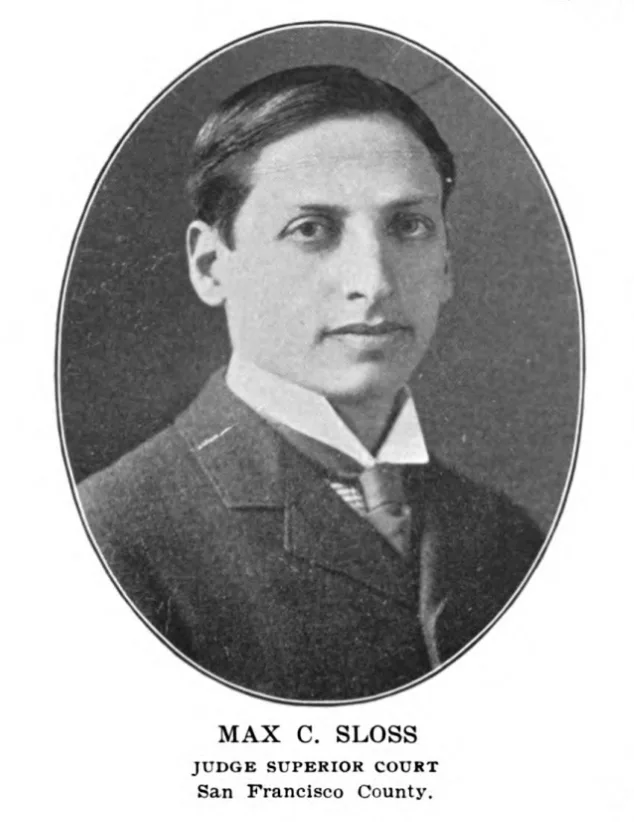
The case concerned the City of Oakland's suit to recover possession of waterfront land below the line of ship channel, which the city equated with the ordinary low tide line as it existed on May 4, 1852, from defendants who held the property as successors to earlier grantees. This action was a companion to a prior eminent domain proceeding in which the city had condemned the adjacent land above that line. The trial court awarded possession to the city on the theory that defendants held the disputed parcel only under an expired lease or that it fell outside their ownership. The Supreme Court reversed the judgment, reasoning that the city had not established that the 1852 low tide line encompassed all the land north of the disputed boundary or that the condemnation judgment already covered the area in question, and that affirming the award would risk depriving defendants of property without compensation.
This case involved a dispute between owners of lands riparian to the Fresno River and the Madera Canal and Irrigation Company over the company's right to divert water from the river. The superior court determined that the company had acquired a prescriptive right to divert up to 200 cubic feet of water per second for irrigation purposes, as that amount was reasonably necessary for the beneficial use on approximately 14,000 acres of land. On appeal, the California Supreme Court affirmed the judgment, holding that the trial court's findings were supported by substantial evidence and that questions of evidentiary weight and witness credibility were properly resolved by the trial court. The court also found no reversible error in the admission of certain expert testimony or reports.
This case involved a landlord's action to recover possession of a storeroom through ejectment and to obtain damages from the tenant under a nine-year lease originally for a fruit and vegetable business. The trial court awarded the plaintiff restitution of the premises, $300 for use and occupation, and $509 in damages based on nonpayment of rent and other claims like improper use as a garage and building alterations. The appellate court reversed, holding that forfeiture of the lease for nonpayment required a precise demand for the exact rent due, which was not made here due to a prior modification of the rent amount, and that the lease permitted garage use while lacking any repair obligation that would support the damages award. The court reasoned that common-law and California precedents strictly limit forfeitures and that damages could not be sustained when partly based on permitted conduct.
This case arose from cross-actions concerning a promissory note and mortgage for $1,800 executed by the Stephens in favor of Ahrens, where a loan broker named Gaut advanced only $1,125.90 to the borrowers before his death, pursuant to an agreement for installment payments during construction. Ahrens sought to foreclose the mortgage for the full amount after declaring the principal due for nonpayment of interest, while Stephens sought a declaration limiting the obligation to the sum actually received. The court affirmed judgments holding that the mortgage secured only the amount advanced and dismissing the premature foreclosure action. The core reasoning was that Gaut acted as Ahrens's agent in making the loan, so the parties' rights were equivalent to those if Ahrens had dealt directly with Stephens, limiting recovery to funds actually disbursed.
In Thomas v. Hacker, the plaintiffs (a married couple) sued the defendants (another married couple) to rescind a 1914 contract in which they had transferred land, a promissory note, and furniture in exchange for exclusive rights to place hotel advertising registers in four northwestern states. The plaintiffs alleged that the defendants had made several material false statements about the business's past profits and value to induce the deal, and they sought return of their property after discovering the misrepresentations. The trial court ruled for the plaintiffs on the fraud claims that were proven, and the California Supreme Court affirmed, holding that substantial evidence supported the findings of knowing false representations of fact on which the plaintiffs had relied, and that the appellate court would not reweigh credibility determinations on conflicting testimony.
This case involved a lawsuit on a surety bond required under the Road District Improvement Act of 1907 for county road construction work outside incorporated cities. The plaintiff sought payment for hay, grain, and other supplies furnished to a subcontractor to feed horses and mules used on the project, after the lower court sustained a demurrer to the complaint and entered judgment for the defendants. The court reversed the judgment, holding that the bond's condition requiring payment for all materials furnished for the work covered these supplies. The reasoning relied on a liberal interpretation of public works bond statutes, distinct from mechanics' lien laws, and drew on recent California precedents and federal decisions construing similar bond language to include items necessary for performing the contract.