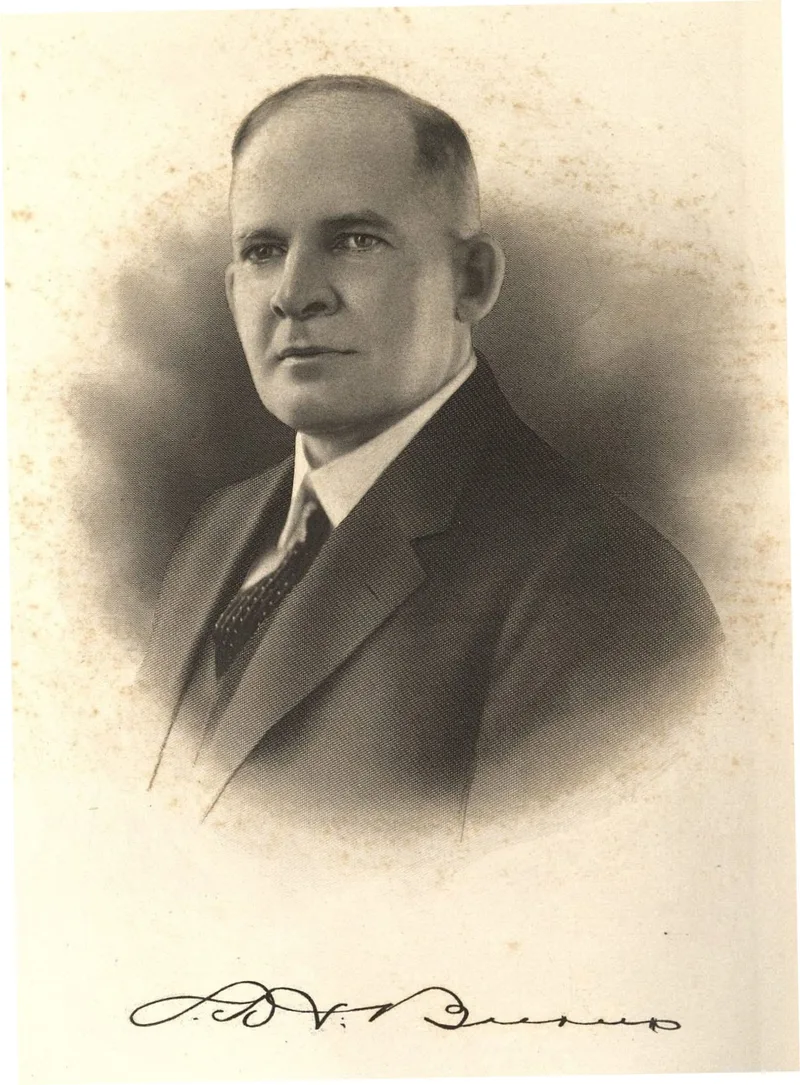
Robert P. Hyams Coal Co. v. United States
District Court, E.D. Louisiana · 1928-06-04 · cited 7×
The case involved a Louisiana coal company and its affiliates suing the United States to recover over $3,700 in additional income and profits taxes assessed for fiscal years 1918 and 1919 on freight income from seven incomplete barge voyages that had been entered on the books before the voyages finished and most expenses were paid. The plaintiff argued its books should be treated as reflecting an accrual method, requiring deferral of the net income to the subsequent years when the voyages actually accrued. The court ruled for the plaintiff after finding that the adjustments would accurately complete an accrual accounting basis, that the Commissioner had failed to apply the statutory requirement to use a method that clearly reflects income, and that the Board of Tax Appeals decision rested on an incomplete record; it therefore held the assessments illegal and ordered a refund with costs.
taxesprocedure
Irving Berlin, Inc. v. Daigle
District Court, E.D. Louisiana · 1928-05-04 · cited 5×
The case involved a copyright infringement claim by Irving Berlin, Inc. against the operator of a dance pavilion who charged admission fees; the plaintiff alleged that a band hired by the defendant played three copyrighted popular songs without authorization on a specific date in 1926. The defendant admitted the performances but argued he was not liable because the band leader was an independent contractor and alternatively that any damages should be limited to $10 per song under the Copyright Act rather than the $250 minimum. The court held the defendant liable for authorizing the unlicensed performances in his for-profit venue, following established precedent that the operator of such an entertainment space bears responsibility regardless of the musicians' employment status. However, it ruled that the songs, as ordinary popular jazz compositions rather than dramatic or orchestral works, fell under the lower statutory damages category, awarding only $30 total.
propertybusiness & regulatory
The Gansfjord
District Court, E.D. Louisiana · 1928-04-17 · cited 12×
The case involved the United States filing a libel of information against the Norwegian steamship Gansfjord for negligently colliding with and damaging a jetty wall, seeking recovery under sections 14 and 16 of the Rivers and Harbors Act of 1899. The court had previously overruled exceptions challenging its jurisdiction and the statute's constitutionality, and the claimant renewed those arguments on the merits. After a trial without a jury, the court found gross negligence by the master and pilot but held that the vessel's liability for damages to public works did not depend on proof of negligence or intent. It concluded that Congress had validly created a statutory remedy enforceable by libel in district court, allowing recovery for the full amount of damages regardless of fault. A decree was entered in favor of the United States.
federal powerprocedurepropertytorts & liability
Stewart v. United States
District Court, E.D. Louisiana · 1928-04-16 · cited 16×
In this admiralty case, a first assistant engineer on a U.S. government steamship was injured when a water gauge glass he had installed burst, causing loss of sight in one eye; he alleged the absence of a safety chain device to operate the valves from a safe distance made the vessel unseaworthy. The court found the shipowner liable for failing to provide a seaworthy vessel and safe appliances, a nondelegable duty, but also determined the plaintiff's contributory negligence in not protesting the missing device, requisitioning it, or supervising its installation before or during the voyage was the remote cause. As a result, the court applied a divided liability rule and awarded the plaintiff $3,000 in damages for the permanent partial injury, while denying claims for maintenance and cure due to his refusal of government medical care and finding no defect in the gauge glass itself.
torts & liabilitylabor & employment
In Re Hagin
District Court, E.D. Louisiana · 1927-07-25 · cited 13×
This 1927 bankruptcy case involved a dispute between a first mortgage holder (Phœnix Building & Homestead Association) and a second mortgage holder over the referee's order allowing the first mortgagee to recover interest up to the date of sale, along with fines, penalties per its bylaws, and $400 in attorney's fees from the proceeds of the mortgaged real estate. The second mortgagee challenged these allowances, arguing that the mortgage note was not due at adjudication, no suit had been filed, and such fees were not provable under the Bankruptcy Act. On review and rehearing, the court held that section 67d governed the valid first mortgage, permitting interest and related charges up to sale when the security covered them, but reversed the $400 attorney's fee because the contractual 10% stipulation required legal proceedings that had not occurred before bankruptcy and the bankruptcy sale was not equivalent to foreclosure. The final decree affirmed the referee's order in part but vacated it regarding the attorney's fee.
business & regulatorypropertyprocedure
The Silverbrook
District Court, E.D. Louisiana · 1927-03-07 · cited 11×
The case involved a libel in rem filed by cargo owner Ayer & Lord Tie Company against the American steamship Silverbrook for shortage and damage to a shipment of creosote, with claimant Mountain Oil & Refining Company moving to stay the proceedings for arbitration in London pursuant to an arbitration clause in the charter party incorporated by reference into the bills of lading. The court denied the motion for a stay under the United States Arbitration Act of 1925, holding that the Act does not authorize a federal admiralty court to direct or supervise arbitration proceedings outside its territorial district. The reasoning centered on the limited jurisdiction of federal courts, the Act's requirements in sections 4 and 8 that arbitration hearings occur within the district where the petition is filed, and the inability of the court to enforce, vacate, or modify an award made in London.
procedurebusiness & regulatoryfederal power
Gulf Coast Transp. Co. v. Ruddock-Orleans Cypress Co.
District Court, E.D. Louisiana · 1927-02-15 · cited 11×
The case involved a claim by the owner of the tug Catherine against the owner of a sunken barge for damages from a collision in a navigable stream, where the wreck had not been marked. The court decided in favor of the tug owner, holding the barge owner liable. The reasoning was that the barge owner failed to mark the wreck as required by federal statute, did not properly abandon it despite negotiations for salvage, and thus remained responsible for the obstruction.
torts & liabilitybusiness & regulatory
Land Development Co. of Louisiana, Ltd. v. City of New Orleans
District Court, E.D. Louisiana · 1926-07-08 · cited 2×
The case involved a Louisiana corporation owning property in New Orleans that challenged a city ordinance restricting home residences based on race, which prohibited white persons from establishing residences in predominantly negro communities and negroes from doing so in white communities without majority consent from the opposite race, enforced through building permit denials and criminal penalties. The plaintiff sought an injunction, claiming the ordinance violated the Fourteenth Amendment by depriving it of property rights to rent to negro tenants. The court dismissed the bill, finding the allegations too vague and general, with no specific interference or threatened action against identified leases or tenants. It reasoned that the plaintiff's interest as owner was too remote to support equitable relief, as it appeared to assert rights on behalf of third-party tenants rather than its own direct rights, and that such intervention would improperly interfere with state court processes.
civil rightspropertyprocedure
In Re Jensen
District Court, E.D. Louisiana · 1926-02-26 · cited 14×
The case involved a petition for naturalization filed by Jens Marinus Jensen, a Danish seaman who arrived in the United States in 1920 without inspection by immigration authorities or payment of the required head tax, and who later declared his intent to become a citizen and served on American merchant vessels. The Naturalization Examiner objected to the petition on the ground that Jensen's entry was unlawful, rendering his subsequent residence and declaration of intention invalid. The court denied the petition, holding that the certificate of arrival did not cure the unlawful entry and that aliens must strictly comply with immigration laws as a condition precedent to naturalization. The decision emphasized that the Immigration Bureau's plenary authority over admission and the requirement of lawful arrival and formal admission after inspection must be affirmatively shown, as unlawful residence vitiates any basis for citizenship.
immigration
Brown v. Protestant Episcopal Church in the United States
District Court, E.D. Louisiana · 1925-10-15 · cited 2×
The case involved plaintiff William Montgomery Brown, a retired Episcopal bishop from Ohio, who filed suit in federal court seeking an injunction to prevent the Protestant Episcopal Church, its House of Bishops, and presiding bishop Ethelbert Talbot from enforcing a sentence of deposition from the ministry following his conviction for teaching contrary doctrine. The plaintiff alleged procedural irregularities in the church's internal trial and review process and claimed the action would deprive him of perquisites valued over $3,000. The court dismissed the bill, holding that it lacked jurisdiction over the two unincorporated church bodies because such associations have no distinct legal entity and cannot be sued by name in federal court under diversity jurisdiction, which instead requires naming individual members. It further held that venue was improper as to the individual defendant Talbot, a Pennsylvania citizen, under the Judicial Code provision limiting suits based solely on diversity to the district of either party's residence. The court did not reach the merits of the ecclesiastical dispute or the amount-in-controversy question.
procedurereligious liberty