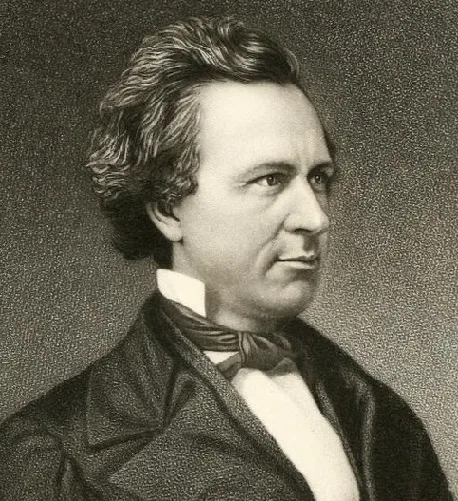
The case concerned whether a bankruptcy discharge under the federal Bankruptcy Act could be avoided if the debtor had made preferential payments or transfers to certain creditors in contemplation of bankruptcy. The court decided that such preferences, when made after the Act's passage and in contemplation of bankruptcy, constitute a fraud upon the Act and provide valid grounds to impeach and set aside the discharge. The core reasoning was that the Act's second section explicitly voids such transfers as fraudulent and bars discharge for the debtor, while the fourth section allows impeachment of a discharge for fraud contrary to the Act's provisions, including preferential transfers, rather than limiting challenges only to actual criminal fraud or concealment of property.
The case concerned whether Clark Tillinghast's assignment of his real and personal property to trustees for the benefit of creditors was void on its face. The court held that the assignment was invalid because its provision authorizing the trustees to convert the property into "available means" permitted sales on credit rather than for immediate cash. Relying on precedent from Nicholson v. Leavitt, the court reasoned that such a term allowed trustees to accept notes, bonds, or other securities instead of money, thereby hindering or delaying creditors in collecting their debts in violation of statute and common law. The court distinguished other cases like Kellogg v. Slauson, finding that the language here expressly enabled non-cash transactions. As a result, the judgment below was reversed and a new trial ordered.
The case involved a replevin action in which the plaintiff claimed sole ownership of certain property (hogs converted to pork and lard) and obtained possession of the entire amount through the writ. The defendant, acting as bailee for a purchaser who had acquired the property from one of the joint owners, contested the claim. The court held that the plaintiff, who was only a part owner rather than sole owner, could not maintain the action for the whole property and thus failed entirely. Because joint owners or tenants in common are entitled to possession of the whole until a division occurs, the defendant was entitled to a return of the property or judgment for its full value under the applicable replevin statute. The rights among the co-owners were to be resolved in a separate proceeding.
The case concerned a dispute over whether a buyer’s debt for goods was extinguished by acceptance of a third party’s promissory note delivered at the time of the sale. The court held that when no prior debt exists and the note is received simultaneously with the creation of the obligation, accompanied by a receipt stating it is in payment, the presumption is that the note operates as payment and the burden shifts to the recipient to prove otherwise. Because the sale price exceeded $50 and no earlier writing or delivery had occurred, the debt and the note arose together, making the presumption applicable. The jury found that the note had been accepted as payment, and that factual determination was conclusive. The court therefore affirmed the judgment.
The case involved the Town of Guilford seeking to enjoin enforcement of a special state law that directed county officials to appoint commissioners, determine the costs incurred by two former highway commissioners in an unsuccessful lawsuit against a turnpike company, and then levy a tax on the town's property to reimburse those costs after town voters had twice rejected payment. The court held that the 1852 statute was constitutional and affirmed the judgment allowing the tax to proceed. The reasoning centered on the distinction between the limited federal government and New York's sovereign state legislature, whose taxing power is plenary unless explicitly restricted by the state constitution; no such restriction was found, and procedural requirements for tax and appropriation bills had been satisfied. The opinion further noted that the power to tax for local or private purposes, when formalities are met, extends to any portion of the state's taxable property.
The case concerned whether a bankruptcy discharge under the general bankrupt act released a defendant from a co-surety's claim for contribution on a bond, where the claim remained contingent at the time of the bankruptcy filing because it depended on whether the principals would default and whether the plaintiff would pay more than his share. The dissenting opinion examined the act's provisions on provable claims, including those of sureties and persons with uncertain or contingent demands, and concluded that the plaintiff's claim was not provable or discharged because it did not exist until after payment. The majority, however, affirmed the supreme court's judgment, thereby upholding the discharge as a bar to the claim.