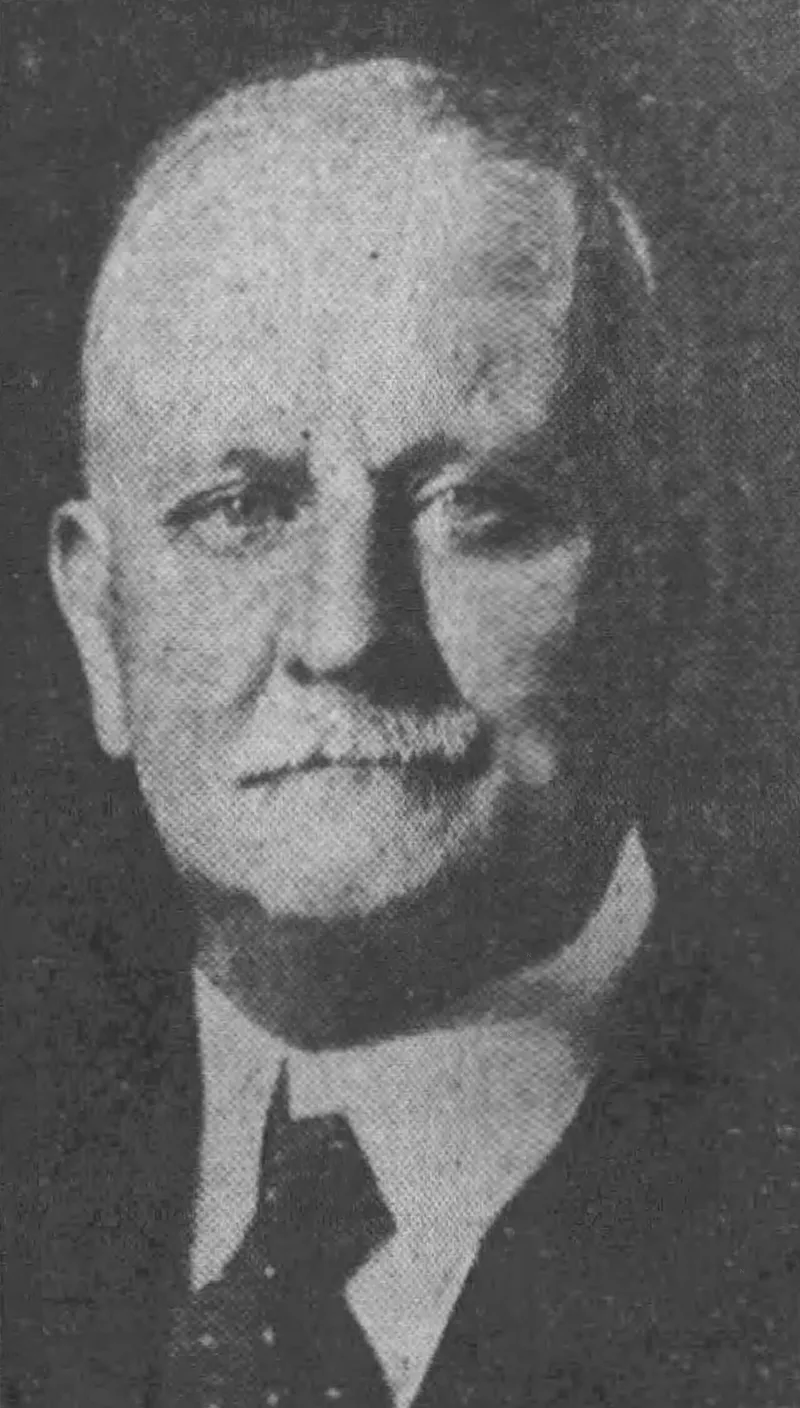
Gates v. Union Central Life Ins. Co.
District Court, E.D. New York · 1944-02-08 · cited 7×
This case involved two actions brought in New York state court to recover unpaid installments due under life insurance policies, which the defendant insurer removed to federal court based on diversity of citizenship. The plaintiffs moved to remand, arguing that the amounts in controversy ($500 and $250) fell below the $3,000 threshold required for federal jurisdiction, while the defendant contended that the policies' full face values or required reserves should count toward the amount in dispute. The court granted the motions to remand, holding that in actions at law seeking only accrued installments, the matter in controversy is measured solely by the judgment demanded in the complaint, and any reserve or future policy obligations are merely collateral and do not confer jurisdiction. It further rejected consolidation as a basis for jurisdiction and left related motions on the pleadings for the state court to decide.
procedurebusiness & regulatory
United States v. the San Leonardo
District Court, E.D. New York · 1942-11-18 · cited 7×
The case involved motions by the Alien Property Custodian to substitute himself as the sole party in forfeiture proceedings against vessels owned by Italian and German companies that had been seized after acts of sabotage by their crews in 1941. The court decided to allow the Custodian to intervene as a party with rights to the vessels and any compensation under a Vesting Order issued pursuant to the Trading with the Enemy Act, but denied his request to exclude the original claimants entirely from the proceedings. The reasoning was that while the Custodian was vested with the claimants' interests as of July 22, 1942, the court's jurisdiction over the forfeiture actions was preserved, and the claimants could continue to participate without being fully displaced.
criminal lawfederal powerpropertyprocedure
United States v. Gudewicz
District Court, E.D. New York · 1942-06-18 · cited 14×
This case involved the United States seeking to recover $1,069 in adjusted service benefits paid to the estate of a Russian immigrant who served in the U.S. Army during World War I but was honorably discharged in 1919 due to alienage and never became a citizen. The court ruled that the government could recover the mistaken payments from the executor individually and as executor. The core reasoning was that a veteran's discharge record on grounds of alienage conclusively established ineligibility for benefits under the World War Adjusted Compensation Act, that administrative decisions on claims did not bar the government from correcting its own errors or recovering overpayments made under mistake of fact or law, and that federal debts must be satisfied first from a decedent's estate.
immigrationfederal powerprocedure
Weinberg v. Sinclair Refining Co.
District Court, E.D. New York · 1942-06-09 · cited 12×
This case involves three plaintiffs who filed separate causes of action seeking treble damages under the Clayton Act as amended by the Robinson-Patman Act for alleged price discrimination by the defendant in sales of gasoline of like grade and quality. The defendant moved to dismiss the complaint for failure to state a claim or establish jurisdiction, to strike portions of the complaint, for a more definite statement or bill of particulars, and for an extension of time to answer. The court denied the motion to dismiss, holding that the complaint sufficiently alleged sales in interstate commerce and price discrimination to state a claim under 15 U.S.C.A. § 13(a), with the burden on the defendant to justify any discrimination, and that diversity jurisdiction was properly pled. The court also denied the motion to strike, granted limited requests for a bill of particulars to allow the defendant to prepare a responsive pleading, and granted an extension of time to answer.
business & regulatoryprocedure
In Re Forman
District Court, E.D. New York · 1942-05-27 · cited 8×
This case involves a creditor's motions in a bankruptcy proceeding to either vacate the 1934 adjudication of Morris Forman as a bankrupt and his 1935 discharge, or alternatively to reopen the estate to administer allegedly concealed assets tied to a partnership debt evidenced by a promissory note. The court denied both motions. It held that the request to vacate was untimely under the one-year limitation in Section 15 of the Bankruptcy Act for revoking discharges based on fraud, that no fraud was shown, and that the claimant was guilty of undue laches in asserting her claim years after the discharge and the death of the original note holder. On reopening, the court found insufficient evidence that the claimant properly owned the note or that any unadministered assets existed, as the allegations amounted only to suspicions without reasonable grounds for belief.
business & regulatoryprocedure
M. H. Renken Dairy Co. v. Wickard
District Court, E.D. New York · 1942-05-18 · cited 7×
This case involves a dairy handler's challenge to the Secretary of Agriculture's denial of market service payments under the New York milk marketing order issued pursuant to the Agricultural Marketing Agreement Act of 1937. The company had transferred milk between its plants, produced buttermilk at the second plant, and sought payments that the Market Administrator withheld on the ground that the buttermilk was properly classified as Class I milk shipped into the marketing area. The court reviewed the administrative record and the order's definitions, which placed in Class I all milk leaving a plant as a whole milk drink whose utilization was not established for another class, and concluded that the buttermilk fit this description rather than qualifying as a homogenized mixture under Class II-B. The court granted the defendant's motion for summary judgment, holding that the Secretary's ruling was in accordance with law and presented no triable issues.
business & regulatoryfederal power
Dumbrow v. Ettinger
District Court, E.D. New York · 1942-05-01 · cited 2×
This case concerned a plaintiff's claim against retail druggist Martin Ettinger for breach of implied warranty after she allegedly became ill from consuming liver extract. The court granted Ettinger's motion for summary judgment and dismissed the complaint. The core reasoning was that no privity of contract existed between the plaintiff and Ettinger, as the extract was not sold by Ettinger or his agents but instead obtained by the plaintiff's son through a third-party clerk acting independently and outside the store's business.
proceduretorts & liability
The Zarembo
District Court, E.D. New York · 1942-03-16 · cited 6×
This admiralty case consolidated a libel by cargo owners Balfour, Guthrie & Co. and Commonwealth African against the steamship Zarembo for seawater damage to a shipment of cocoa beans from West Africa to New York, with a cross-libel by the vessel owner American-West African Line seeking general average contribution for expenses incurred during the voyage. The court found that a corroded and thinned hull plate had cracked under heavy weather, rendering the vessel unseaworthy at the start of the voyage, and that the carrier had failed to prove it exercised due diligence to discover the defect despite recent surveys. Liability for the cargo damage was therefore imposed on the carrier under the Carriage of Goods by Sea Act, while the owner was held entitled to recover general average expenses (though the amount was referred to a commissioner) because the bills of lading provided for adjustment in New York under the York-Antwerp Rules and the owner had shown proper manning and equipment apart from the plate defect.
business & regulatoryproceduretorts & liability
R. R. Donnelley & Sons Co. v. Haber
District Court, E.D. New York · 1942-02-14 · cited 12×
This case involved a copyright infringement claim by R. R. Donnelley & Sons Co. against defendant Haber, along with an unfair competition allegation, concerning a catalog prepared for the John Simmons Co. The court held that the plaintiff owned a valid copyright in the catalog as its author and compiler, and that the defendant infringed by creating his own catalog through photographic reproduction of 121 pages and 637 units from the plaintiff's work, including errors and arbitrary numbering. The core reasoning was that the plaintiff's catalog involved original editing, arrangement, and new material protected under copyright law, with direct evidence of copying shown by exact matches and the absence of independent sourcing by the defendant; the unfair competition claim was rejected because the parties were not business competitors and no additional acts beyond infringement were shown. The court awarded the plaintiff an injunction, damages, profits, and costs but denied relief on the unfair competition count.
propertybusiness & regulatory
Horzepa v. Dauski
District Court, E.D. New York · 1941-08-26 · cited 8×
The case involves a personal injury lawsuit brought by an infant plaintiff through his guardian ad litem and his father against the defendant for damages from a car accident in New York. The defendant moved to dismiss on grounds including failure to state a claim, lack of personal jurisdiction due to no guardian ad litem appointed by the federal court, and improper venue because the plaintiffs are aliens and the defendant resides in Michigan. The court denied the motion, holding that the complaint adequately states a claim, the guardian was properly appointed, the infant's citizenship determines diversity jurisdiction, and the pendency of a related state court action does not bar the federal suit.
proceduretorts & liability
Colpak v. Hetterick
District Court, E.D. New York · 1941-08-18 · cited 12×
This case involves a motion in a civil action, apparently arising from an accident, seeking to compel oral examinations and the production of documents for discovery from defendants and the London & Lancashire Insurance Company. The court granted the motion in part over the insurance company's objection, ruling that the company's internal investigation was not privileged and that certain materials like written statements from the defendants and doctors' reports must be produced. It limited the examination of the company's chief claim agent, however, because the agent lacked personal knowledge and would largely offer hearsay. The court set a specific date and time for the depositions while requiring production of statements that could contain admissions against interest. The decision rested on principles distinguishing privileged trial-preparation materials from discoverable evidence relevant to testing witness testimony.
proceduretorts & liability
Muldowney v. Seaberg Elevator Co.
District Court, E.D. New York · 1941-06-04 · cited 28×
This case involved a claim by plaintiff Muldowney against defendant Seaberg Elevator Co. under the Fair Labor Standards Act of 1938 for unpaid overtime wages during his employment cleaning and securing the company's newly acquired premises in Brooklyn from January to July 1940. The court found that the plaintiff worked an average of 57 hours per week, entitling him to overtime compensation after excluding time for sleep, meals, and personal activities, and calculated the amounts due based on the statutory rates for 44-hour and 42-hour workweeks. It awarded the plaintiff $213.90 in overtime pay, an equal amount in liquidated damages, $200 in attorney's fees, and costs. The decision rested on the statutory definitions of compensable working time under Department of Labor interpretive bulletins and the application of the FLSA's overtime provisions to the hours actually worked.
labor & employment
Tampax, Inc. v. Personal Products Corporation
District Court, E.D. New York · 1941-04-18 · cited 7×
This case is a patent infringement suit brought by Tampax Sales Corporation and Tampax Incorporated against Personal Products Corporation and a retailer, alleging infringement of two patents (Nos. 1,964,911 and 2,024,218) issued to Earle C. Haas for catamenial devices, specifically vaginal tampons with absorbent cores and withdrawing members. The court decided for the defendants, dismissing the complaint on the merits with costs after finding both patents invalid. The core reasoning was that the claimed inventions were anticipated by or obvious in light of prior art patents, such as those disclosing similar absorbent dressings and tampons, lacked novelty in features like compression and stitching, and that commercial success alone does not establish patentable invention; the court also rejected a related motion on admissions as involving legal conclusions rather than facts.
business & regulatoryproperty
United States v. Brass
District Court, E.D. New York · 1941-03-18 · cited 11×
The case involved the United States seeking to cancel Jacob Brass's naturalization certificate obtained in 1927, alleging that it was procured through fraud because Brass falsely testified under oath during the naturalization process that he had never been arrested or convicted of any crimes, despite having multiple convictions including during the statutory five-year period. The court found that Brass had indeed been convicted of several offenses, that his testimony was willfully false, and rejected defenses based on his limited English proficiency, hearing impairment, laches, and statute of limitations. The court concluded that the naturalization was fraudulently and illegally procured and ordered the certificate vacated, as there is no time limit for the government to challenge naturalizations obtained through false statements.
immigrationcriminal lawprocedure
Boyd v. Frenchee Chemical Corporation
District Court, E.D. New York · 1941-02-06 · cited 6×
This case involved a wrongful death claim brought by the administrator and parents of a 19-month-old child who died after ingesting "Hollywood Fabric Cleaner" sold without a poison warning label. The defendant manufacturer moved to dismiss the complaint or for summary judgment, arguing no valid claim existed under Pennsylvania law. The court granted summary judgment to the defendant, holding that the Pennsylvania pharmacy and poison sales statute (Act of May 17, 1917) regulates only drugs and poisons sold in the practice of pharmacy and does not apply to household cleaning products. The court reasoned that the product's label identifying it as a fabric cleaner sufficiently indicated it was not for consumption, that no statutory or common-law duty required a "poison" label on such goods, and that the product was not an attractive nuisance. The complaint therefore failed to state a claim for negligence or statutory violation.
torts & liabilitybusiness & regulatory
Rowley v. Tresenberg
District Court, E.D. New York · 1941-01-17 · cited 4×
The case involved a claim by the owner of a design patent for a kitchen utensil used for beating eggs and similar tasks against defendants for manufacturing and selling an allegedly infringing product. The court held that the patent was valid but that the defendants' device did not infringe it. The reasoning centered on the fact that the similar design elements were primarily functional rather than ornamental, were anticipated by prior art patents, and that the overall appearance of the defendants' product would not confuse the average purchaser into believing it was the patented design. The complaint was dismissed with costs to the defendants.
property
Burris v. American Chicle Co.
District Court, E.D. New York · 1940-05-24 · cited 11×
This case involved a window cleaner employed by a contractor who was injured when a rope supporting his scaffold parted, causing him to fall from a public building owned by the defendant. The plaintiff sued the building owner under New York Labor Law §202, which requires owners to provide and maintain approved safety devices for outside window cleaning, and the owner brought a third-party claim against the contractor. After a jury trial, verdicts of $35,000 were returned in favor of the plaintiff against the owner and in favor of the owner against the contractor. The court denied motions to set aside the verdicts on grounds of insufficient evidence or legal error, finding the statutory liability properly applied and the evidence supported the jury's conclusions on causation and safety, but ruled the damages excessive because the plaintiff's injuries, though permanent, did not prevent all work and medical evidence showed a favorable outcome. The court therefore ordered a reduction of both verdicts to $20,000 or, alternatively, a new trial.
labor & employmenttorts & liability
Radtke Patents Corporation v. CJ Tagliabue Mfg. Co.
District Court, E.D. New York · 1939-12-28 · cited 11×
This case involves a motion by the plaintiff in a patent lawsuit to strike certain defenses from the defendant's answer under Federal Rule of Civil Procedure 12(f). The defendant had alleged that the plaintiff engaged in unclean hands, inequitable conduct, and fraud on the public. The court denied the motion, holding that such defenses are valid in patent cases and that the allegations are material and could raise issues that should not be struck if there is any doubt about their relevance. The court noted that fraud allegations allow for liberal defensive pleading and that the individual involved controls the plaintiff corporation.
procedure
Thomas French & Sons, Ltd. v. Carleton Venetian Blind Co.
District Court, E.D. New York · 1939-12-26 · cited 24×
This case involves discovery disputes in a patent infringement action between Thomas French & Sons, Ltd. and Carleton Venetian Blind Co. The plaintiff moved to compel answers to certain interrogatories and for production of specimens and documents under Rule 34 of the Federal Rules of Civil Procedure. The court overruled objections to interrogatories 1, 2, and 3, requiring them to be answered as they sought observable facts rather than improper opinions, but sustained objections to interrogatories 5 through 8. The motion for production was denied because the plaintiff failed to submit an affidavit showing good cause, the demands were overly broad and vague (including requests for items not in the defendant's possession or control), and they did not sufficiently identify admissible evidence. The court allowed the production motion to be renewed with proper supporting papers within ten days.
procedure
In Re Atlantic Steel Products Corporation
District Court, E.D. New York · 1939-12-20 · cited 7×
This case involves a bankruptcy proceeding under Chapter XI of the Bankruptcy Act where Atlantic Steel Products Corporation sought an arrangement with its creditors. Shaw Factors Corporation, holding a chattel mortgage on the debtor's property, petitioned for review of the Referee's order denying it leave to foreclose on the mortgage. The court upheld the Referee's decision to stay the foreclosure proceedings until the final decree in the arrangement case. The reasoning was that Section 314 of the Bankruptcy Act grants the court authority to enjoin lien enforcement for cause, the stay was necessary to allow the proposed plan to proceed, and the equities favored the debtor since the property's value exceeded the mortgage amount.
business & regulatorypropertyprocedure