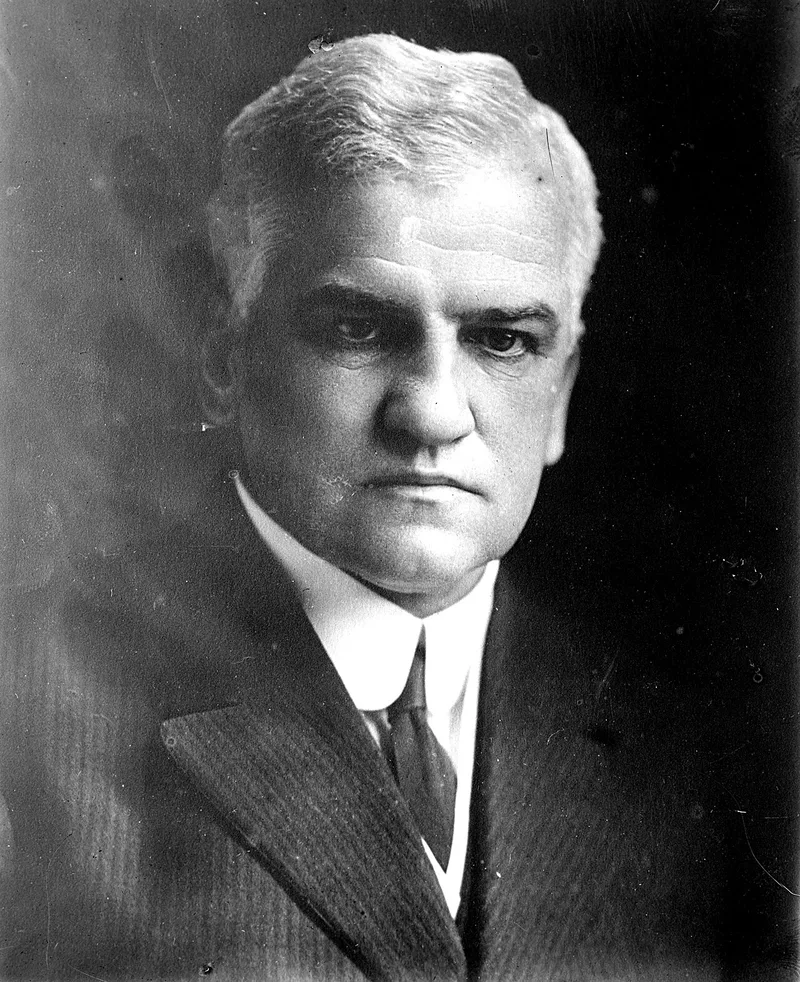
This case involved a U.S. Army Colonel discharged under § 24b of the Army Reorganization Act of 1920 after classification boards found he should not be retained in service. The officer petitioned for a writ of mandamus to vacate the discharge and restore his rank, arguing that lack of notice and hearing before certain boards violated due process under the Fifth Amendment. The Supreme Court of the District of Columbia granted the writ, but the Court of Appeals reversed, and the U.S. Supreme Court affirmed that reversal. The Court reasoned that Congress's plenary power over the military allows for administrative classification processes distinct from civil judicial procedures, that the officer received the required hearing before the Court of Inquiry, and that military tribunals acting within their jurisdiction provide due process that civilian courts cannot review or override.
The case concerned a dispute over priority rights to water diverted from the North Fork of the Republican River, an interstate stream, by a Nebraska irrigation company that had used a portion of the water in Colorado and the rest in Nebraska since 1890. Colorado state officials sought to enforce state laws declaring the water public property for Colorado's use only, potentially impairing the company's diversions based on later in-state appropriations. The District Court and Circuit Court of Appeals found federal jurisdiction based on both diversity of citizenship and a substantial federal question, then enjoined the officials from treating the company's rights differently due to the state line. The Supreme Court affirmed, ruling that the company's priority of appropriation for beneficial use across state lines was protected by the U.S. Constitution and could not be overridden by Colorado's in-state preference rules.
This case involved a challenge by Southwestern Bell Telephone Company to a 1909 City of Houston ordinance setting local telephone rates, which the company argued were confiscatory and thus violated constitutional protections. The district court, after review by a master, found the rates produced insufficient revenue to cover operating expenses and enjoined their enforcement, using the fair value of the company's property at the time of inquiry as the rate-making base. The Supreme Court affirmed, holding that a 1915 merger ordinance purporting to limit rates to a return on capital actually invested was void under the Texas Constitution and did not bind the parties, so fair value rather than historical cost was the proper standard. The Court also declined to address certain valuation issues like going-concern value due to deficiencies in the record and briefs. The decree was affirmed without prejudice to future rate adjustments by the city.
This case involved Colonel John W. French seeking a writ of mandamus to compel the Secretary of War to annul an order retiring him from active Army service under Section 24b of the 1920 Army Reorganization Act and to restore his prior status. The Supreme Court of the District of Columbia granted the writ, but the Court of Appeals reversed, and the Supreme Court affirmed that reversal after examining the statutory classification process. The Act establishes a multi-step system using preliminary classification boards, courts of inquiry, final classification boards, and an honest-and-faithful board, all subject to the President's supervisory authority, to reduce the Army while retaining fit officers. The Court held that the procedures were properly followed in this case, that the statute should be liberally construed to achieve its efficiency goals without technical restrictions, and that mandamus was not available to override the final classification.
This case involved a suit by George Redeagle, a full-blood Quapaw Indian, seeking to have Paul A. Ewert declared to hold title to 100 acres of restricted Indian land in trust for him, on the ground that Ewert, while employed by the federal government in Indian affairs, had improperly acquired the land through an agent, Franklin M. Smith, in violation of Rev. Stats. § 2078. The District Court dismissed the petition, and the Circuit Court of Appeals affirmed the dismissal based on a later settlement stipulation between Ewert and Redeagle. The Supreme Court reversed, holding that the deeds from Redeagle to Smith, Smith to Ewert, and Redeagle to Ewert were all void because the statute barred Ewert from any interest in trade with Indians, and the settlement did not end the controversy since the land remained restricted at the time. The Court remanded with directions to cancel the deeds, order an accounting for rents, royalties, and profits, and address any mortgage liens on the property.
The case involved a dispute over freight rates for shipping two carloads of beer from San Francisco to Seattle in 1917, where the beer was packaged in thousands of individual cases addressed to separate persons. The railroad refused to accept the shipments in bulk carload lots for delivery to a transfer company, citing federal labeling requirements under the Criminal Code and state prohibition laws limiting imports to small quantities per person with special permits; it instead required individual billing and delivery. The steamship company sued to recover the higher less-than-carload rate, and the lower courts ruled in its favor. The Supreme Court affirmed, holding that the railroad could not lawfully transport the beer in carload lots to the named consignee because state law made each permit holder the ultimate consignee, required permits and markings on each package, and obligated the carrier to cancel permits upon delivery to individuals, making bulk delivery to a transfer company impermissible.