Best open worlds in games
Open world games promise more than just a map to explore—they offer entire universes to lose yourself in, packed with secrets, stories, and freedom to roam. From neon-soaked cities to sprawling fantasy kingdoms, the best ones make you forget the real world exists. Which virtual landscape reigns supreme? Cast your vote and defend your favorite digital frontier.
What counts: The crowd's votes decide the order — seeded neutral.
Hyrule (Breath of the Wild)▲ Rising
You step out of a cave onto the Great Plateau and can see a castle in the distance, and nothing stops you from walking there right now — that promise, kept, rewired what an open world is supposed to do. Physics-driven puzzles, climbable everything, and a chemistry engine that lets you set grass on fire to ride the updraft made exploration itself the game, not the wrapper around it. It sits at or near the top because it's the rare world that trusts the player completely and is still rewarded for that trust.
added by IJR
92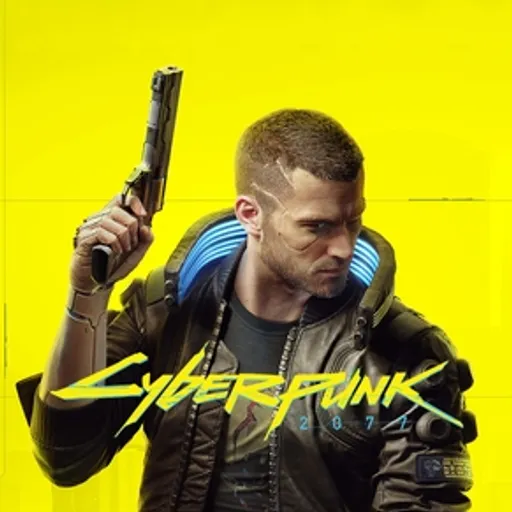
Night City (Cyberpunk 2077)▲ Rising
added by IJR
48Red Dead Redemption 2's frontier▲ Rising
Ride from the swamps of Lemoyne to the snowbound peaks near Colter and watch the game genuinely change weather, wildlife, and dialect as it goes — this is a frontier built on ecological and social texture, not just square mileage. The slow, deliberate camp life of the Van der Linde gang, where Arthur can just sit and play dominoes, made stillness as much a part of the open world as galloping across it. It earns its spot for treating the West as a living, dying ecosystem rather than a checklist of icons.
added by IJR
30The Lands Between (Elden Ring)
added by IJR
11Los Santos (GTA V)
Three protagonists, one sprawling satire of Los Angeles, and a heist structure that turns the city itself into a getaway map — Los Santos earns its spot by being the funniest, meanest open world ever built. Trevor torching a meth lab while a smooth-jazz radio station plays underneath is the kind of tonal whiplash only this game attempts and pulls off. It's here for scale and mechanical polish, sure, but really for how completely it commits to being a mirror held up to American excess.
added by IJR
-3
Skyrim▼ Falling
A dragon crashes an execution in the game's first five minutes and from there Skyrim simply lets you wander off into any direction, guild, or shout you please — that unstructured freedom, more than any single quest, is why it never left the cultural conversation. Radiant quests and modding support turned the game into an ever-expanding platform rather than a fixed product, giving it a decade-plus afterlife most worlds can't dream of. It's ranked for longevity and sheer cultural gravity as much as design.
added by IJRin 4 rankings
-19The Witcher 3's Continent▼ Falling
Novigrad's rooftops, the Skellige storms, and a griffin contract in Velen that spirals into a genuinely tragic family story — the Continent proved side quests could carry the emotional weight of main plots. Bloody Baron's questline alone, with its ambiguous, no-clean-answers resolution, reset expectations for what 'open world writing' could mean. It's on this list because it's the world that made people stop skipping side content.
added by IJR
-21Ghost of Tsushima's Tsushima▼ Falling
Following foxes to shrines and letting the wind literally point you toward your next objective, Tsushima replaced UI clutter with environmental grace, and it changed how open worlds could guide players without a single quest marker. Golden fields of pampas grass doubling as both beauty shot and stealth cover made the island feel painterly and purposeful at once. It claims its place for pure aesthetic confidence — a world designed to be photographed as much as played.
added by IJR
-72
Keep ranking
Comments (4)
Free account · your comment posts right after signup
This order is closer to right than any editor would've gotten.
Exactly the kind of argument the internet was built for.
- VVera OkaforJul 28, 2026
Voted — and the gap between #1 and #2 should be bigger.