Biggest U.S. metros
America's biggest metropolitan areas are engines of culture, commerce, and innovation, shaping everything from national politics to where the next big trends emerge. With cities constantly growing, shifting, and competing for residents and businesses, the question of which metro truly reigns supreme is more contested than ever. Cast your vote and help settle the debate on which U.S. metro stands above the rest.
What counts: Seeded with approximate real-world figures — the crowd's votes decide the order from here.
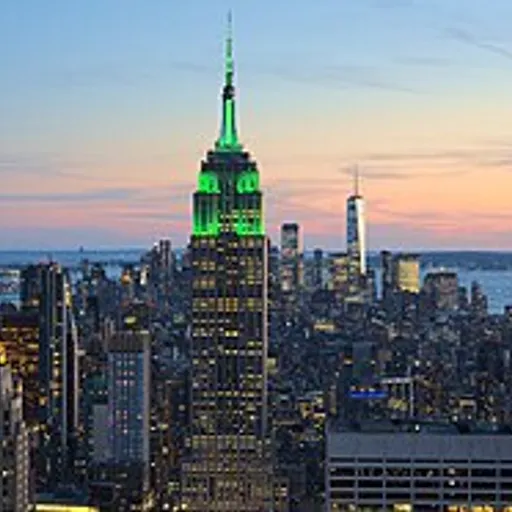
New York City▲ Rising
The original American megalopolis, still pulling in nearly 20 million people across a metro that never surrendered its gravitational pull despite decades of predicted decline. Wall Street, Broadway, and JFK's runways make it the nation's undisputed financial and cultural capital, and no exodus—not white flight, not COVID—has ever knocked it off the top spot for long. It's the metro every other metro secretly measures itself against.
Metro pop.: 19,600,000Median home: $700,000Sunny days: 224
added by IJRin 13 rankings
8Phoenix▲ Rising
A desert metro that had no business supporting millions of people, Phoenix willed itself into existence through air conditioning, cheap land, and an aggressive annexation strategy that kept expanding the city limits outward. It's now one of the fastest-growing metros in America, a magnet for Californians fleeing high costs and Midwesterners fleeing snow. Water scarcity is the sword hanging over its head, but so far growth has outrun the reckoning.
Metro pop.: 5,000,000Median home: $440,000Sunny days: 296
added by IJRin 4 rankings
6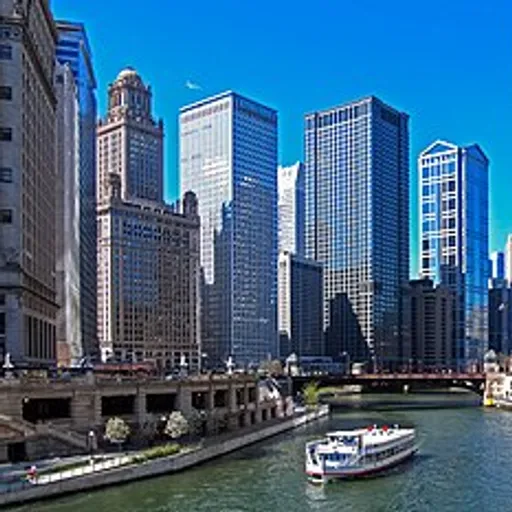
Chicago
Built on rail lines and stockyards, Chicago became the essential hinge between America's coasts, the place where grain, steel, and commodities futures all had to pass through. The Great Fire of 1871 should have ended it; instead it rebuilt taller, inventing the skyscraper and cementing itself as the Midwest's unchallenged capital. Population growth has stalled this century, but its economic and architectural weight still punches at a first-tier level.
Metro pop.: 9,400,000Median home: $340,000Sunny days: 189
added by IJRin 15 rankings
4
Philadelphia
The cradle of American independence, where the Declaration and Constitution were both signed, Philly spent much of the 20th century in the shadow of bigger neighbors New York and D.C. even as it quietly built one of the country's most durable regional economies. It's the city that boos Santa Claus and means it, a blue-collar identity that never fully faded even as it added biotech and Ivy League-adjacent prestige. Rocky's steps are still climbed daily by people who get the point.
Metro pop.: 6,200,000Median home: $280,000Sunny days: 207
added by IJRin 10 rankings
4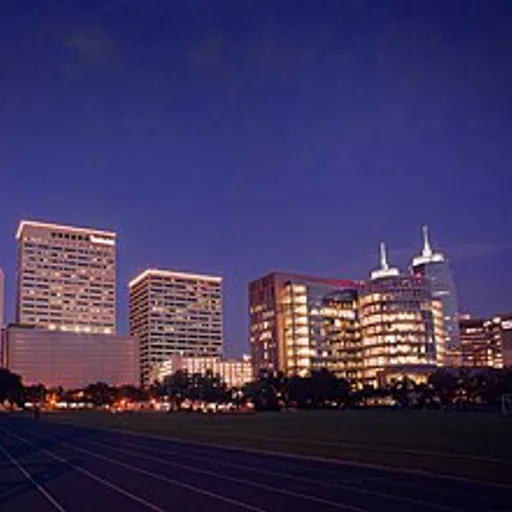
Houston
Oil turned a swampy bayou town into America's energy capital, and the Houston Ship Channel made it one of the busiest ports in the country almost by accident of geography and ambition. NASA's Mission Control put it on the map culturally, but it's the relentless in-migration—no zoning, cheap housing, endless job growth—that's made it a genuine top-five metro. Hurricane Harvey couldn't slow it down for long.
Metro pop.: 7,300,000Median home: $340,000Sunny days: 204
added by IJRin 7 rankings
3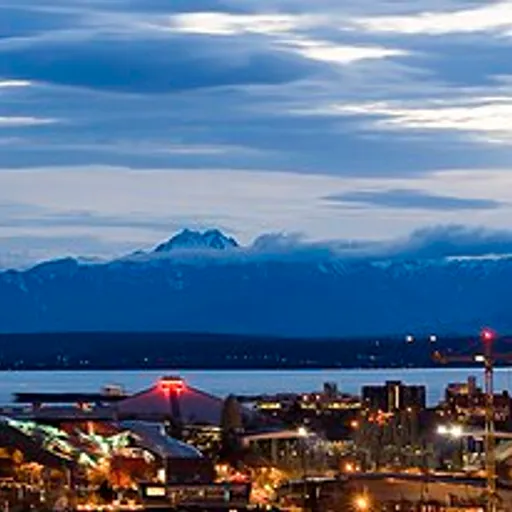
Seattle
Rain-soaked and once dismissed as a logging-and-fishing backwater, Seattle became a genuine tech titan on the backs of Boeing, then Microsoft, then Amazon, turning it into one of the wealthiest and fastest-growing metros in the country by the 2010s. Grunge music gave it cultural cred in the '90s before tech money reshaped its skyline and its housing prices. Traffic and homelessness debates now dominate a city that grew almost too fast for its own infrastructure.
Metro pop.: 4,000,000Median home: $750,000Sunny days: 152
added by IJRin 8 rankings
3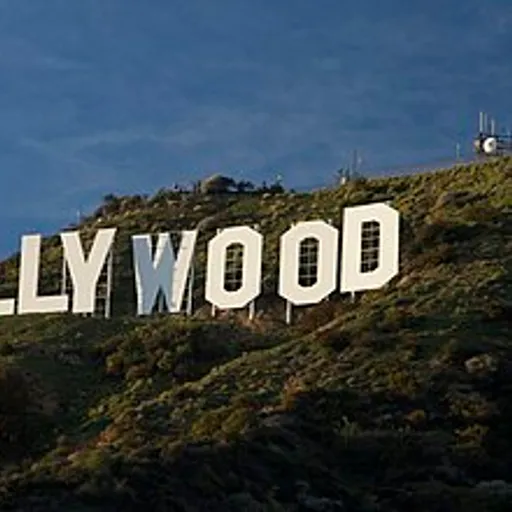
Los Angeles
Sprawled across basins and canyons with no discernible center, LA proved you didn't need a downtown to become America's second city—just Hollywood, the ports of LA/Long Beach, and an endless supply of sunshine-chasing dreamers. It exported American culture to the entire planet through film and television, then reinvented itself again as a tech and immigration hub. The freeways are a punchline, but nearly 13 million people still refuse to leave.
Metro pop.: 12,900,000Median home: $900,000Sunny days: 284
added by IJRin 12 rankings
2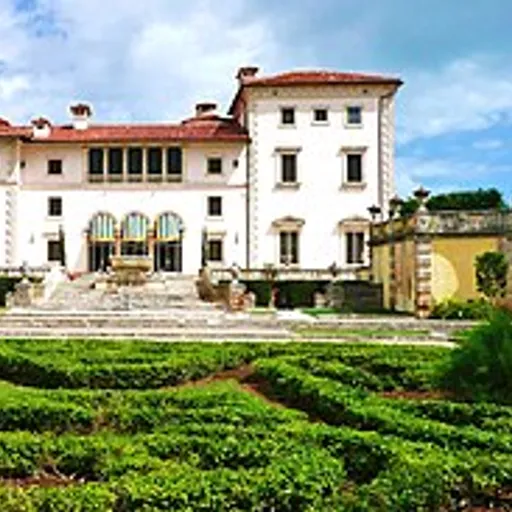
Miami
Built on drained swampland and reinvented by waves of Cuban, Haitian, and Latin American immigration, Miami transformed from a Jazz Age resort town into the undisputed gateway between the U.S. and Latin America. Its skyline is basically a monument to foreign capital and cocaine-era comeback stories, and its cultural exports—from Miami Vice to reggaeton crossover hits—punch far above its size. Sea-level rise looms, but for now it's one of the fastest-growing major metros in the country.
Metro pop.: 6,100,000Median home: $550,000Sunny days: 248
added by IJRin 9 rankings
2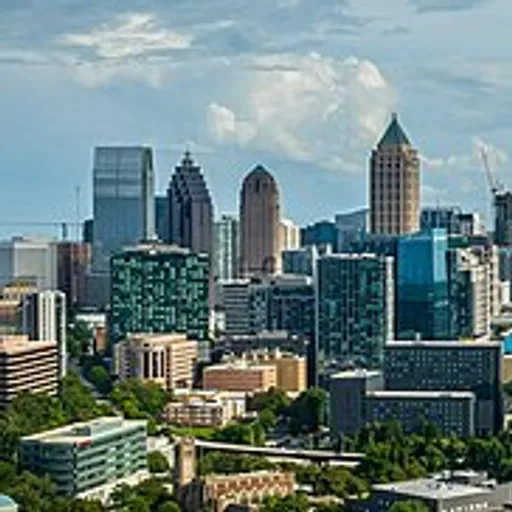
Atlanta
Sherman burned it to the ground in 1864, and Atlanta responded by becoming the unofficial capital of the New South, a Black economic and political power center built around Coca-Cola, CNN, and the world's busiest airport. It sold itself hard with the 1996 Olympics and never stopped selling, luring corporate headquarters and film productions (hello, superhero-movie tax credits) at a staggering rate. The traffic is legendarily bad because everyone actually wants to be there.
Metro pop.: 6,100,000Median home: $400,000Sunny days: 217
added by IJRin 10 rankings
2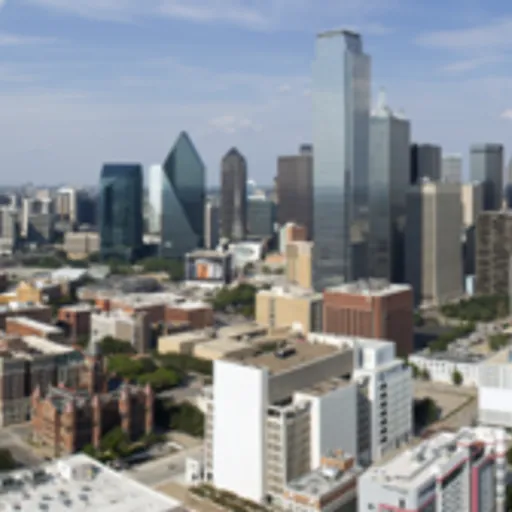
Dallas
Dallas turned a lack of natural advantages—no port, no river worth mentioning—into a case study in pure commercial hustle, building itself into a banking and corporate-relocation magnet through sheer business-friendly aggression. The DFW Airport bet paid off spectacularly, turning the metroplex into a logistics hub that corporations from California now flee to. Its rocket-ship growth over the last two decades is the loudest argument for the Sunbelt takeover of American population.
Metro pop.: 8,000,000Median home: $380,000Sunny days: 232
added by IJRin 5 rankings
1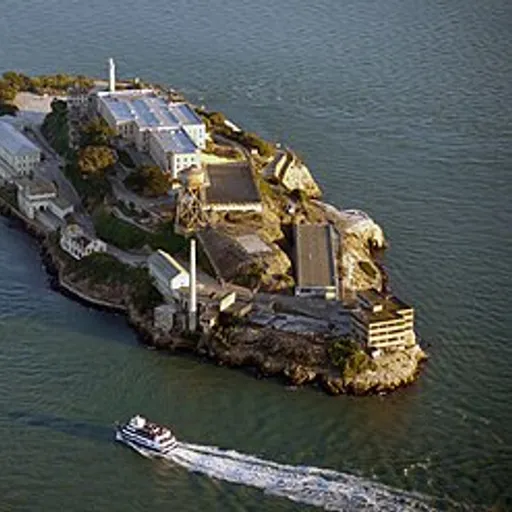
San Francisco
The Gold Rush built it, the tech boom rebuilt it twice over, and the Bay Area became the single most consequential few square miles in the global economy thanks to Stanford, Silicon Valley, and a willingness to fund absurd ideas that occasionally become Google or the iPhone. Housing costs and a visible homelessness crisis have made it a symbol of urban dysfunction as much as innovation. Love it or hate it, more wealth has been created here in fifty years than almost anywhere in human history.
Metro pop.: 4,600,000Median home: $1,200,000Sunny days: 259
added by IJRin 8 rankings
1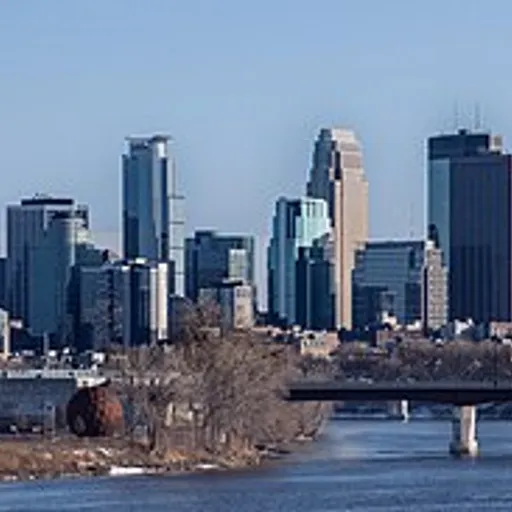
Minneapolis
The Twin Cities built an outsized economy—Target, General Mills, 3M, UnitedHealth—out of sheer Midwestern efficiency, becoming a Fortune 500 headquarters cluster nobody outside the region fully appreciates. It's consistently ranked among the most livable big metros in America, a quiet overachiever that punches well above its population. George Floyd's murder in 2020 thrust it into the center of a national reckoning it never asked for but has had to reckon with ever since.
Metro pop.: 3,700,000Median home: $350,000Sunny days: 198
added by IJRin 7 rankings
1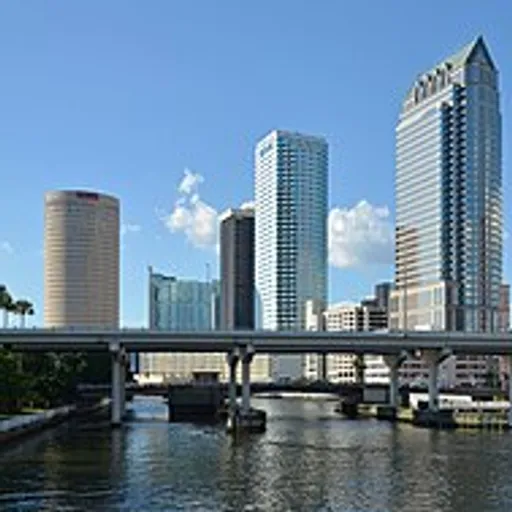
Tampa
Long dismissed as a retiree landing pad, Tampa Bay quietly became one of the hottest relocation destinations in America, riding a wave of financial-services jobs, no state income tax, and pandemic-era remote-work migration to explosive growth. The Lightning's Stanley Cups and the Bucs' Super Bowl gave it a sports identity to match its population boom. It's the Florida growth story that isn't Miami or Orlando, and it's arguably outpacing both.
Metro pop.: 3,300,000Median home: $380,000Sunny days: 246
added by IJRin 6 rankings
1Washington
A city literally invented to be a capital, D.C.'s metro area ballooned far beyond its marble core into a sprawling engine of federal contracting, lobbying, and policy that quietly became one of the wealthiest regions in America. It survived being a punching bag for every anti-government campaign ad ever made and just kept growing anyway. Politics is the industry here, and business has never been better.
Metro pop.: 6,400,000Median home: $620,000Sunny days: 203
added by IJRin 4 rankings
0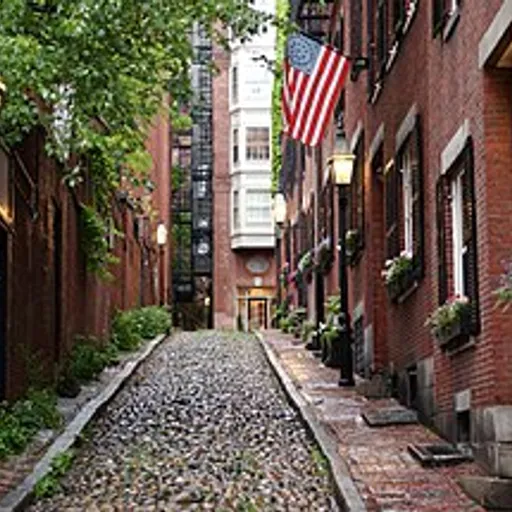
Boston
America's intellectual engine room, powered by Harvard, MIT, and a biotech/pharma cluster that turns university research into billion-dollar drugs faster than almost anywhere else on Earth. It's a small, dense, notoriously parochial metro that still manages to out-innovate cities five times its size, and its sports championship runs over the past two decades gave it a swagger to match its brainpower. Old money and new science coexist uneasily but productively.
Metro pop.: 4,900,000Median home: $700,000Sunny days: 200
added by IJRin 8 rankings
0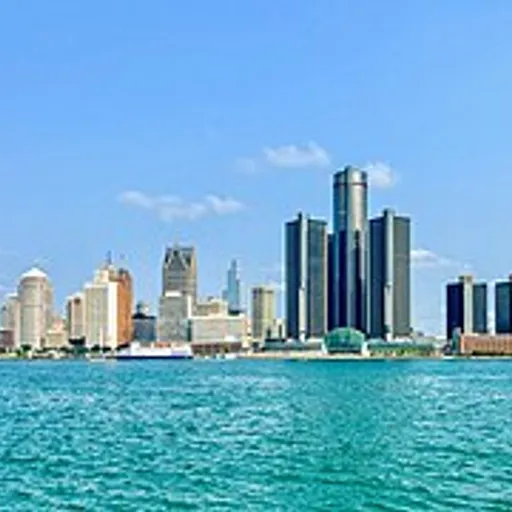
Detroit
The Motor City didn't just build cars, it built the American middle class, pioneering the assembly line and union wages that defined 20th-century prosperity before deindustrialization gutted it into the country's most infamous urban decline story. The largest municipal bankruptcy in U.S. history in 2013 was the grim capstone, but a scrappy downtown revival and Motown's cultural legacy keep it from being written off entirely. It's the cautionary tale every Rust Belt city studies.
Metro pop.: 4,300,000Median home: $200,000Sunny days: 183
added by IJRin 10 rankings
0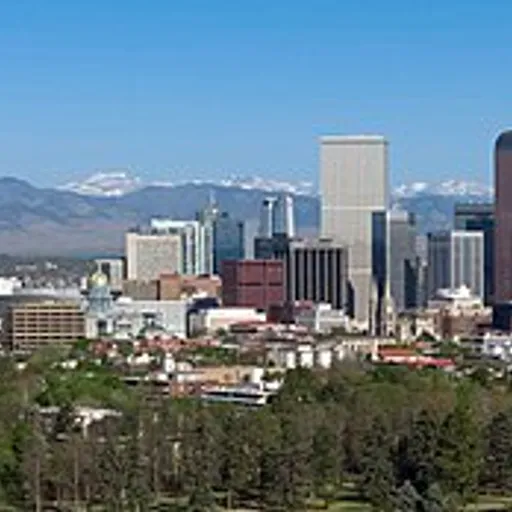
Denver
The Mile High City turned its Rocky Mountain backdrop into the ultimate lifestyle sell, luring a generation of outdoorsy young professionals and turning legal marijuana into a genuine economic sector alongside aerospace and craft brewing. DIA's absurdly oversized footprint signaled the city's ambitions early, and population growth followed for decades straight. It's the connector city between the coasts and the heartland, and it knows it.
Metro pop.: 3,000,000Median home: $560,000Sunny days: 245
added by IJRin 8 rankings
0Charlotte
A former textile and railroad crossroads that bet everything on becoming a banking hub, Charlotte turned Bank of America and Wells Fargo's East Coast operations into the second-largest financial center in the U.S. after New York. Its explosive Sun Belt growth over the last twenty years—driven by corporate relocations and no state income tax neighbors nearby—made it one of the fastest-growing metros in the country almost by stealth. NASCAR gave it culture; banking gave it money.
Metro pop.: 2,800,000Median home: $400,000Sunny days: 214
added by IJRin 3 rankings
0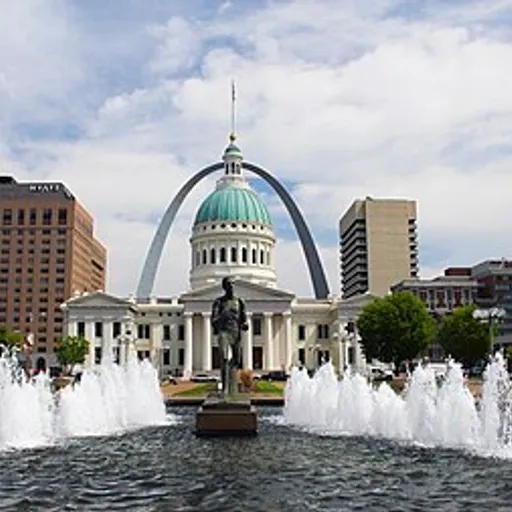
St. Louis
Once the fourth-largest city in America and the literal Gateway to the West, St. Louis rode the Mississippi River and westward expansion to Gilded Age prominence, hosting the 1904 World's Fair as its high-water mark. Decades of population loss and deindustrialization since have shrunk its national profile dramatically, even as Anheuser-Busch, Cardinals baseball, and the Arch keep its identity intact. It's the city that reminds you rankings can fall as hard as they rise.
Metro pop.: 2,800,000Median home: $250,000Sunny days: 202
added by IJRin 7 rankings
0
San Diego
Perfect weather, a massive naval presence, and a booming biotech corridor turned San Diego into a laid-back but genuinely powerful metro, home to more Nobel laureates in research institutions than almost any comparable city. It's often overshadowed by LA to the north, but it built its own identity around craft beer, surf culture, and defense spending. Border-adjacent to Tijuana, it's also a binational economic zone few American cities can claim.
Metro pop.: 3,300,000Median home: $900,000Sunny days: 266
added by IJRin 5 rankings
-2
Keep ranking
Comments
Free account · your comment posts right after signup