Greatest Ancient Civilizations
From the pyramids of Giza to the temples of Angkor, ancient civilizations shaped the world we live in today through their innovations in writing, law, architecture, and philosophy. Debating which civilization stands above the rest reveals as much about our own values as it does about history itself. Cast your vote and help decide which ancient culture deserves the title of greatest of all time!
What counts: Ranking reflects a blend of longevity, territorial reach, and lasting cultural/technological influence on later civilizations. Dates, populations, and territory sizes are approximate and drawn from rough historical/archaeological estimates; scholarly figures vary widely.
Three thousand years of pharaohs, pyramids, and a Nile-fed bureaucracy so stable it makes modern nations look flighty — the Great Pyramid of Giza was already 2,000 years old when Cleopatra was born. Egypt gave the world monumental architecture, a 365-day calendar, and hieroglyphic writing that still hypnotizes tourists and scholars alike. Its sheer continuity of identity across dynasties earns it a permanent top tier: this wasn't one civilization but a relay race of them, all running under the same banner.
Approximate Era: c. 3100–30 BCEPeak Territory: ~1,000,000Approx. Duration: ~3,000 yearsLasting Influence: 9.5/10Innovation Level: 8.5/10
added by IJRAncient Egypt
0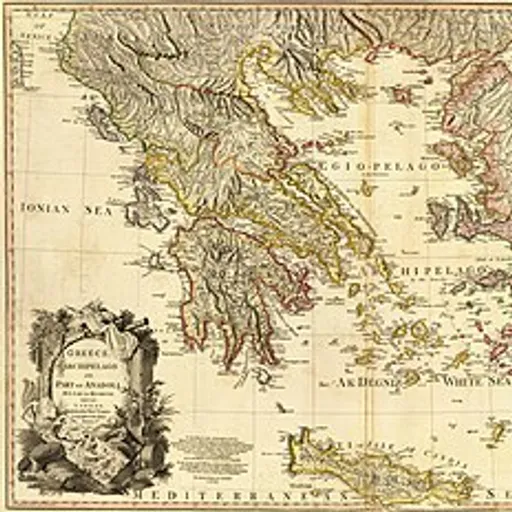
Ancient Greece
A scatter of feuding city-states somehow invented democracy, theater, and Western philosophy, then had the audacity to also produce Alexander the Great, who dragged Hellenism to India. Athens gave us Socrates asking annoying questions and Euclid drawing perfect shapes, laying intellectual foundations that Rome, the Renaissance, and every philosophy 101 class still borrow from. Small population, outsized legacy — Greece punches so far above its weight it nearly breaks the scale.
Approximate Era: c. 800–146 BCEPeak Territory: ~2,000,000 (Alexander's empire)Approx. Duration: ~650 yearsLasting Influence: 9.8/10Innovation Level: 9.2/10
added by IJR
0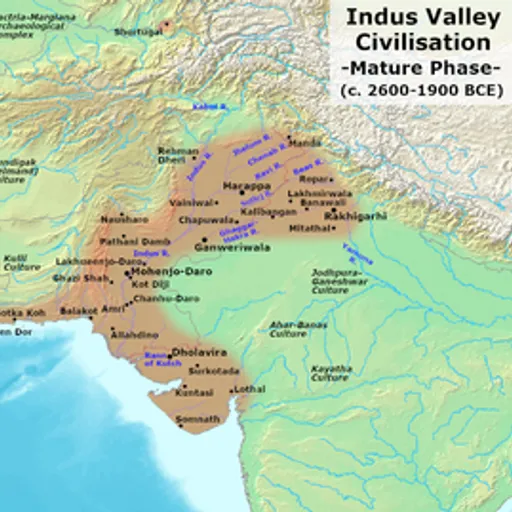
Indus Valley Civilization
Mohenjo-daro had flush toilets and grid-planned streets while much of the world was still figuring out permanent housing, yet its script remains stubbornly undeciphered, keeping this Bronze Age superpower shrouded in mystery. Spanning a footprint larger than ancient Egypt and Mesopotamia combined, it ran on trade and standardized weights rather than kings and monuments we can name. It ranks high for sheer scale and engineering savvy, docked slightly because history still can't hear its voice.
Approximate Era: c. 3300–1300 BCEPeak Territory: ~1,250,000Approx. Duration: ~2,000 yearsLasting Influence: 7.5/10Innovation Level: 8.5/10
added by IJR
0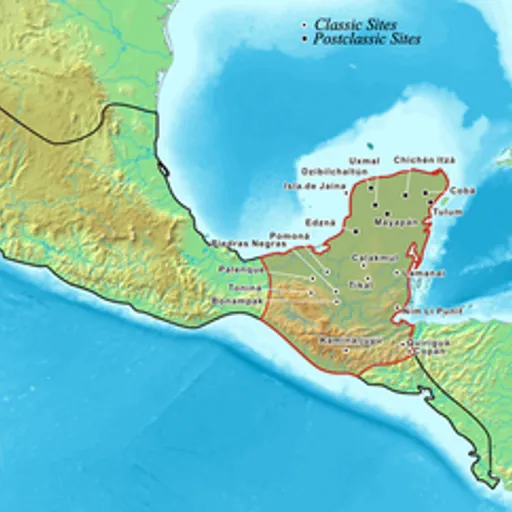
The Maya tracked Venus's orbit with terrifying precision, built stepped pyramids in the jungle, and invented one of only a handful of fully original writing systems on Earth — all while running rival city-states that never unified into one empire. Their calendar math anticipated the concept of zero independently, and their collapse still fuels doomsday theories about the year 2012. Brilliant, self-taught, and mysterious, they prove empire size isn't the only path to greatness.
Approximate Era: c. 2000 BCE–1500 CEPeak Territory: ~325,000Approx. Duration: ~3,000 yearsLasting Influence: 7.8/10Innovation Level: 8.3/10
added by IJRMaya civilization
0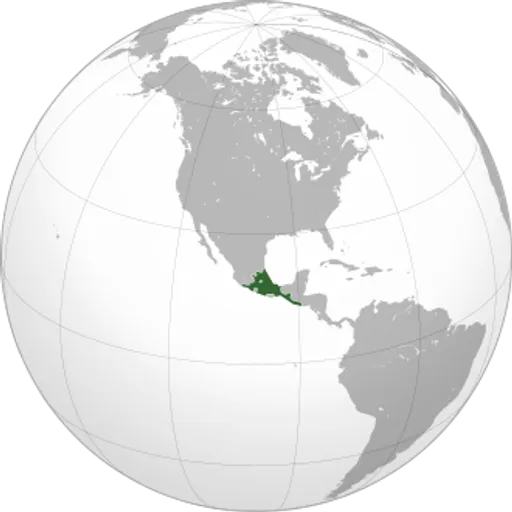
Tenochtitlan rose from a swamp to become a lake-bound metropolis of causeways and floating gardens (chinampas) that stunned the conquistadors who called it more beautiful than any city in Spain. The Aztecs ran a tribute empire held together by fear, ritual, and one of history's most elaborate calendar and cosmological systems, extracting wealth from subject peoples with terrifying efficiency. Their empire was young — barely two centuries old at contact — but its scale and audacity earn its spot before Cortés burned it to the waterline.
Approximate Era: 1300–1521 CEPeak Territory: ~220,000Approx. Duration: ~200 yearsLasting Influence: 7.2/10Innovation Level: 7.5/10
added by IJRin 2 rankingsAztec Empire
0
Without the wheel, iron tools, or a written language, the Inca built a 25,000-mile road network and stitched together the largest empire the pre-Columbian Americas ever saw, from Ecuador to Chile, in under a century. Machu Picchu's dry-stone masonry fits so precisely you can't slip a knife between the blocks — a feat of engineering that still baffles modern builders. Fast rise, brutal Spanish conquest, and an administrative genius (the quipu record-keeping system) that ran an empire by knots alone.
Approximate Era: 1438–1533 CEPeak Territory: ~2,000,000Approx. Duration: ~100 yearsLasting Influence: 7.3/10Innovation Level: 7.8/10
added by IJRin 2 rankingsInca Empire
0Persian Empire (Achaemenid)
Cyrus the Great conquered a chunk of the known world and then did something radical for the era: let conquered peoples keep their gods, laws, and customs, inventing a template for multicultural empire that Rome later copied. The Royal Road and a professional postal relay system moved messages faster than anything before the telegraph, binding together a realm stretching from Egypt to India. Persia's tolerant, administratively brilliant model of empire deserves more credit than the Greek-centric history books usually give it.
Approximate Era: 550–330 BCEPeak Territory: ~5,500,000Approx. Duration: ~220 yearsLasting Influence: 8.7/10Innovation Level: 8/10
added by IJR
0Ancient India (Maurya/Gupta)
Ashoka the Great conquered half a subcontinent through bloody war, then had a change of heart so total he carved edicts of nonviolence and Buddhist compassion into stone pillars across his empire. The later Gupta period gave the world the concept of zero, the decimal system, and advances in astronomy and medicine that traveled west via Arab scholars centuries later. Between Mauryan scale and Gupta's intellectual golden age, ancient India quietly rewired mathematics for the entire planet.
Approximate Era: c. 322 BCE–550 CEPeak Territory: ~5,000,000 (Maurya)Approx. Duration: ~900 yearsLasting Influence: 8.8/10Innovation Level: 8.7/10
added by IJR
0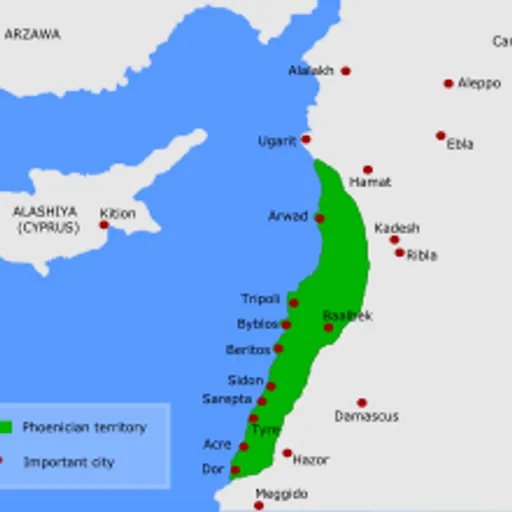
Phoenicia
The Phoenicians never built an empire in the traditional sense — they built an alphabet, and that alphabet became the ancestor of Greek, Latin, and eventually every letter you're reading right now. Sailing out of coastal city-states like Tyre and Sidon, they seeded Mediterranean trading colonies from Carthage to Cadiz, spreading purple dye, glassmaking, and literacy itself. Small in territory, massive in consequence — civilization's unsung scribes.
Approximate Era: c. 1500–300 BCEPeak Territory: ~50,000 (homeland)Approx. Duration: ~1,200 yearsLasting Influence: 8/10Innovation Level: 8.2/10
added by IJR
0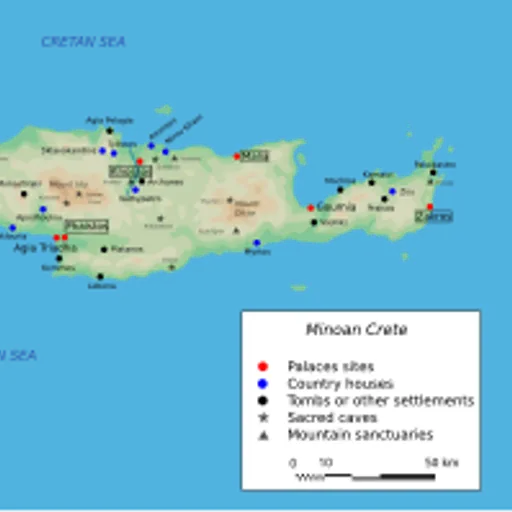
Crete's Bronze Age palace-builders at Knossos left behind vivid frescoes of bull-leaping athletes and dolphins, a labyrinthine palace complex that likely inspired the Greek myth of the Minotaur, and a script (Linear A) still not fully cracked. They ran a sophisticated maritime trade network without heavy fortifications, suggesting either naval dominance or unusual peace — until a massive volcanic eruption and later invasions snuffed them out. The Minoans are Europe's first great civilization, a direct ancestor to Mycenaean and later Greek culture.
Approximate Era: c. 3000–1100 BCEPeak Territory: ~30,000 (Crete)Approx. Duration: ~1,900 yearsLasting Influence: 6.5/10Innovation Level: 7.2/10
added by IJRMinoan civilization
0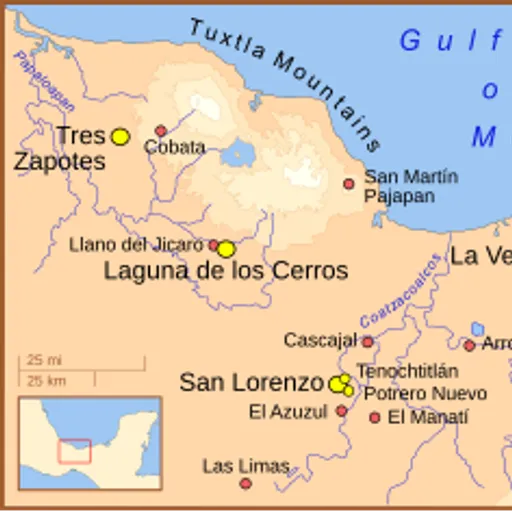
Olmec Civilization
Someone carved multi-ton basalt boulders into colossal human heads and dragged them for miles through the jungles of Mexico with no wheels and no draft animals — that's the Olmec calling card, and it's why historians call them Mesoamerica's 'mother culture.' They likely originated the Mesoamerican ballgame, early writing systems, and the calendar concepts that the Maya and Aztec later perfected. Ancient, foundational, and criminally underrated, they're the root system beneath civilizations that get all the glory.
Approximate Era: c. 1200–400 BCEPeak Territory: ~150,000Approx. Duration: ~800 yearsLasting Influence: 6.5/10Innovation Level: 7/10
added by IJR
0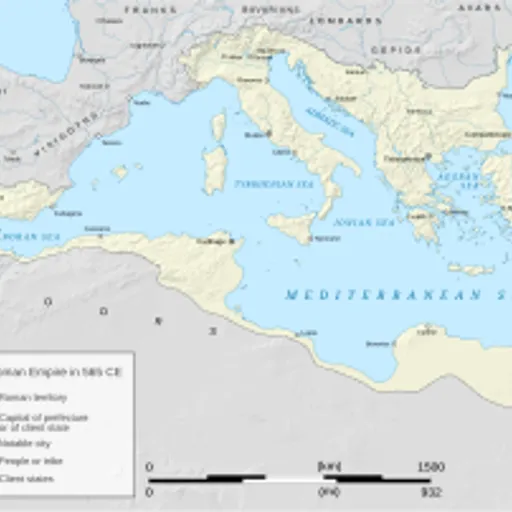
While Rome crumbled in the west, Constantinople kept the empire alive for another thousand years, codifying Roman law under Justinian and preserving Greek philosophy through the medieval dark ages until it could reignite the Renaissance. Its walls held off invaders for centuries, its churches (Hagia Sophia) redefined architecture, and its scribes literally saved the ancient world's texts from oblivion. Byzantium is the great bridge civilization — Rome's afterlife and the Renaissance's secret midwife.
Approximate Era: 330–1453 CEPeak Territory: ~3,500,000Approx. Duration: ~1,100 yearsLasting Influence: 8.3/10Innovation Level: 7.5/10
added by IJRin 3 rankingsByzantine Empire
0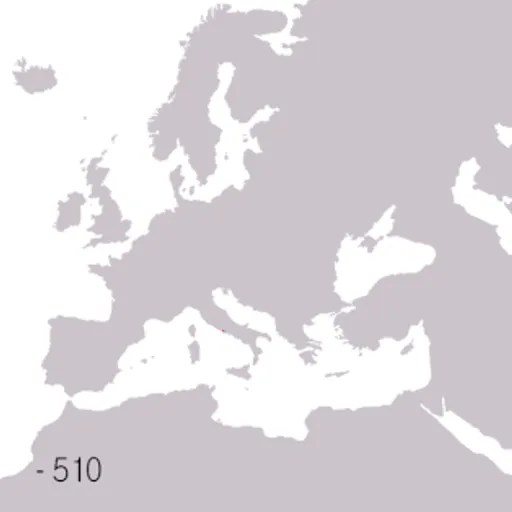
Ancient Rome
From a village of shepherds to an empire spanning three continents, Rome gave the world concrete, aqueducts, codified law, and roads so well-built that some are still driven on today. It absorbed Greek philosophy, Etruscan engineering, and conquered cultures wholesale, then exported its language, legal systems, and republican ideals so thoroughly that half the modern world's governments still echo its DNA. Few civilizations changed the shape of the future as completely — Rome doesn't just rank high, it set the rubric everyone else gets measured against.
Approximate Era: 753 BCE–476 CE (West)Peak Territory: ~5,000,000Approx. Duration: ~1,200 yearsLasting Influence: 10/10Innovation Level: 9/10
added by IJR
0Mesopotamia (Sumer/Akkad/Babylon/Assyria)
This is where it all started: the wheel, writing (cuneiform), the first cities, the first law code (Hammurabi's), and the first epic literature (Gilgamesh) all emerged from the land between the Tigris and Euphrates. Sumerian ziggurats, Akkadian empire-building, Babylonian astronomy, and Assyrian military machines each took turns dominating the cradle of civilization for over 3,000 years. Everything on this list owes Mesopotamia a debt — it's not just a great civilization, it's civilization's opening chapter.
Approximate Era: c. 4500–539 BCEPeak Territory: ~1,500,000Approx. Duration: ~4,000 yearsLasting Influence: 9.7/10Innovation Level: 9.5/10
added by IJR
0Ancient China (Han/Qin/Zhou)
The Qin's brutal First Emperor unified warring states, standardized writing and currency, and built the first Great Wall segments — then the Han dynasty took that framework and ran it for four centuries, inventing paper, advancing the Silk Road, and creating a bureaucratic meritocracy centuries ahead of its time. Chinese civilization's genius was continuity: dynasties changed, but the written language, Confucian administrative philosophy, and imperial identity persisted almost unbroken into the modern era. Few civilizations combined this much territorial scale with this much cultural staying p
Approximate Era: c. 2070 BCE–220 CEPeak Territory: ~6,500,000 (Han)Approx. Duration: ~2,300 yearsLasting Influence: 9.5/10Innovation Level: 9.3/10
added by IJR
0Ancient Israel (Kingdoms of Israel and Judah)
A small, geopolitically squeezed kingdom produced the Hebrew Bible, monotheism as a durable world-historical idea, and a body of law and ethics that would shape Christianity, Islam, and Judaism — three faiths now claimed by billions. Militarily and territorially modest compared to its Egyptian and Mesopotamian neighbors, its influence on moral and religious thought vastly outstrips its size. This is the ultimate proof that cultural impact, not territorial reach, can carve out a permanent seat at history's table.
Approximate Era: c. 1200–586 BCEPeak Territory: ~30,000Approx. Duration: ~600 yearsLasting Influence: 8.5/10Innovation Level: 6.5/10
added by IJR
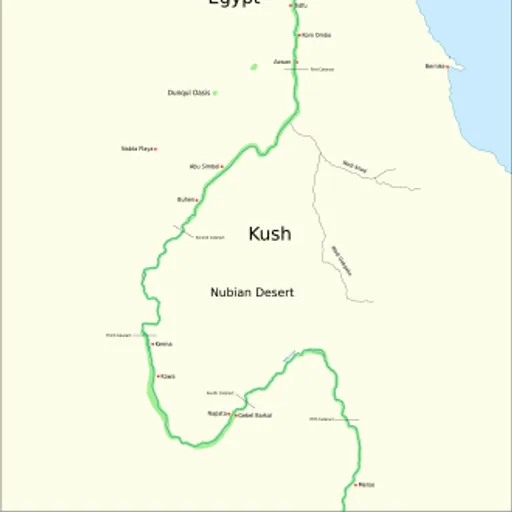
0Ancient Nubia (Kush)
The Kushite kings didn't just trade with Egypt — they conquered it, ruling as Egypt's 25th Dynasty and building more pyramids in Sudan than Egypt itself ever built, over 200 of them at sites like Meroë. Nubia controlled the gold and ivory trade routes that made Egyptian wealth possible in the first place, and developed its own script (Meroitic) still only partially deciphered. Long overshadowed by its northern neighbor, Kush deserves recognition as an African superpower that ruled the Nile for centuries in its own right.
Approximate Era: c. 2000 BCE–350 CEPeak Territory: ~1,000,000Approx. Duration: ~2,300 yearsLasting Influence: 6.8/10Innovation Level: 6.7/10
added by IJR
0Ancient Japan (Yamato period)
The Yamato court consolidated a patchwork of clans into Japan's first unified imperial state, established a lineage of emperors claimed to be unbroken to this day, and imported Buddhism and Chinese writing while quietly reshaping both into something distinctly Japanese. Great tomb mounds (kofun) as large as small mountains testify to the era's ambition, even before Nara and Heian took the culture further. It's a smaller, later entry on this list, but the foundational moment for a civilization that would go on to punch well above its geographic weight.
Approximate Era: c. 250–710 CEPeak Territory: ~370,000Approx. Duration: ~460 yearsLasting Influence: 6.5/10Innovation Level: 6.5/10
added by IJR
0
Keep ranking
Comments
Free account · your comment posts right after signup