Greatest maps and voyages
From ancient portolan charts to daring circumnavigations, maps and voyages have expanded the boundaries of human knowledge and redrawn our understanding of the world. These journeys and the documents that guided them reveal courage, curiosity, and the relentless drive to explore the unknown. Which map or voyage do you consider the greatest of all? Cast your vote and help settle the debate.
What counts: Seeded with approximate figures where shown — the crowd's votes decide the order.
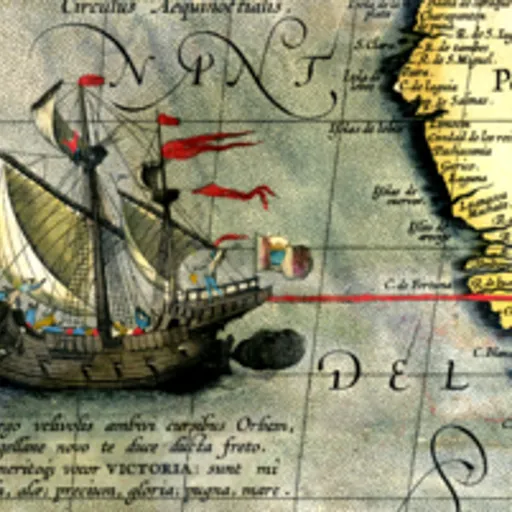
Magellan's circumnavigation▲ Rising
He set out to find a westward spice route and instead proved, with his own blood on the sand at Mactan, that the Earth could be circled. Of the five ships and roughly 270 men who left Spain in 1519, only one battered vessel and 18 survivors limped home in 1522 — but they'd done what no expedition had: sailed around the entire planet. It's the ultimate proof-of-concept voyage, the moment abstract cosmography became lived, brutal fact.
Era: 1519–22
added by IJRin 2 rankings
42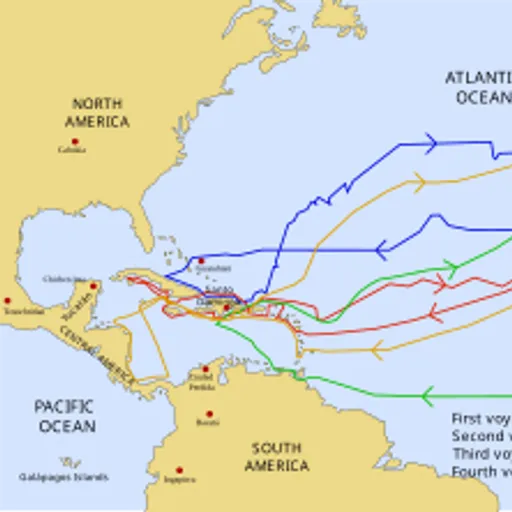
Columbus's first voyage▲ Rising
Three small ships, a wildly wrong estimate of the Earth's circumference, and a landfall in the Bahamas that the admiral insisted to his dying day was Asia — few accidents have reshaped history so violently. It didn't discover a 'new world' so much as detonate one, triggering the Columbian Exchange, the Atlantic slave trade, and centuries of conquest. Its place here is undeniable and uncomfortable in equal measure: no voyage changed more, for better and catastrophically for worse.
Era: 1492
added by IJRin 2 rankings
38Cook's Pacific voyages▲ Rising
Across three expeditions from 1768 to his death in Hawaii in 1779, Cook mapped New Zealand's coastline, charted eastern Australia, and pushed into the Antarctic Circle, turning the Pacific from cartographic blank space into a known ocean. He carried astronomers to track Venus, botanists to catalog new worlds, and chronometers precise enough to finally nail down longitude at sea. His charts remained the gold standard for generations — meticulous, scientific exploration replacing swashbuckling guesswork.
Era: 1768–79
added by IJR
16Darwin's Beagle voyage
A seasick 22-year-old naturalist boarded a survey ship in 1831 expecting a gentleman's diversion and returned five years later having quietly assembled the evidence for evolution by natural selection. The Galápagos finches and mockingbirds were just one stop in a voyage that circled the globe collecting fossils, specimens, and observations that took Darwin two decades to detonate into 'On the Origin of Species.' It's the voyage that mapped not coastlines but the tree of life itself.
Era: 1831–36
added by IJR
7Zheng He's treasure fleets▲ Rising
Between 1405 and 1433, Ming admiral Zheng He led fleets of hundreds of ships — some nine-masted treasure junks dwarfing anything Europe would build for a century — as far as East Africa, projecting Chinese power and collecting tribute from dozens of kingdoms. Then the Ming court, turning inward, burned the records and let the fleet rot, one of history's great what-ifs. It belongs here as proof that the age of oceanic empire could have begun in China, decades before Europe even dreamed it.
Era: 1400s
added by IJR
6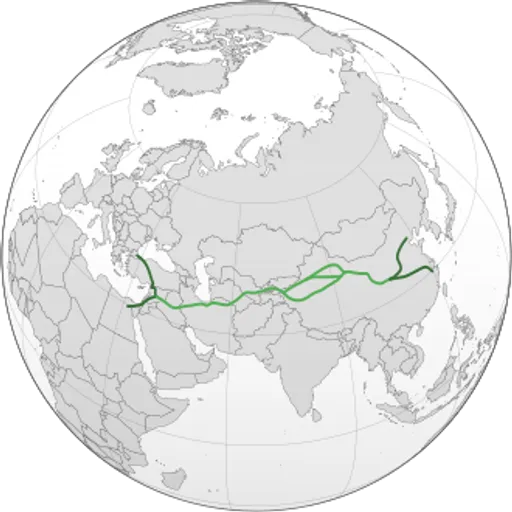
The Silk Road
Not one voyage but a two-thousand-year braid of camel caravans, oasis towns, and middlemen stretching from Chang'an to Rome, moving silk and spices alongside Buddhism, gunpowder, and the plague. Marco Polo's account of traveling it in the 13th century became Europe's window onto Asia, inspiring the very age of exploration that eventually made sea routes obsolete. No single hero, no single ship — just the greatest sustained exchange network in human history, earning its spot by sheer civilizational weight.
Era: Ancient
added by IJR
2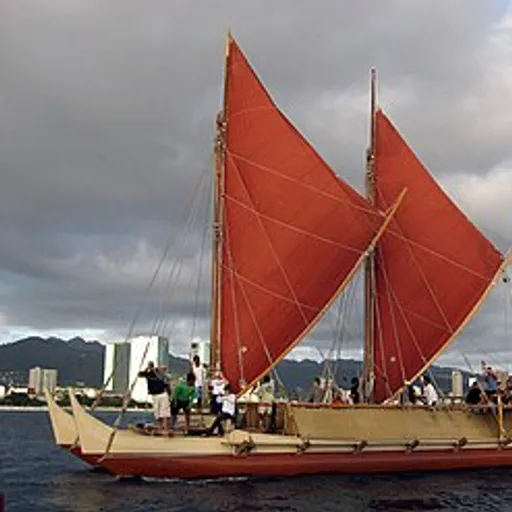
Polynesian wayfinding
With no compass, no sextant, no writing, Polynesian navigators read stars, swells, and bird flight to settle an ocean third the size of Earth's surface, reaching Hawaii, Rapa Nui, and New Zealand centuries before European ships dared open water. Double-hulled canoes carried entire ecosystems — pigs, taro, breadfruit — across thousands of miles of empty Pacific with pinpoint intention, not luck. It's arguably the single greatest feat of navigation in human history, and it's earned its overdue place at the top of any honest list.
Era: Ancient
added by IJR
-3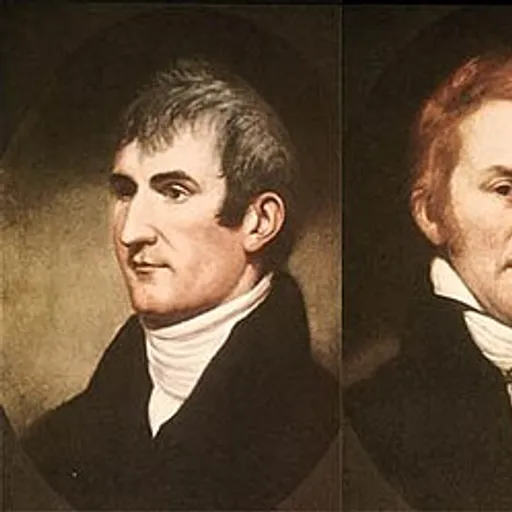
Lewis and Clark▼ Falling
Jefferson sent two men and the Corps of Discovery west in 1804 to find a water route to the Pacific that didn't exist, and they returned two years later having crossed the Rockies, befriended and depended on Sacagawea's diplomacy, and mapped a continent's interior for the first time. They didn't find the Northwest Passage, but they filled in a blank map with rivers, tribes, and a grizzly-bear body count, setting the template for American westward expansion. It's the voyage that turned a young nation's imagination continental.
Era: 1804–06
added by IJRin 2 rankings
-24
Keep ranking
Comments (8)
Free account · your comment posts right after signup
Exactly the kind of argument the internet was built for.
The crowd is sleeping on the bottom half of this list.
This order is closer to right than any editor would've gotten.
Voted — and the gap between #1 and #2 should be bigger.