Most audacious scientific experiments
From splitting the atom to probing the edges of the cosmos, science has always advanced through bold, sometimes reckless leaps into the unknown. These experiments pushed ethical boundaries, risked catastrophe, or simply dared to ask 'what if?' on a scale few thought possible. Which one deserves the title of most audacious? Cast your vote and help settle the debate.
What counts: Seeded with approximate figures where shown — the crowd's votes decide the order.
Eddington's eclipse test▲ Rising
In 1919, Arthur Eddington dragged telescopes to a tiny island off West Africa and photographed starlight bending around the eclipsed sun, betting an entire cosmology on a few smudges on glass plates. The measurements matched Einstein's general relativity almost exactly, instantly making the German physicist world-famous and overturning Newton's universe in a single afternoon. Audacious because a war-weary scientist used a four-minute shadow to rewrite the laws of gravity itself.
Era: 1919
added by IJR
89Franklin's kite▲ Rising
Benjamin Franklin allegedly flew a kite into a thunderstorm in 1752, tying a key to the string and daring lightning to prove his theory that it was simply electricity. He didn't get fried, but plenty of imitators did, which is exactly why this stunt earns its spot: it's the archetype of the scientist risking his own hide for a hypothesis. Whether or not it happened exactly as legend says, it cemented the idea that nature's most terrifying forces could be tamed by curiosity and a metal key.
Era: 1752
added by IJR
54Curie's radium work▲ Rising
Marie Curie spent years hand-stirring tons of pitchblende in a leaky shed, isolating radium and polonium while glowing vials sat unshielded on her desk and in her pockets. She won two Nobel Prizes for it and eventually died of the very radiation exposure she'd spent her life chasing, her notebooks still too hot to touch a century later. Few experiments have cost their author so literally, making this one of science's most heroic and haunting bets on discovery.
Era: 1900s
added by IJR
36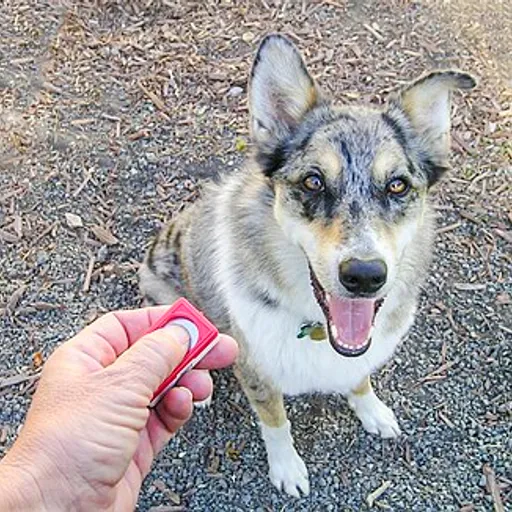
Pavlov's dogs▲ Rising
Ivan Pavlov noticed his dogs drooling at the mere sound of a bell that predicted dinner, and turned an offhand observation into decades of rigorous conditioning experiments that founded behavioral psychology. The ringing bell became shorthand for the discovery that even involuntary biology can be rewired by association, reshaping everything from advertising to therapy. It's audacious not for danger but for scale: an entire field of the mind built on saliva and a metronome.
Era: 1900s
added by IJR
27The LHC
Underneath the Swiss-French border, physicists built a 17-mile ring to smash protons together at nearly light speed, chasing a particle predicted decades earlier on paper alone. In 2012 they found the Higgs boson, confirming the mechanism that gives all matter mass and validating the loose thread that had held the Standard Model together on faith. At a cost north of $10 billion and the energy of a small nation, it's the largest and most expensive single experiment humanity has ever run — audacity measured in tunnels and terawatts.
Era: 2008
added by IJR
5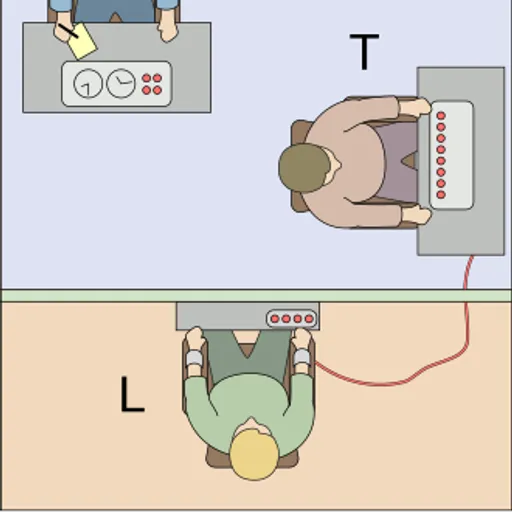
Milgram experiment▼ Falling
In 1961, Stanley Milgram told ordinary volunteers to deliver what they believed were painful, even lethal electric shocks to a stranger simply because a man in a lab coat told them to — and 65% obeyed all the way to the end. The 'victim' was an actor and no one was actually shocked, but the results were so disturbing about human obedience that they reshaped research ethics forever. It makes this list not for physical danger but for what it revealed: how thin the line is between ordinary people and atrocity.
Era: 1961
added by IJR
-8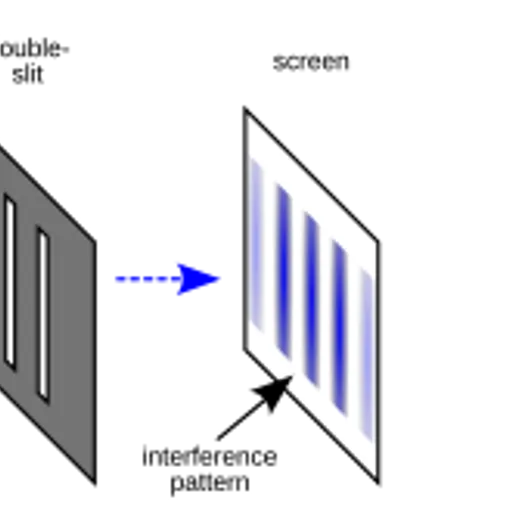
Double-slit experiment▼ Falling
Thomas Young first split light through two slits in 1801 and got an interference pattern that shouldn't exist if light were simply particles, but the real gut-punch came later when physicists fired single electrons through the same slits one at a time and still got wave interference. Reality itself seemed to depend on whether anyone was watching, launching a century of arguments about observers, probability, and what 'real' even means. No experiment has done more damage to common sense while doing more to build modern quantum technology.
Era: 1801
added by IJR
-32
Trinity test▼ Falling
At 5:29 a.m. on July 16, 1945, in the New Mexico desert, Robert Oppenheimer's team detonated the first nuclear weapon, uncertain whether the chain reaction might ignite the atmosphere itself and some scientists placed side bets on the odds. It worked, vaporizing the test tower and turning sand to glass, and three weeks later the same physics leveled two cities. It's the single experiment that most literally gambled with the future of the species — and won, terribly.
Era: 1945
added by IJR
-68
Keep ranking
Comments (7)
Free account · your comment posts right after signup
The crowd is sleeping on the bottom half of this list.
Exactly the kind of argument the internet was built for.
Voted — and the gap between #1 and #2 should be bigger.