
Greatest scientific discoveries
Throughout history, a handful of scientific breakthroughs have completely transformed our understanding of the universe and reshaped the course of civilization. From unlocking the secrets of the atom to decoding the blueprint of life itself, these discoveries continue to influence medicine, technology, and how we see our place in the cosmos. Which discovery do you believe stands above the rest? Cast your vote and make your voice heard!
What counts: Seeded with approximate figures where shown — the crowd's votes decide the order.
Newton, watching an apple fall (or so the legend insists), realized the same force tugging fruit to earth also holds the moon in orbit — one law governing heaven and earth alike. It gave humanity the mathematics to predict tides, launch satellites, and land on the moon centuries later. Few ideas have ever unified so much of the visible universe with a single elegant equation.
Era: 1687
added by Yourlist Editorialin 3 rankingsgravity
60When Pasteur and Koch proved that invisible microbes — not bad air or moral failing — caused disease, they turned medicine from superstition into science overnight. Handwashing, sterilization, and vaccines followed directly from this insight, saving more lives than perhaps any other discovery in history. It's the reason surgery stopped being a coin-flip with death.
Era: 1860s
added by Yourlist Editorialin 2 rankingsgerm theory of disease
34Evolution by natural selection
Darwin spent decades staring at finches, barnacles, and pigeons before he dared publish the idea that species aren't fixed but slowly reshaped by survival and reproduction. It replaced divine design with a mechanism anyone could test, and it quietly rewired biology, medicine, and even how we see ourselves as animals among animals. Every antibiotic-resistant bacterium is proof the theory still works exactly as advertised.
Era: 1859
added by Yourlist Editorial
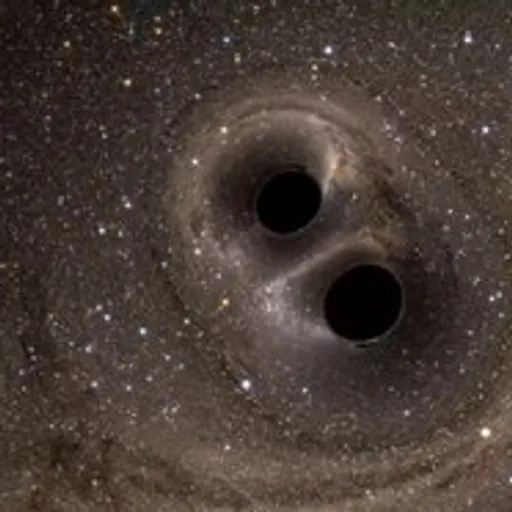
29Einstein reimagined gravity not as a force but as spacetime itself bending around mass, a claim so radical it was confirmed by starlight bending during a 1919 eclipse. It predicted black holes, gravitational waves, and the GPS satellite corrections we rely on daily without ever thinking about them. It's the moment physics stopped being intuitive and became sublime.
Era: 1915
added by Yourlist Editorialgeneral relativity
14DNA's double helix
Watson, Crick, and the X-ray images from Franklin revealed in 1953 that life's instructions are written in a twisting ladder of four simple letters. That single spiral cracked open genetics, forensics, biotech, and the entire human genome project decades later. Nothing else so cleanly reduced the mystery of heredity to a legible code.
Era: 1953
added by Yourlist Editorial
-3The heliocentric model
Copernicus dared to put the sun, not humanity, at the center of the cosmos, and Galileo's telescope later gave the idea teeth by revealing moons orbiting Jupiter. It cost Galileo his freedom but permanently dethroned Earth from the center of creation, launching the scientific revolution itself. Every subsequent leap in astronomy stands on this first act of cosmic humility.
Era: 1543
added by Yourlist Editorial
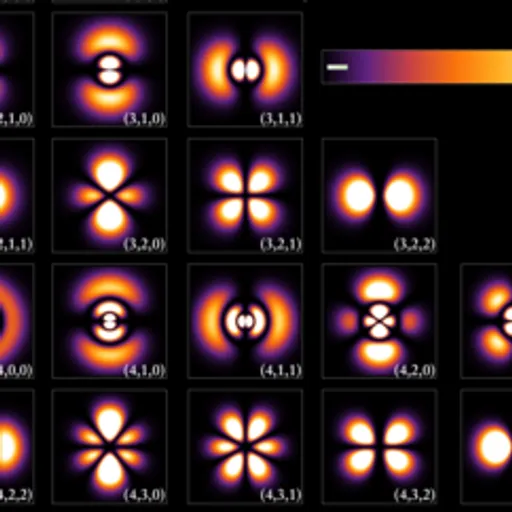
-9Planck, Bohr, Heisenberg, and Schrödinger discovered that at the smallest scales, reality dissolves into probabilities, particles behave like waves, and observation itself changes outcomes. It's bizarre, unintuitive, and yet it powers every transistor, laser, and MRI machine in existence. No theory has ever been so successfully weird.
Era: 1920s
added by Yourlist Editorialquantum mechanics
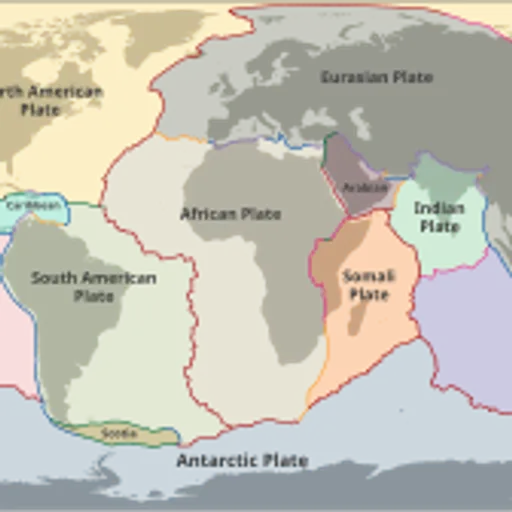
-27Wegener was mocked for suggesting continents drift like puzzle pieces, until decades later seafloor spreading and magnetic striping vindicated him completely. The theory finally explained earthquakes, volcanoes, mountain ranges, and why fossils match up across oceans — the whole planet's surface as one slow, churning machine. It turned geology from a catalog of rocks into a story of a living, moving Earth.
Era: 1960s
added by Yourlist Editorialplate tectonics
-46