Most influential economists ever
From the invisible hand to the animal spirits of markets, a handful of economists have fundamentally reshaped how nations govern trade, money, and prosperity. Their theories have sparked revolutions, guided central banks, and ignited fierce debates that still divide policymakers today. Who do you think left the deepest mark on economic thought — cast your vote and see how others rank the field's greatest minds.
What counts: Seeded with approximate figures where shown — the crowd's votes decide the order.
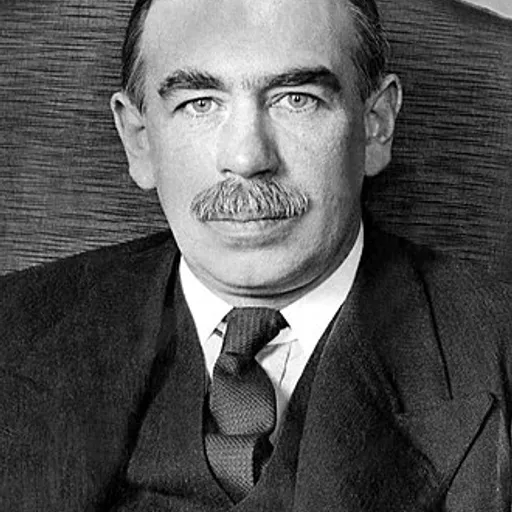
John Maynard Keynes▲ Rising
When the Great Depression made classical economics look like a cruel joke, Keynes rewrote the rules in 1936 with 'The General Theory,' arguing that governments could and should spend their way out of slumps rather than wait for markets to self-correct. His ideas built the postwar welfare state, justified central bank activism, and gave every recession-fighting finance minister since a playbook to reach for. Love him or blame him for inflation, Keynes made the state a permanent character in the economic story.
Era: 1900s
added by IJRJohn Maynard Keynes
90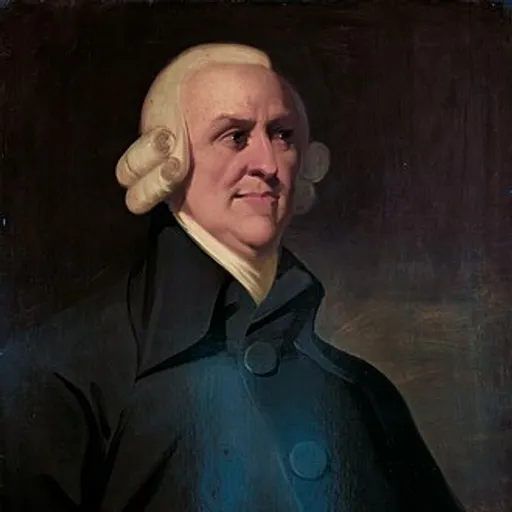
Adam Smith▲ Rising
In 1776, while colonies revolted and empires wobbled, a rumpled Scottish moralist published 'The Wealth of Nations' and quietly invented the intellectual case for markets as self-organizing systems. The 'invisible hand' became the most durable metaphor in social science, turning selfishness into a coordinating force and giving capitalism its founding scripture. Every economist since has been arguing with, refining, or rediscovering Smith — which is exactly why he sits at number one.
Era: 1700s
added by IJRin 2 rankings
76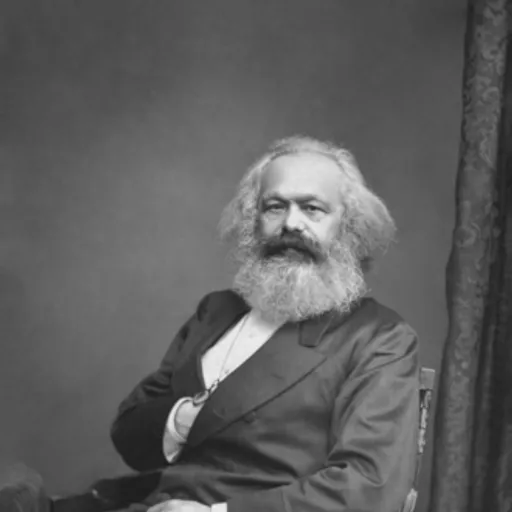
Karl Marx▲ Rising
Marx spent decades in the British Library dissecting capitalism's contradictions in 'Das Kapital,' predicting it would devour itself through exploitation and crisis — and then handed the world a blueprint for revolution that toppled empires and redrew the 20th century map. Whether you read him as prophet or cautionary tale, his critique of labor, capital, and class forced every subsequent economist to reckon with power, not just prices. No single thinker's ideas have moved more armies, built more walls, or haunted more boardrooms.
Era: 1800s
added by IJRin 3 rankings
33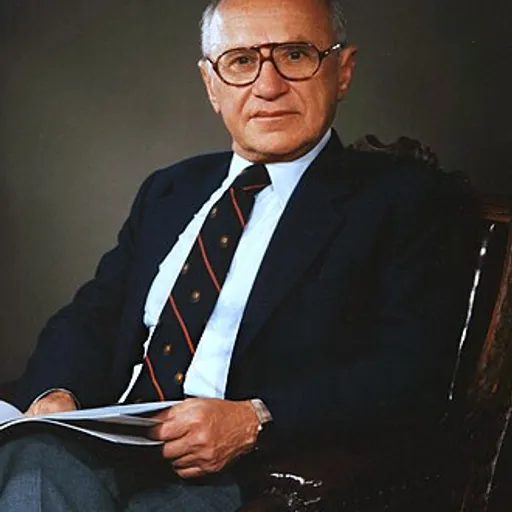
Milton Friedman▲ Rising
Friedman spent the mid-20th century as the loudest voice arguing that inflation was 'always and everywhere a monetary phenomenon,' and by the 1980s his monetarism had captured Volcker's Fed and Reagan's and Thatcher's governments alike. His 'Free to Choose' PBS series turned dry economics into populist television, selling deregulation and free markets to a generation raised on Keynesian consensus. He didn't just win academic arguments — he rewired the ideological default settings of Western governments for forty years.
Era: 1900s
added by IJRMilton Friedman
29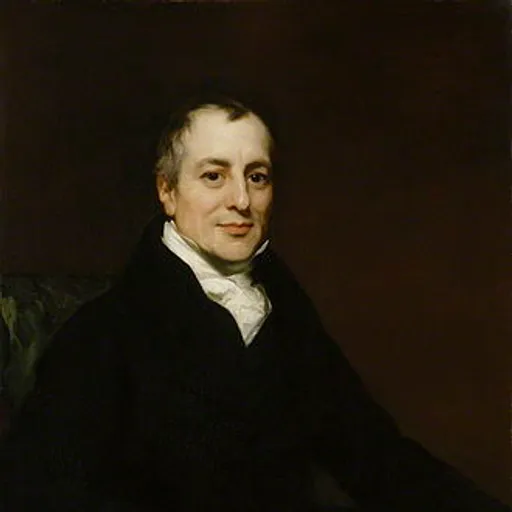
David Ricardo▲ Rising
A stockbroker turned theorist, Ricardo formalized comparative advantage in 1817, proving mathematically that nations should specialize even when one is better at everything — the single idea that underwrites virtually every free-trade argument made since. He also built the analytical toolkit of rents, wages, and profits that turned economics from moral philosophy into rigorous model-building. Every WTO negotiation and NAFTA debate is, deep down, still fighting Ricardo's corner or trying to escape it.
Era: 1800s
added by IJR
18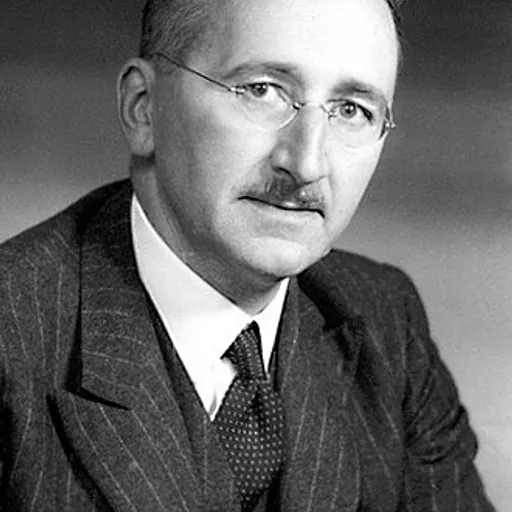
Friedrich Hayek▼ Falling
In 'The Road to Serfdom' (1944), Hayek warned that central planning was a slippery slope to tyranny, an argument that seemed quaint during the Keynesian consensus but roared back to define the Reagan-Thatcher revolution and won him a Nobel in 1974. His deeper insight — that markets aggregate dispersed knowledge no planner could ever centralize — became the intellectual backbone of libertarian economics and a permanent rebuttal to socialist ambition. He lost the argument in his lifetime and won it after his death, which is its own kind of influence.
Era: 1900s
added by IJRFriedrich Hayek
-15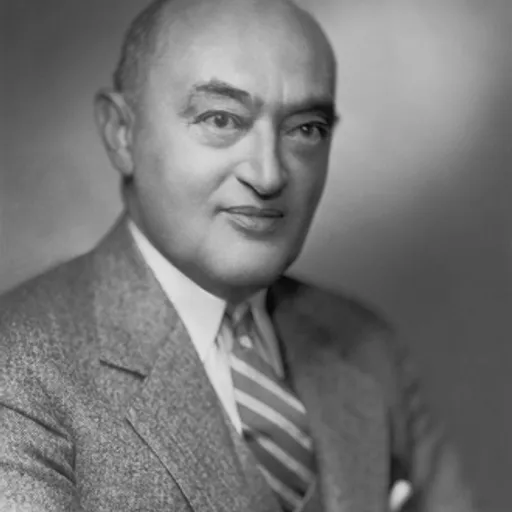
Joseph Schumpeter▼ Falling
Schumpeter coined 'creative destruction' in 1942, reframing capitalism not as an equilibrium machine but as a perpetual storm of entrepreneurs bulldozing old industries to build new ones — an idea that now underpins how Silicon Valley, venture capital, and disruption-obsessed CEOs think about the economy. He also predicted capitalism might collapse from its own success by breeding bureaucrats who resent it, a warning that still nags at defenders of the system. His fingerprints are on every startup pitch deck that promises to 'disrupt' an industry.
Era: 1900s
added by IJRJoseph Schumpeter
-23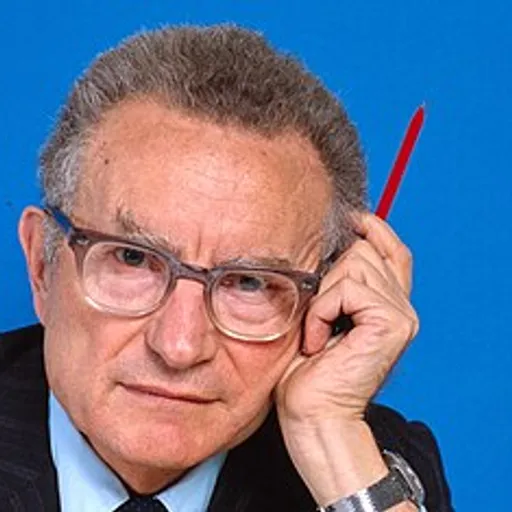
Paul Samuelson▼ Falling
Samuelson's 1948 textbook 'Economics' taught more students their first economic model than any book in history, while his 1947 'Foundations of Economic Analysis' dragged the entire discipline into rigorous mathematics, making equations rather than essays the coin of the realm. He synthesized Keynesian macro with neoclassical micro into the postwar mainstream consensus that dominated policy for decades and won the first American Nobel in economics in 1970. He didn't invent a single big idea so much as build the machine room where modern economics runs.
Era: 1900s
added by IJRPaul Samuelson
-46
Keep ranking
Comments (7)
Free account · your comment posts right after signup
Voted — and the gap between #1 and #2 should be bigger.
- KKira OkaforJul 27, 2026
The crowd is sleeping on the bottom half of this list.
This order is closer to right than any editor would've gotten.
- HHugo KowalskiJul 29, 2026
Exactly the kind of argument the internet was built for.