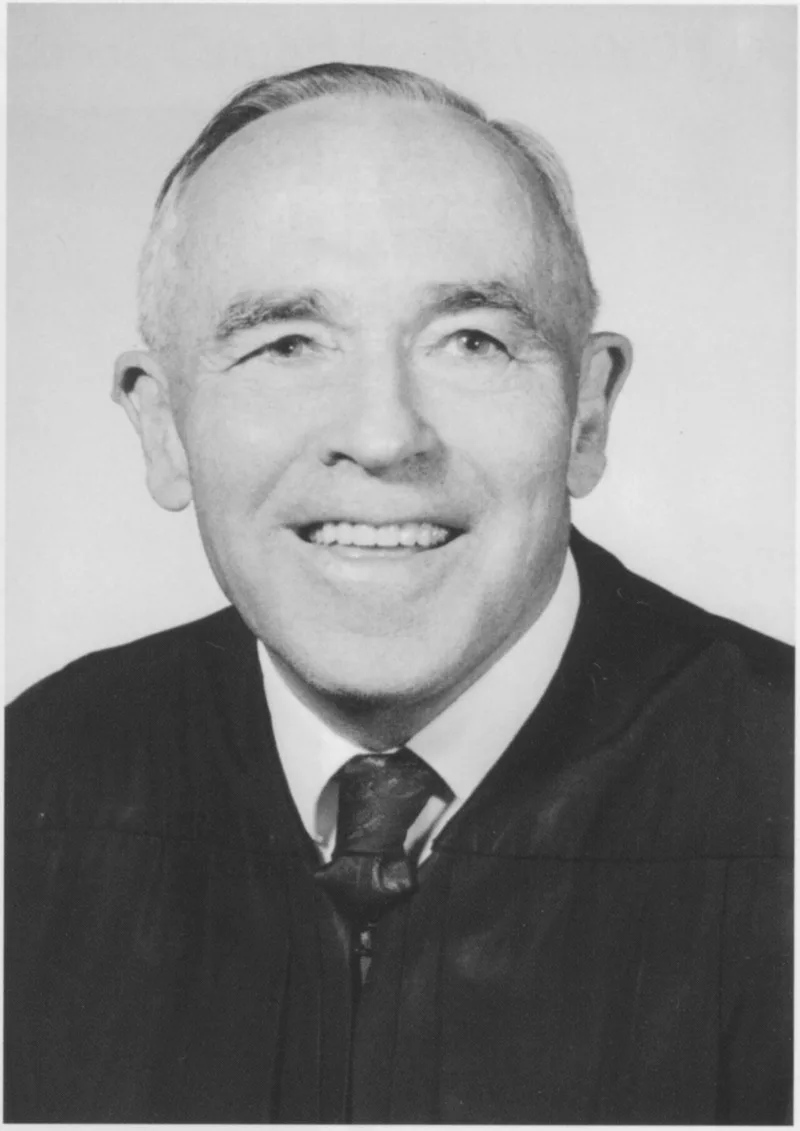
Judicial data via CourtListener (Free Law Project). Social links via Wikidata.
Decision levers
AI-measured from their own opinions — each lever cites its cases
PurposivismTextualism
Opinions apply statutory text strictly, as in holding that filing alone does not commence an action under the Federal Rules without prompt service, that wrongful death requires a living person under Alaska law, and that antitrust fee provisions cover only prevailing plaintiffs. Hukill v. Pacific and Arctic Rai… ↗ MacE v. Jung ↗ Gillam v. A. Shyman, Inc. ↗
Deference to government powerSkepticism of government power
The court defers to government authority by dismissing a Federal Tort Claims Act suit under the discretionary function exception for highway planning decisions. Sisley v. United States ↗
This case involves a patent infringement suit by Laitram Corporation against King Crab, Inc., concerning the use of shrimp peeling machines. The court reconsidered its prior ruling on the defendant's affirmative defense of patent misuse through discriminatory lease rates between different regions. It clarified that patent misuse does not require a violation of antitrust laws like the Sherman Act, as the misuse doctrine prevents courts from enforcing patents used to subvert public policy, even without proving antitrust violations. The court found the discriminatory rates constituted patent misuse, barring enforcement until purged, but confirmed the original judgment denying damages and issuing an injunction.
This case involves a patent infringement suit by Laitram Corporation (successor to Peelers) against King Crab, Inc., seeking an injunction and damages for the defendant's use of Skrmetta shrimp peeling machines that allegedly infringed three patents on shrimp peeling machinery owned by the plaintiff. The court, relying on prior decisions from the Western District of Washington and the Ninth Circuit, determined that the patents were valid and infringed. However, it found that the plaintiff's practice of charging discriminatory rental rates to West Coast lessees compared to Gulf Coast lessees constituted an antitrust violation under the Sherman and Clayton Acts, barring recovery of damages. Because the plaintiff had ceased the discriminatory pricing, the court granted a permanent injunction against the defendant's use of the infringing machines but dismissed the damages claim and awarded no costs or fees to either party.
In Holton v. McFarland, union members sued the long-serving trustees of a Taft-Hartley labor-management health and security trust fund, alleging that the trustees had usurped their positions because they were not elected by employees or union members, in violation of Section 302 of the Labor Management Relations Act and Section 501 of the Labor-Management Reporting and Disclosure Act. The plaintiffs sought to have the trustees removed, new elections ordered, and damages awarded for alleged breaches including jeopardizing the fund's tax status. The court granted the defendants' motion to dismiss the amended complaint with prejudice, holding that the statutes impose no requirement for election of trustees, that the trust agreement properly authorizes appointment by the signatory local unions, that Section 186 requires only equal employer-employee representation without dictating selection methods, and that Section 501 governs officers of labor organizations rather than trust fund trustees.
This case was a wrongful death action brought under Alaska law by the mother, as special administratrix of the estate of her unborn child, against the driver whose car collided with hers, alleging that the collision caused the death of the fetus she was carrying. The fetus was non-viable, at approximately four to four-and-a-half months' gestation, and was delivered stillborn the day after the accident. The federal district court granted the defendant's motion for summary judgment. The court reasoned that, under the Alaska Wrongful Death Act, which requires that the decedent could have sued if alive, no cause of action exists for the death of a non-viable unborn child, following the traditional rule that an unborn child is not a "person" entitled to recovery and noting the absence of authority allowing suits for non-viable fetuses, as distinct from cases involving viable fetuses or surviving children.
In Gillam v. A. Shyman, Inc., the plaintiff sued the defendants for treble damages and injunctive relief under Section 4 of the Clayton Act, alleging antitrust violations, but the court dismissed the action after trial for lack of sufficient proof. The defendants then requested attorneys' fees as the prevailing party under local district court rules, an Alaska statute on costs, and Federal Rule of Civil Procedure 54(d). The court denied the request, reasoning that the federal antitrust statute expressly provides for attorneys' fees only to successful plaintiffs, not defendants; federal law governs the issue rather than state law; and Rule 54(d) does not permit such fees in antitrust cases absent specific statutory authorization or exceptional circumstances.
The case involved plaintiffs suing the United States under the Federal Tort Claims Act for property damage from surface water diverted onto their land by the construction of the Glenn Highway in Alaska, alleging negligence in raising the road level, building the base, and failing to install adequate culverts. The government moved to dismiss for lack of jurisdiction, citing the discretionary function exception in 28 U.S.C. § 2680(a). The court granted the motion and dismissed the action, ruling that the planning, design, engineering, and specifications for the highway grading and drainage were discretionary functions involving policy judgments by the Alaska Road Commission, not operational-level negligence. This conclusion followed the Supreme Court's analysis in Dalehite v. United States, which excludes such planning decisions from liability under the Tort Claims Act even if errors in judgment occurred.