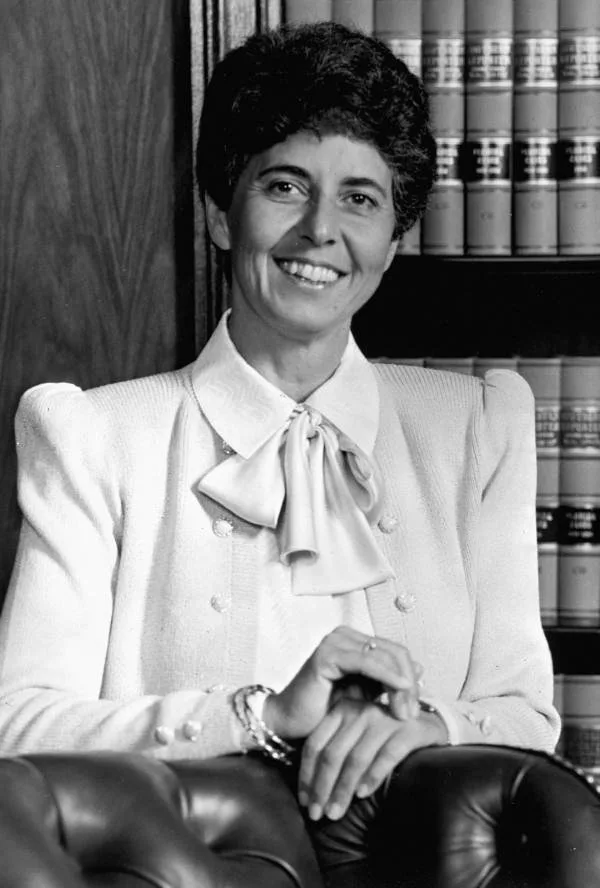
Applies and extends holdings such as Wyche and Pope without questioning their validity in [2] and [4]. EL v. State ↗ Fraser v. State ↗
Deference to government powerSkepticism of government power
Invalidates municipal loitering and bicycle ordinances for vagueness/overbreadth and limits arrest powers in [2] and [9]. EL v. State ↗ Thomas v. State ↗
Affiliations
Court of Appeals for the Eleventh Circuit — appointed by William Jefferson Clinton
This case involves the Florida Supreme Court's ongoing implementation of family court divisions in the state's circuit courts, following its 1991 opinion that required each circuit to establish such a division or coordination mechanism for family law matters. After reviewing local rules and administrative orders submitted by the circuits and convening a 1993 workshop with circuit delegations, the court clarified expectations for a unified approach. The court directed that each circuit create an administratively coordinated family division to handle cases including dissolutions of marriage, custody, support, adoption, paternity, domestic violence, juvenile delinquency and dependency, and termination of parental rights, with two key requirements: dedicated case management staff and an appointed administrative judge responsible for oversight and planning. The reasoning centers on accommodating local variations in geography, resources, and caseloads while ensuring comprehensive coordination of all matters affecting a single family, supported by linkages to community services and a new statewide committee to develop model guidelines and recommendations.
The case concerned whether an individual condominium unit owner could sue a developer and general contractor for alleged construction defects in the common elements of the condominium, where the owner had no defects in their own unit and the claims involved duties owed to all owners. The Florida Supreme Court held that a unit owner has standing to bring such an action because they hold an undivided ownership interest in the common elements, making them a real party in interest under the rules of civil procedure. The court further ruled that the unit owner must represent the interests of the other owners in the suit. The reasoning emphasized that courts determine standing based on protectible property interests, that the Condominium Act regulates but does not eliminate individual owners' rights to sue, and that the association's authority to act does not bar owners from proceeding individually.
This case concerned whether a trial court must individually consider each statutory criterion under sections 39.059(7)(c) and (d), Florida Statutes, before sentencing a juvenile as an adult and whether those findings must be reduced to writing at the time of sentencing. Antonio Troutman, a sixteen-year-old with no significant prior record, pleaded nolo contendere to false imprisonment and grand theft; the trial court imposed adult sanctions consisting of probation after a predisposition report recommended juvenile community control, with a written order filed three days later. The Florida Supreme Court held that trial courts must evaluate each criterion with an individualized assessment and contemporaneously reduce findings to writing, as the statute makes these steps mandatory. The court quashed the district court's decision upholding the sentence, finding that the trial court's actions did not comply with the statutory requirements. The reasoning centered on legislative policy favoring differential treatment of juveniles and the explicit mandatory language in the juvenile justice statutes.
The case involved Patricia Dubreuil, a Jehovah's Witness who refused blood transfusions after an emergency C-section due to her religious beliefs, despite medical advice that they were necessary to save her life; the hospital petitioned for court authorization to administer transfusions over her objections, citing the risk that her death would abandon her four minor children. The Florida Supreme Court quashed the district court's ruling that had upheld the hospital's authority to proceed with the transfusions. The court held that the state interest in preventing abandonment of minor children did not override the patient's constitutional rights to refuse medical treatment on religious grounds where no actual abandonment was shown, as extended family and friends were available to care for the children and the estranged husband could not override her wishes. The decision emphasized that the patient's autonomy and religious liberty prevail absent proof that her death would impose a burden on the state.
This case involves Richard Harold Anderson's appeal from a trial court's summary denial of his motion to vacate his murder conviction and death sentence under Florida Rule of Criminal Procedure 3.850. The trial court denied the motion because it was not properly sworn and was facially insufficient. The Florida Supreme Court affirmed the denial regarding the oath requirement but held it should be without prejudice, and reversed on the merits because Anderson was entitled to access public records to support his claims before the motion could be dismissed. The court remanded the case to allow Anderson to obtain the records and amend his motion accordingly.
The case involved Jacobs Wind Electric Company, which patented a tidal flow system to prevent water stagnation and showed it to state officials, after which the Florida Department of Transportation installed a similar system without a license. Jacobs sued in federal court for patent infringement but the suit was dismissed on Eleventh Amendment grounds; it then brought takings and conversion claims in state court seeking just compensation. The circuit court allowed the suit, but the district court granted prohibition, ruling that federal courts have exclusive jurisdiction over patent-related claims. The Florida Supreme Court quashed that decision, holding that state courts have jurisdiction over the takings and conversion claims because Congress did not intend to preempt them from state review even when a patent is involved, as the claims do not arise solely under patent law.