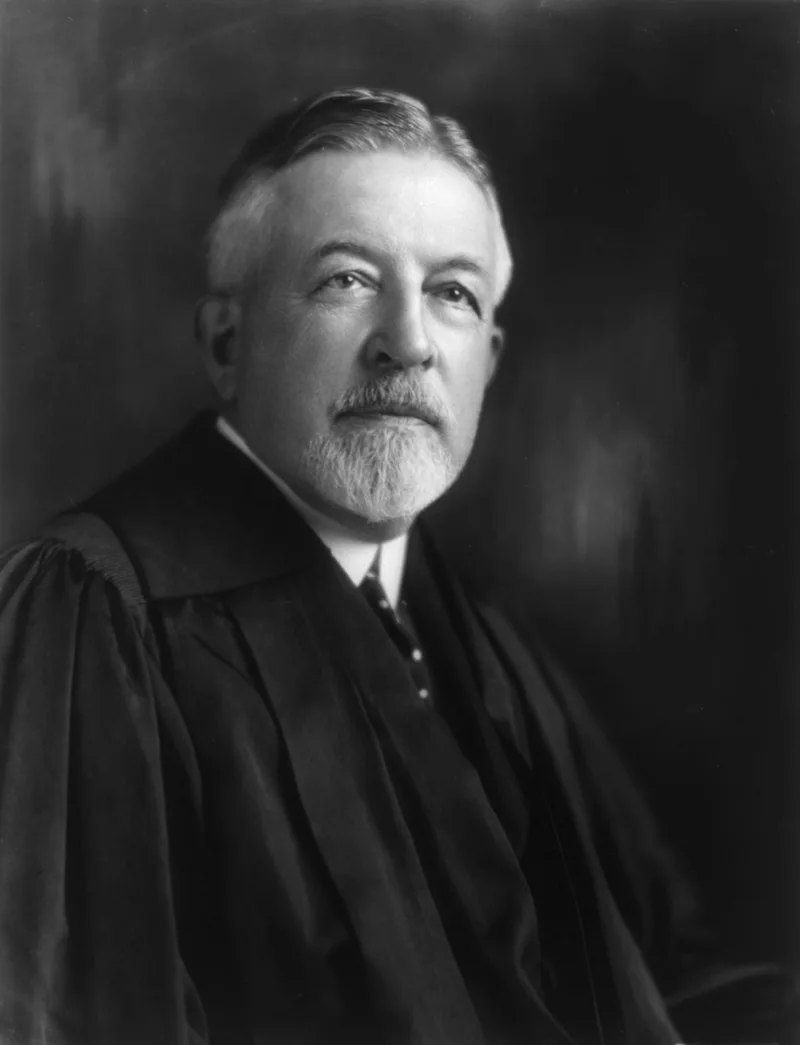
District of Columbia v. Thompson
Supreme Court of the United States · 1930-02-24 · cited 13×
The case concerned a condemnation proceeding in which the District of Columbia took land to extend Lamont Street as an improved thoroughfare and assessed $200 in benefits against Georgiana Thompson's lot as a lien. After Thompson paid the assessment following a tax sale and the District failed to build the street extension—leaving the strip unimproved and obstructed—the plaintiff sued in Municipal Court to recover the payment on grounds of failure of consideration. The court affirmed judgment for the plaintiff, holding that the assessment was made in exchange for the street extension, the undisputed facts established the District's abandonment of the project, and this created an implied contractual obligation to repay the funds. Jurisdiction existed because the claim was for debt under an implied contract, and the three-year statute of limitations did not bar the suit since the cause of action accrued upon abandonment rather than at assessment or payment.
propertyprocedure
United States Fidelity & Guaranty Co. v. Guenther
Supreme Court of the United States · 1930-02-24 · cited 78×
This case involved an insurance company's denial of coverage under an automobile liability policy after a 17-year-old driver, operating with the owner's consent, caused an accident resulting in personal injuries. The policy excluded liability when the vehicle was operated by anyone under the age limit fixed by law or under 16. Although no Ohio state statute addressed drivers over 16, a Lakewood city ordinance made it unlawful for an owner to permit a minor under 18 to drive on public streets. The Supreme Court held that the ordinance qualified as fixing an age limit by law within the policy's plain meaning, triggering the exclusion and precluding coverage, and therefore reversed the judgments in favor of the insured.
business & regulatorytorts & liability
Lindgren v. United States
Supreme Court of the United States · 1930-02-24 · cited 199×
The case concerned the death of a seaman, Barford, caused by negligence while working on a vessel owned by the United States, and whether his estate's administrator could recover damages under the Merchant Marine Act of 1920 when Barford left no qualifying beneficiaries such as a widow, child, parent, or dependent next of kin. The administrator sued the United States under the Suits in Admiralty Act, seeking recovery either through the federal statute or, alternatively, under Virginia's death statute or for unseaworthiness of the vessel. The Supreme Court held that Section 33 of the Merchant Marine Act, which incorporates the Federal Employers' Liability Act's provisions on wrongful death, supplies the exclusive remedy for a seaman's death due to negligence and limits recovery solely to the designated beneficiaries; with no such beneficiaries present, no action could be maintained, and state remedies or claims based on unseaworthiness were unavailable. The Court reasoned that the federal statute's structure and prior interpretations made its right of action for the personal representative exclusive, precluding supplementation by state law or other maritime remedies.
labor & employmentfederal powertorts & liability
Grant v. A. B. Leach & Co.
Supreme Court of the United States · 1930-01-06 · cited 33×
The case concerned whether a receiver appointed by an Ohio state court for an Ohio corporation could sue in federal district court in Ohio to recover mortgage bonds or their value from a New York corporation, based on an exchange the receiver claimed was ultra vires. The district court ruled for the receiver after the state court authorized the suit, but the circuit court of appeals dismissed the action, holding that the state court lacked power to authorize a federal suit. The Supreme Court reversed, reasoning that a receiver duly appointed and authorized by a state court may bring suit in federal court within the appointing court's jurisdiction, as this does not make the receiver a foreign officer acting outside his authority.
procedurefederal power
Herbring v. Lee
Supreme Court of the United States · 1929-11-25 · cited 18×
This case involved a challenge to an Oregon insurance law requiring fire insurance companies to pay a $500 additional fee to appoint more than two agents in larger cities like Portland. Herbring applied for an agent's license to represent a qualified foreign insurer that already had two agents there, but the Insurance Commissioner denied it because the company had not paid the fee. The state trial court ruled the fee requirement unconstitutional as an interference with the agent's rights, but the Oregon Supreme Court reversed, holding that the statute validly made payment a condition precedent for the company to appoint an additional agent and that an agent's license rights were contingent on the company's compliance. The U.S. Supreme Court affirmed, reasoning that the provision regulated the insurance company itself rather than restricting individual agents and that Herbring could not challenge the law based on the company's rights.
business & regulatory
Sanitary Refrigerator Co. v. Winters
Supreme Court of the United States · 1929-10-14 · cited 407×
This case involves two related patent infringement suits concerning specific claims in a 1921 patent for improvements in latches used in refrigerators. The Supreme Court addressed a conflict between the Seventh and Third Circuit Courts of Appeals regarding whether the latches manufactured by Dent Hardware Co. infringed the patent held by Winters and Crampton. The Court affirmed the Seventh Circuit's finding of infringement and reversed the Third Circuit's finding of noninfringement. The reasoning centered on the doctrine of equivalents, concluding that the accused devices performed substantially the same function in substantially the same way to achieve the same result as the patented invention, despite minor differences in form.
business & regulatoryproperty
Maryland Casualty Co. v. Jones
Supreme Court of the United States · 1929-06-03 · cited 24×
In Maryland Casualty Co. v. Jones, the respondent sued the petitioner on an indemnity bond in California state court; the case was removed to federal district court and tried without a jury, resulting in special findings of fact and judgment for the respondent. The circuit court of appeals affirmed without addressing the petitioner's assignments of error on evidentiary rulings, denial of a nonsuit motion, and referral to a special master. The Supreme Court reversed, holding that Rev. Stat. § 700 permits appellate review of rulings during trial that are preserved by exception and bill of exceptions, even when special findings support the judgment, and remanded for consideration of those assignments.
procedure
Atlantic Coast Line Railroad v. Driggers
Supreme Court of the United States · 1929-06-03 · cited 23×
The case involved the death of railroad employee William A. Driggers, who was struck by a passing passenger train after stepping off a moving switch engine in a South Carolina rail yard. His administratrix sued the Atlantic Coast Line Railroad under the Federal Employers Liability Act, securing a jury verdict in state court that was affirmed on appeal. The U.S. Supreme Court reversed, ruling that the evidence showed Driggers' own negligence in dismounting without looking or signaling was the sole cause of the accident, with no proximate negligence by the railroad, so a directed verdict for the defendant was required.
labor & employmenttorts & liability
The Pocket Veto Case
Supreme Court of the United States · 1929-05-27 · cited 222×
The case concerned whether a bill passed by both houses of Congress and presented to the President less than ten days before the adjournment of a session becomes law without the President's signature if he neither signs it nor returns it with objections. The Court held that the bill did not become law because the adjournment prevented its return within the constitutional time limit. The reasoning centered on the text of Article I, Section 7, which requires the President to return a bill to the originating house for reconsideration and provides that an adjournment preventing such return results in the bill not becoming law; this applies to interim adjournments of a session as well as final adjournments of a Congress. Delivery of the bill to a house officer during adjournment was insufficient, as the Constitution contemplates return to the house itself while in session, consistent with longstanding governmental practice.
federal powerprocedure
White River Lumber Co. v. Arkansas Ex Rel. Applegate
Supreme Court of the United States · 1929-05-27 · cited 43×
The case concerned the constitutionality of an Arkansas statute authorizing the state attorney general to sue corporations for back taxes on property that had been undervalued or underassessed in prior years, but not extending the same procedure to natural persons. The White River Lumber Company challenged the law after the state sought additional taxes on its timber lands, arguing that selective application to corporations violated the Equal Protection Clause of the Fourteenth Amendment. The Supreme Court upheld the statute, ruling that it did not deny equal protection because the state's original assessment process treated corporate and individual property alike, and the back-tax remedy was a permissible means of correcting inadequate valuations limited to corporations. The Court reasoned that states have broad latitude in devising mechanisms to collect taxes that escaped proper assessment, and the classification between corporations and individuals was not arbitrary in this context.
taxesbusiness & regulatorycivil rights
W. A. Marshall & Co. v. S. S. "President Arthur"
Supreme Court of the United States · 1929-05-20 · cited 62×
The case involved a claim by coal supplier W. A. Marshall & Co. asserting a maritime lien on the steamship "President Arthur" for an unpaid balance on bunker coal furnished to the vessel's owner under two contracts. The District Court dismissed the libel after finding no lien, and the Circuit Court of Appeals affirmed. The Supreme Court affirmed, holding that the Maritime Lien Act of 1910 (reenacted in the Ship Mortgage Act of 1920) permits waiver of such liens by agreement, and that the supplier had waived any lien by requiring and accepting endorsed trade acceptances from designated third parties as the specified payment method, without any contract reference to a vessel lien and with explicit integration clauses stating the contracts covered the entire agreement. The Court reasoned that by contracting for this express alternative security and later suing the endorsers on the unpaid acceptance, the supplier could not later rely on an implied lien arising from furnishing necessaries to the vessel.
propertybusiness & regulatory
Grayson v. Harris
Supreme Court of the United States · 1929-04-08 · cited 10×
This case concerned a dispute over title to an undivided half interest in lands allotted in the former Creek Nation in Oklahoma, specifically whether that interest passed upon Gertrude Grayson's death to her Creek kindred under the Supplemental Creek Agreement or to her non-Creek grandmother, and whether the plaintiffs' suit was barred by a seven-year statute of limitations. The Supreme Court held that the plaintiffs' action was not time-barred and reversed the Oklahoma Supreme Court's judgment in favor of the defendants. The Court reasoned that under the Arkansas statute of limitations extended into Indian Territory by federal law, the seven-year period began to run only when the plaintiffs' cause of action accrued upon the defendants taking adverse possession in 1912, rather than upon acquisition of title years earlier when no adverse claim had been asserted. It further noted that the statute's construction as federal law required independent judicial interpretation, and prior Arkansas precedent supported starting the clock only upon possession.
propertyprocedurefederal power
Atlantic Coast Line Railroad v. Davis
Supreme Court of the United States · 1929-02-18 · cited 41×
In Atlantic Coast Line Railroad v. Davis, the administrator of a deceased railroad employee sued the company under the Federal Employers’ Liability Act, alleging negligence in failing to provide a safe workplace after the employee was fatally injured by a steam shovel boom while voluntarily spotting cars during track work performed by an independent contractor. The trial court denied the railroad’s motion for a directed verdict, the jury awarded damages, and the state supreme court affirmed. The U.S. Supreme Court reversed, holding that the evidence showed multiple safe positions available for the work and that the employee’s own choice to stand on an obviously dangerous jack-arm, rather than any negligence by the railroad, was the sole cause of the accident. The Court concluded there was no substantial evidence supporting liability and that a directed verdict for the railroad should have been granted.
labor & employmenttorts & liability
Morimura, Arai & Co. v. Taback
Supreme Court of the United States · 1929-02-18 · cited 94×
The case concerned creditors' opposition to the discharge of two bankrupts in federal bankruptcy proceedings under the Bankruptcy Act, on grounds that the debtors had obtained property on credit by means of a materially false written financial statement and had failed to keep adequate books of account from which their financial condition could be ascertained. After a referee recommended discharge, the district court denied it on the basis that the statement was false and made to obtain credit, but the circuit court of appeals reversed and directed that the bankrupts be discharged. Because the lower courts had reached no concurrent findings on the material issues, the Supreme Court reviewed the evidence at length, comparing the financial statement furnished to the creditor with the accurate opening entries in the debtors' new books of account, which showed a much lower net worth. The Court focused on whether the statement met the statutory requirements for denying discharge, including that it was materially false and made for the purpose of obtaining credit.
business & regulatoryprocedure
Botany Worsted Mills v. United States
Supreme Court of the United States · 1929-01-02 · cited 788×
Botany Worsted Mills, a manufacturing corporation, deducted over $1.5 million in payments to its directors as ordinary and necessary business expenses on its 1917 tax return under the Revenue Act of 1916 and War Revenue Act of 1917. The Commissioner of Internal Revenue disallowed a portion of the deduction as unreasonable compensation, leading to an additional tax assessment that the company paid before suing in the Court of Claims for a refund. The Supreme Court affirmed the dismissal of the suit, holding that the company failed to meet its burden of proving the disallowed amounts were deductible expenses rather than distributions of profits, based on findings that the payments were unusually large compared to prior years and lacked a direct relation to services rendered. The Court rejected the company's arguments regarding an informal settlement agreement, concluding it did not preclude review on the merits of the deduction.
taxesbusiness & regulatory
United States v. Carver
Supreme Court of the United States · 1929-01-02 · cited 10×
In United States v. Carver, American ship owners sued the United States in the Court of Claims under the Emergency Shipping Fund Act of 1917 for compensation after their vessel Betsy Ross was directed by officials to carry wheat from Australia to New York rather than chrome ore under an existing charter. The lower court awarded judgment to the owners on the theory that the Shipping Board had requisitioned or taken over the vessel, depriving them of its use. The Supreme Court reversed, holding that the findings showed no actual requisition of the ship or the chrome ore charter under the Act's provisions, that the owners had voluntarily signed the wheat charter to avoid a potential takeover, and that the statute did not authorize compensation for cancellation of contracts for carriage of freight. The Court further noted that even an order to abandon the chrome ore charter would not qualify as requisitioning the vessel itself.
federal powerpropertybusiness & regulatory
Pacific Steamship Co. v. Peterson
Supreme Court of the United States · 1928-11-26 · cited 204×
In Pacific Steamship Co. v. Peterson, a seaman sued his employer under § 33 of the Merchant Marine Act of 1920 (the Jones Act) for damages from personal injuries caused by a mate's negligence aboard a merchant vessel, after having already received wages to the end of the voyage plus maintenance and cure. The employer argued that accepting those traditional maritime benefits constituted an election that barred the new statutory action. The Supreme Court held that the seaman could maintain the Jones Act suit, ruling that the contractual right to maintenance, cure, and wages is independent of and cumulative with the right to compensatory damages for negligence. The Court reasoned that any required election under the statute lies only between the inconsistent tort remedies of negligence damages under the Jones Act and indemnity for unseaworthiness under pre-existing maritime law, not between the tort remedy and the separate contractual benefits.
labor & employmenttorts & liability
National Leather Co. v. Commonwealth of Massachusetts
Supreme Court of the United States · 1928-05-28 · cited 41×
The case involved a Maine corporation, National Leather Co., challenging Massachusetts excise taxes imposed for the privilege of doing business in the state in 1922 and 1923. The taxes were calculated in part based on the company's 'corporate excess' assets employed in Massachusetts, which the state commissioner included the full value of the petitioner's stock in two subsidiary Maine corporations whose operations were primarily in Massachusetts. The petitioner argued that this inclusion effectively taxed out-of-state property beyond Massachusetts's jurisdiction, violating the Due Process Clause of the Fourteenth Amendment. The Supreme Judicial Court of Massachusetts upheld the taxes, and the U.S. Supreme Court affirmed, reasoning that the stocks were used as an instrumentality in the petitioner's business conducted within the state and could thus be considered in measuring the excise.
taxesbusiness & regulatory
Southern Pacific Co. v. Haglund
Supreme Court of the United States · 1928-05-21 · cited 11×
This case involved two consolidated admiralty suits arising from a collision in the Oakland Estuary between the ferryboat Thoroughfare and the steamship Enterprise, which was being maneuvered by the tug Relief, resulting in damages to the vessels and the death of a workman on the Enterprise. The lower courts found that the Thoroughfare was solely at fault due to negligence, entering decrees against its owner, the Southern Pacific Co., which were affirmed on appeal. The Supreme Court agreed that the collision resulted solely from the Thoroughfare's actions in approaching at full speed without knowing what vessels lay beyond the Enterprise and commencing a passing maneuver before clearing it. The Court further held that neither the Relief nor the Enterprise contributed to the fault, as the Relief properly accepted passing signals without creating danger and the Enterprise, being at rest without power, had no obligation for a lookout that would have affected the outcome.
torts & liabilityprocedure
McCoy v. Shaw
Supreme Court of the United States · 1928-05-21 · cited 30×
The case involved a Chickasaw Indian seeking to enjoin collection of an Oklahoma gross production tax on oil royalties from his allotted homestead and surplus lands, on the ground that the tax violated federal treaties and statutes. The state trial court dismissed the suit for lack of equity, and the Oklahoma Supreme Court affirmed on the basis that state law provided an adequate and exclusive remedy at law through payment of the tax under protest followed by a suit for recovery. The U.S. Supreme Court held that this non-federal procedural ground was independent, sufficient to support the judgment, and not arbitrary, and therefore dismissed the writ of certiorari for want of jurisdiction without reaching the federal question.
taxesfederal powerprocedure