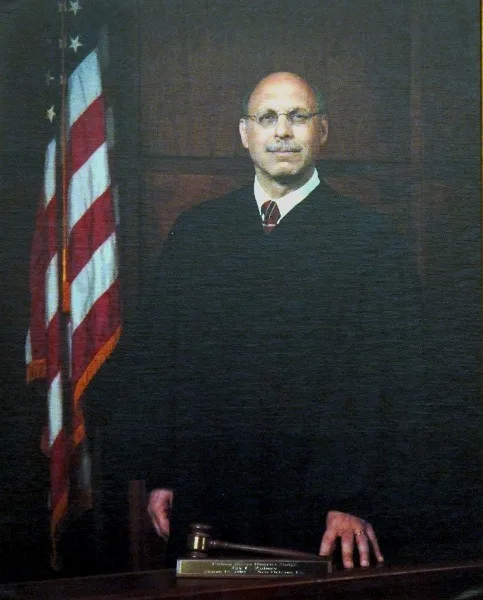
This case involved a claim under the Federal Tort Claims Act arising from a 2008 vehicle collision in New Orleans between a United States Postal Service truck driven by a mail carrier and the plaintiff's van. The court found after trial that the postal driver was primarily negligent for initiating an improper left-hand u-turn into the plaintiff's lane without adequate clearance or visibility, while the plaintiff also contributed by failing to notice the turn signal and accelerating forward as soon as the truck moved. Applying Louisiana comparative fault law, the court assigned 85 percent fault to the government driver and 15 percent to the plaintiff, awarding reduced damages for medical expenses, property damage, general damages, and loss of consortium but denying future medical or wage claims. The decision rested on credibility assessments of witness testimony, photographs, the police citation, and the sequence of events at the intersection.
The case involved a seaman, Joshua Johnson, who was injured when the vessel he was working on collided with a platform. Johnson sued his employer, Blue Marlin, under the Jones Act for negligence and for unseaworthiness. The court granted summary judgment to Blue Marlin on the unseaworthiness claim because the company did not own or operate the vessel, but denied summary judgment on the Jones Act claim. The court reasoned that while Jones Act employers have a duty to inspect third-party vessels for safety hazards, liability requires proof of negligence, and whether a reasonable inspection would have revealed the unsafe conditions is a question for the jury.
This case involved a dispute over whether the IRS could levy funds from bank accounts to satisfy a tax debt owed by the Schwegmann Family Trust, despite claims by John Hancock Life Insurance that it held a superior security interest in those funds from prior loans secured by rents and leases. The accounts were held by Capital One Bank as trustee under an indenture agreement for the benefit of note holders including Hancock. The court granted summary judgment in favor of the United States, dismissing Hancock's wrongful levy claim under 26 U.S.C. § 7426. The reasoning centered on the fact that under the loan documents and Louisiana law, Capital One was the holder of the security interest as a fiduciary, not Hancock, so Hancock lacked priority over the federal tax lien under IRC sections 6321 and 6323.
This case involves a prisoner, Richardi J. Rebaldo, who filed a pro se complaint under 42 U.S.C. § 1983 and Louisiana law against several prison officials, alleging physical abuse, sexual battery, excessive force, and medical indifference while housed at a Louisiana correctional facility. The defendants Dr. William Lo, Liz Olivera, Gary King, and Jerry Miller moved to dismiss the claims against them under Rule 12(b)(6), arguing that Rebaldo failed to exhaust administrative remedies as required by 42 U.S.C. § 1997e and state law. The magistrate judge recommended denying the motion, finding that the defendants had not met their burden to prove lack of exhaustion because they relied only on two grievances attached to the complaint without showing those were the only efforts made, and that pro se grievances should be construed liberally to provide notice. The district judge adopted the report and recommendation in full. The court therefore denied the motion to dismiss, allowing the case to proceed while noting that a later, better-supported motion could be filed after discovery.
In this case, the trustee for an injured worker sued Chevron for negligence after the worker, employed by independent contractor Grand Isle Shipyard, was hurt unloading heavy boxes on Chevron's Gulf of Mexico oil platform. The worker claimed Chevron's on-site supervisor exercised operational control by directing tasks outside the contract and issued an unsafe order about cargo handling. Chevron moved for summary judgment, asserting it had no operational control over the contractor's methods and did not create the hazard. The court granted the motion under Louisiana negligence law, ruling that general supervisory authority did not amount to operational control and Chevron had no duty to correct the contractor's loading practices, dismissing all claims with prejudice.
This case was a personal injury suit brought by employee Julio Romo against his employer Massman Construction Co. under section 905(b) of the Longshore and Harbor Workers' Compensation Act, alleging vessel negligence after Romo fell from a makeshift scaffolding platform on an unmanned work barge during bridge reinforcement work. The district court granted Massman's motion for summary judgment and dismissed the complaint. The court reasoned that the LHWCA provides the exclusive remedy for covered employees injured on navigable waters, and under the dual capacity doctrine an employer is immune from tort liability for acts taken in its capacity as employer rather than vessel owner. Applying the Scindia duties, the court found that the platform construction and related conditions were employer-related activities, not vessel negligence, so no duty to intervene or other vessel-owner obligations were breached.