The case involved Abu Zubaydah's request under 28 U.S.C. §1782 for discovery from former CIA contractors to support a Polish criminal investigation into his alleged detention and enhanced interrogation at a CIA site in Poland. The Government intervened and asserted the state secrets privilege, arguing that confirming or denying the site's existence or operational details would harm national security. The district court dismissed the application, finding that privileged information was central and could not be segregated. The Ninth Circuit partially reversed, allowing discovery on certain topics because some information was public and the contractors were private parties. The Supreme Court reversed, holding that the state secrets privilege barred the requested discovery because it would necessarily risk disclosing protected information about CIA activities with a foreign government.
The case involved Le Roy Torres, an Army Reserve veteran who sued the Texas Department of Public Safety under the Uniformed Services Employment and Reemployment Rights Act (USERRA) after the state refused to reemploy him in a different role due to his service-related respiratory disability from deployment in Iraq. Texas sought dismissal based on sovereign immunity. The Supreme Court held that Congress may authorize private damages suits against nonconsenting states under its Article I powers to raise and support armies, as states agreed their sovereignty would yield to this federal authority in the plan of the Convention. The core reasoning examined the Constitution's text granting complete power over the armed forces, historical context, and precedents such as PennEast Pipeline Co. v. New Jersey, finding structural waiver of state immunity for this plenary federal power.
The case concerned two licensed physicians convicted under 21 U.S.C. §841 for prescribing controlled substances outside the scope of their authorization, with the central dispute being the level of criminal intent (mens rea) required to prove a violation. The Supreme Court held that the statute’s “knowingly or intentionally” requirement applies to the “except as authorized” clause, meaning that once a defendant produces evidence of authorization, the government must prove beyond a reasonable doubt that the defendant knowingly or intentionally acted without authorization. The Court reasoned that criminal statutes carry a presumption of scienter to distinguish wrongful from innocent conduct, that authorization plays a critical role in separating lawful medical practice from illegal distribution, and that analogous precedents such as Rehaif v. United States support extending the mens rea element to the authorization exception. The Court rejected arguments that would limit the scienter requirement or treat the clause as merely jurisdictional or regulatory.
The case concerned a 2018 Washington workers’ compensation statute that applied exclusively to certain employees at the federal Hanford site, easing eligibility rules and raising costs only for the United States and its contractors. The United States sued, claiming the law violated the Supremacy Clause by discriminating against the federal government. The Supreme Court held that the statute facially singled out federal workers for less favorable treatment and therefore breached intergovernmental immunity. It further ruled that 40 U.S.C. §3172 does not contain a clear and unambiguous waiver of immunity from such discriminatory state measures. The Ninth Circuit’s contrary decision was reversed.
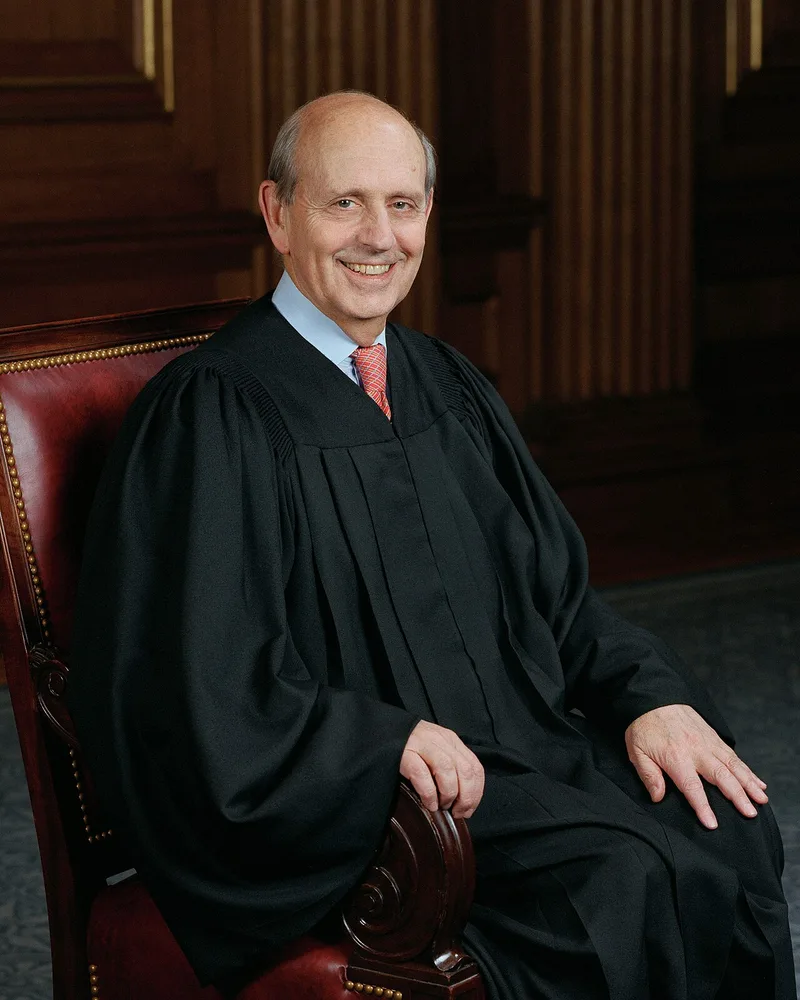
In Smith v. Shinn, petitioner Joe Clarence Smith challenged his Arizona death sentence, imposed originally in 1977 and followed by multiple resentencings, arguing that more than 44 years on death row, much of it in solitary confinement, would render any execution cruel and unusual under the Eighth Amendment. The Supreme Court denied the petition for a writ of certiorari. Justice Breyer filed a statement respecting the denial, observing that the extended delay and isolation raised serious constitutional questions but that procedural obstacles precluded granting review at this stage.
The case involved Harold Shurtleff and Camp Constitution requesting permission from Boston to raise a Christian flag on a third flagpole at City Hall Plaza during an event celebrating the Christian community's civic contributions, after the city had approved dozens of other private flags over the years. Boston denied the flag request due to concerns that displaying a religious flag would violate the Establishment Clause. The Supreme Court held that the city's flag-raising program did not constitute government speech and that denying the request based on the flag's religious content violated the First Amendment's Free Speech Clause. The core reasoning applied a holistic inquiry examining the history of flag displays at government sites, the public's likely perception of who was speaking, and the limited extent of the city's control over the messages on the flags flown by private groups.