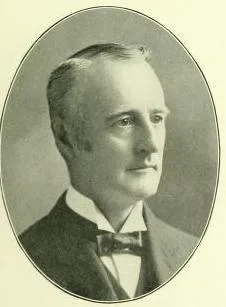
E. Greenfield's Sons, Inc. v. Frame
New York Court of Appeals · 1923-12-27
The case involved a chocolate manufacturer suing buyers who were exporters to recover a federal excise tax of $1,904 plus interest that the manufacturer had paid to the government. The contract called for chocolate packed in cases strapped for export with delivery free alongside steamer in New York and payment against documents, but the buyers instead sold the goods domestically after taking delivery. Lower courts directed a verdict for the defendants on the ground that the contract did not require export. The Court of Appeals reversed, concluding that the contract language and surrounding circumstances showed the parties intended an export sale exempt from tax under the Revenue Act of 1918, so the defendants' domestic resale breached the agreement and rendered them liable for the tax.
business & regulatorytaxes
Lawrey v. . Hines
New York Court of Appeals · 1923-12-27
This case concerned a longshoreman's 1920 negligence lawsuit against Walker D. Hines, then-Director General of Railroads, seeking damages for injuries sustained in 1919 while working on a steamer operated under federal railroad control. After federal control ended in March 1920 pursuant to the Transportation Act, Hines was no longer the designated agent, and the summons had been served on a company secretary rather than the proper presidential designee. The court held that jurisdiction over the United States could not be obtained in this manner, that the action could only proceed against the current designated agent under section 206 of the Act, and that service and the named defendant were insufficient, leading to reversal of the denial of the motion to dismiss.
procedurefederal powertorts & liability
Streat Coal Co., Inc. v. . Frankfort Gen. Ins. Co.
New York Court of Appeals · 1923-11-20 · cited 17×
The case involved an indemnity insurance policy under which the defendant insurer agreed to defend the plaintiff coal company against third-party bodily injury claims up to a $5,000 limit and to pay related costs and interest. After the insurer took over defense of two suits arising from a 1917 accident, it received but did not communicate a $5,000 settlement offer; the cases proceeded to judgments exceeding $12,000, which the insured had to pay in part. The insured then sued the insurer for the excess amount, alleging an implied duty to disclose the offer based on the parties' relationship. The trial court dismissed the complaint for failure to state a claim, the Appellate Division reinstated a jury verdict for the plaintiff, and the Court of Appeals reversed, holding that the unambiguous policy created no such duty absent allegations of fraud, negligence, or bad faith.
business & regulatoryprocedure
Rosenblatt v. . Bergen
New York Court of Appeals · 1923-11-20 · cited 7×
This case involves real estate brokers suing a property owner for a commission after they allegedly procured a corporate buyer ready, willing, and able to purchase the owner's Bronx real estate on the agreed terms. The trial court entered judgment for the brokers, but the Appellate Division reversed on the facts and law and dismissed the complaint. The Court of Appeals determined that the owner had accepted the corporation as purchaser without objecting to its solvency or financial capacity at the time and modified the Appellate Division judgment to grant a new trial instead of dismissing the complaint.
propertybusiness & regulatory
In Re the Transfer Tax Upon the Estate of Dunn
New York Court of Appeals · 1923-11-20 · cited 3×
The case concerned the estate of Patrick J. Dunn, who died in 1921, specifically whether New York's transfer tax applied to the full value of two parcels of real property acquired by Dunn and his wife in 1919 and 1920 as tenants by the entirety. The appraiser initially included the property's full value in the taxable estate; the Surrogate's Court reversed and directed a deduction for the widow's dower interest, a decision affirmed by the Appellate Division. The Court of Appeals reversed, holding that the 1916 amendment to the Transfer Tax Law imposed the tax on the survivor's right to the entire property as though it had been bequeathed by the deceased, without any dower deduction. The court explained that estates by the entirety had historically been exempt because no new interest passed on death, the statute created no dower right, and the legislative fiction of absolute ownership by the deceased required taxing the whole rather than a partial interest.
taxesproperty
Berkshire Cotton Manufacturing Co. v. Cohen
New York Court of Appeals · 1923-07-13 · cited 9×
The case involved a dispute between a Massachusetts cotton manufacturer and New York buyers over three 1919 contracts for the sale of textile goods, where the seller manufactured and set aside bales of goods but the buyers refused to pay outstanding invoices or accept further shipments amid a business downturn. The seller sued for the price of goods sold and delivered, though no physical delivery occurred, prompting defenses that the contracts were canceled due to the seller's refusal to ship and that title had not passed. The trial court entered judgment for the seller, but the Appellate Division reversed on grounds that the complaint alleged actual delivery while the evidence showed only symbolic appropriation under the Personal Property Law. The Court of Appeals held that the buyers were not misled by the pleadings, that title passed upon the seller's selection and allocation of the goods, and that the complaint sufficiently supported recovery for the contract price, leading it to reverse the Appellate Division and reinstate the trial judgment.
business & regulatorypropertyprocedure
People v. . Downs
New York Court of Appeals · 1923-07-13 · cited 26×
The case involved the conviction of defendant Downs for second-degree rape of a sixteen-year-old complainant, which had been affirmed by a divided Appellate Division. New York law requires that a rape conviction cannot rest on the complainant's testimony alone but must be supported by independent evidence tending to establish both that the crime occurred and that the defendant committed it. The trial court had relied solely on the defendant's out-of-court statement that he had "fooled with her" but did not rape her as the necessary corroboration. The Court of Appeals held that this admission was legally insufficient because it did not tend to prove the elements of rape and could be consistent with lesser conduct; accordingly, the judgment was reversed and a new trial ordered.
criminal lawprocedure
Model Building & Loan Ass'n Ex Rel. Skinner v. Reeves
New York Court of Appeals · 1923-07-13 · cited 9×
The case involved a building and loan association, under state banking supervision, suing former law firm partners of Reeves, Todd & Swain for misappropriation and conversion of over $100,000 in trust funds by defendant Herbert Reeves, who had served as the association's director and counsel both before and after the firm's 1911 dissolution. The complaint sought an accounting, discovery, receivership, and judgment, alleging the defendants diverted funds received from the plaintiff or third parties. The trial court (Special Term) dismissed based on the statute of limitations, but the Appellate Division reversed that defense. The Court of Appeals held that once the defendants failed to pay over the funds, the relationship became one of debtor and creditor rather than trust, making the action one at law with an adequate remedy, so the statute of limitations barred the suit; it therefore reversed the Appellate Division and reinstated the Special Term judgment.
business & regulatoryproceduretorts & liability
Winter v. . American Aniline Products, Inc.
New York Court of Appeals · 1923-07-13 · cited 28×
This case involved a contract dispute in which plaintiffs agreed to sell and defendant to buy lemongrass oil shipped from India, with defendant later refusing acceptance on the ground that the shipment arrived after an alleged oral understanding about delivery timing. The court considered whether plaintiffs' complaint sufficiently stated a cause of action for substantial damages on the pleadings alone, given allegations of the contract, defendant's anticipatory breach and refusal to accept tender, and resulting harm. The court decided that the complaint adequately set forth the material facts of contract, breach, and damages without needing to specify the precise measure or items of damages, treating excess details as surplusage, and therefore reversed the Appellate Division's award of only nominal damages.
business & regulatoryprocedure
Rezzemini v. . Brooks
New York Court of Appeals · 1923-06-05 · cited 63×
The case concerned the will of Eliza W. Durant, who created a trust for the support of her incompetent, bedridden son John, with remaindermen to receive any remaining corpus after his death; the son also received income from a separate trust under his father's will. The plaintiff, as committee for the son, sued the trustee to recover from the principal of the mother's trust the amount by which necessary support expenses exceeded income received from that trust. The trial court awarded the excess amount to the plaintiff, but the Appellate Division reversed, finding that the testatrix intended other available income to be considered before invading principal. The Court of Appeals reversed the Appellate Division (with a minor modification to the award amount), holding that the will's language and controlling precedent permitted use of principal for the son's support without first exhausting income from other sources.
family lawproperty
Howard v. . City of New York
New York Court of Appeals · 1923-05-29 · cited 3×
The case concerned whether a complaint sufficiently stated a cause of action for breach of contract against the City of New York. Plaintiffs alleged they sold a cargo of salt herring to the city's commissioner of public markets under a 1917 state law authorizing municipalities, with state food commission consent, to buy and sell food and fuel during wartime emergencies to address shortages and high prices. The Court of Appeals held that the complaint failed to state a cause of action. It reasoned that although the city obtained the required consents and designated an agency, the municipal resolutions did not specify the manner of making purchases or sales as the statute required, leaving the designated agent without authority to bind the city to the contract.
business & regulatoryprocedure
Lawrence v. . Calam
New York Court of Appeals · 1923-05-29 · cited 5×
The case concerned the construction of Sarah Elizabeth Lawrence's 1892 will, which left her real and personal property to her son Theodore subject to his father's life interest in income, with alternative provisions for a church and her heirs at law if Theodore died without lawful issue. The Appellate Division had held that Theodore took the entire estate in fee simple absolute upon his mother's death in 1915. The Court of Appeals reversed, ruling instead that Theodore received only a conditional estate that would be defeated by his death without lawful issue at any time, after which half the property would pass to the Presbyterian Church and half to the testatrix's heirs at law. The decision rested on the will's overall language, which the court found showed the testatrix contemplated the son's death without issue occurring either before or after her own death, applying the principle from Brown v. Gardner that such references are not limited to the testator's lifetime absent contrary indications.
propertyfamily law
McDougall v. . Shoemaker
New York Court of Appeals · 1923-05-29 · cited 5×
This case involved a dispute over a conditional sales contract for an automobile under New York's Personal Property Law. The buyer (plaintiff) made a down payment and promissory notes but returned the car before any default, and the seller (defendant) accepted it under an oral agreement to resell it and apply the proceeds to the balance owed, with the buyer to cover any shortfall. The trial court found that this created a new contract rescinding the original one and dismissed the buyer's complaint on the merits. The Appellate Division reversed and directed judgment for the plaintiff, but the Court of Appeals reversed that decision, holding that the trial judge's findings of fact were controlling because the Appellate Division had not properly reversed or supplanted them, and that the new agreement was not governed by the retaking provisions of the Personal Property Law since there had been no default. The court therefore reinstated the trial court's dismissal of the complaint.
propertyprocedurebusiness & regulatory
In Re the Estate of Felt
New York Court of Appeals · 1923-04-17 · cited 8×
The case concerned the construction of Samuel Felt's 1917 will, which made specific bequests and devises to his widow, sister, niece, employees, and a hospital, created a trust, and in the eighth clause gave the residuary estate to his widow 'to have and use during her life time,' with the eleventh clause directing the remainder after her death primarily to the hospital. The surrogate held that the widow received only a life estate in the residue and that the executors' power of sale over real estate was limited, a ruling affirmed by the Appellate Division; the widow appealed, contending the eighth clause granted her broader rights to consume or dispose of the property. The Court of Appeals affirmed the life-estate ruling but modified the decree to clarify that the executors could exercise the power of sale whenever they deemed it in the interest of the interested parties, based on the will's language, the testator's knowledge of his real-estate holdings and income, and his evident intent to provide for both his widow and the ultimate charitable beneficiary.
propertyfamily law
C. Bahnsen & Co. v. Gerst
New York Court of Appeals · 1923-04-17 · cited 4×
The case involved a dispute over an installment contract for the sale of fabric, where the plaintiff seller agreed to deliver goods in two batches and the defendant buyer refused the first delivery on the due date, citing no reason other than not wanting the goods amid a sharp market price drop. The lower courts dismissed the seller's complaint for breach of the entire contract, ruling that the seller had not proven tender of the second installment or excused its absence. The Court of Appeals reversed, holding that under subdivision 2 of section 126 of the Personal Property Law, the buyer's arbitrary refusal constituted a material breach of the whole contract based on its terms and circumstances, allowing the seller to sue for damages without further performance. The court also found that allegations about the second installment were surplusage that did not require amendment, as the buyer was not prejudiced. A new trial was ordered.
business & regulatoryprocedure
Urbis Realty Co. v. . Globe Realty Co.
New York Court of Appeals · 1923-03-06 · cited 3×
The case involved a dispute over a January 1920 contract for the sale of an apartment building in New York City, where the buyer paid a $5,000 deposit and agreed to close on April 1, 1920, taking the property subject to existing leases that were set to expire or be cancellable by October 1, 1920. The buyer refused to close, citing the enactment of chapter 137 of the Laws of 1920 (effective April 1), which modified summary eviction proceedings during an emergency, and sued to recover the deposit. The trial court dismissed the complaint, finding the objections to title trivial and time not of the essence, but the Appellate Division reversed and awarded judgment to the buyer. The Court of Appeals reversed the Appellate Division and reinstated the dismissal, holding that the new statute only temporarily limited a landlord's summary remedy without abolishing effective means to recover possession or impairing contractual obligations, and that the contract remained enforceable as written.
propertybusiness & regulatoryprocedure
People v. . Hickey
New York Court of Appeals · 1923-03-06 · cited 1×
The case involved defendant Hickey, who was charged with first-degree burglary and first-degree grand larceny for allegedly breaking into a dwelling in Troy, New York, at night on May 16, 1920, with intent to steal while a human being was present, and for taking $427 in cash. After a jury convicted him on both counts, the Appellate Division affirmed despite noted exceptions. The Court of Appeals reversed the conviction and ordered a new trial, holding that the trial judge erred by refusing to charge the jury that first-degree burglary required a human being in the house at the time of entry, where evidence showed the entry occurred before any occupants arrived, and by improperly admitting the witness Catherine Kelly's grand jury testimony as a prior inconsistent statement, which was prejudicial. These material errors in jury instructions and evidence admission required reversal under the Penal Law and Code of Criminal Procedure.
criminal lawprocedure
General Investment Co. v. Interborough Rapid Transit Co.
New York Court of Appeals · 1923-02-27 · cited 122×
The case involved a suit by General Investment Co. against Interborough Rapid Transit Co. to recover on five matured promissory notes that the defendant had issued. The complaint alleged the notes' issuance, plaintiff's ownership, presentment for payment, and nonpayment; the defendant admitted the notes existed, were presented, and unpaid but denied knowledge of plaintiff's ownership via a form denial permitted under the Civil Practice Act, while also raising separate defenses. The Special Term granted summary judgment under Rule 113 of the Rules of Civil Practice, which the Appellate Division affirmed, and the Court of Appeals likewise affirmed. The court held that the defendant's denial was insufficient to raise a triable issue and that the separate defenses failed, while ruling that Rule 113 was valid because it was adopted pursuant to authority inherent in the Supreme Court and did not improperly delegate legislative power or infringe the right to jury trial.
procedure
Benevento v. . Poertner Motor Car Co.
New York Court of Appeals · 1923-02-27 · cited 7×
The case involved a wrongful death claim arising from a 1920 automobile collision in New York City that killed the plaintiff's intestate; the car was owned by the defendant motor company and driven by its employee Phipps, who had been instructed to retrieve a sold vehicle from Newark and return it to the company's salesroom. The trial court entered judgment for the plaintiff after a jury trial, relying in part on statements by Phipps to police, but the Court of Appeals reversed, holding the defendant not liable. The core reasoning was that Phipps had deviated from his authorized route and duties by driving several miles out of the way to his residence to obtain money for lunch, an unauthorized personal errand that placed him outside the scope of his employment at the time of the accident, rebutting the presumption of business use.
torts & liabilitylabor & employment
Gould v. . Gould
New York Court of Appeals · 1923-01-30 · cited 62×
This case was a New York action for absolute divorce brought by the wife in 1920, which the husband moved to dismiss on the ground that a French court had already dissolved the marriage. The pleadings showed the couple had married in Scotland in 1910, lived in New York until 1913, then resided in France; the wife began divorce proceedings there in 1918, but the husband obtained a default judgment of divorce against her for adultery in April 1919, which survived her later request for a new trial. The New York courts dismissed the complaint, holding that the French judgment was entitled to recognition under principles of comity. The core reasoning was that the parties had maintained a substantial residence in France, adultery was a recognized ground for divorce in New York, and the decree did not offend New York public policy even though the parties' domicile remained in New York.
family law