⚛️Best Physicists of All Time
Ranking physicists pits foundational breakthroughs against lasting influence on technology and theory. From classical mechanics to quantum fields and cosmology, these figures shaped how we understand reality itself. Vote to reorder the list by your own weighting of impact.
What counts: Best means transformative discoveries plus enduring influence on physics; figures are approximate and drawn from historical consensus.
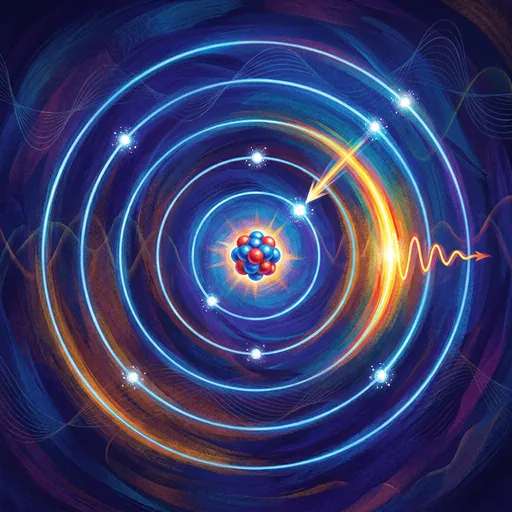
Bohr introduced quantized orbits that explained atomic spectra and founded the Copenhagen interpretation of quantum mechanics. His model and complementarity principle guided the quantum revolution.
Lifespan: 1885-1962Nobel Laureate: ✓Signature Contribution: Atomic model and complementarityImpact Rating: 9/10Key Discoveries: 3
- Explained hydrogen spectrum
- Led quantum interpretation
- Model superseded by quantum mechanics
- Philosophical debates unresolved
added by Yourlist Editorialin 2 rankingsNiels Bohr
39Newton unified terrestrial and celestial motion with his laws and calculus, ending centuries of separate physics. His Principia in 1687 set the framework for classical mechanics that dominated until relativity.
Lifespan: 1643-1727Nobel Laureate: —Signature Contribution: Laws of motion and gravityImpact Rating: 10/10Key Discoveries: 5
- Founded classical mechanics
- Invented calculus for physics
- Limited experimental work
- Delayed optics publication
added by Yourlist Editorialin 7 rankingsIsaac Newton
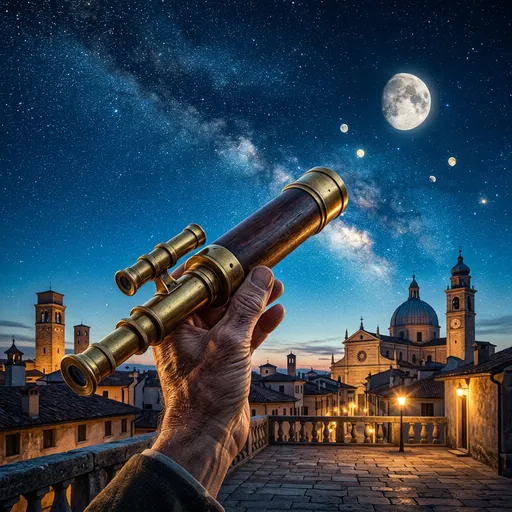
30Galileo established the experimental method and used telescopes to confirm heliocentrism, launching modern physics. His 1632 Dialogue forced the scientific revolution into public view.
Lifespan: 1564-1642Nobel Laureate: —Signature Contribution: Experimental method and heliocentrismImpact Rating: 9/10Key Discoveries: 4
- Pioneered empirical science
- Discovered Jupiter moons
- No mathematical laws
- Recanted under pressure
added by Yourlist Editorialin 5 rankingsGalileo Galilei
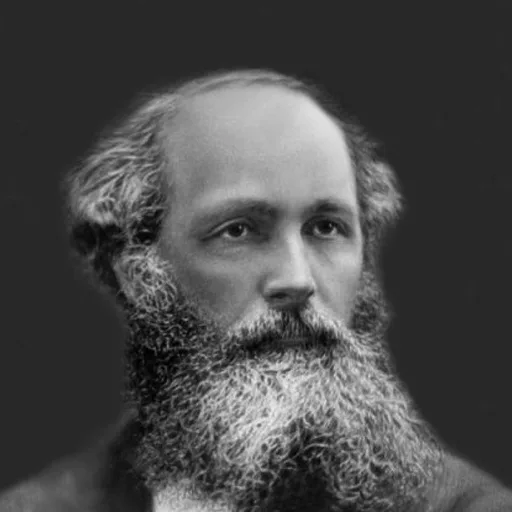
27Maxwell unified electricity, magnetism, and light into four equations that predicted electromagnetic waves. His work enabled radio, optics, and all modern electromagnetic technology.
Lifespan: 1831-1879Nobel Laureate: —Signature Contribution: Electromagnetic theoryImpact Rating: 9/10Key Discoveries: 3
- Unified disparate forces
- Predicted wave propagation
- Died before full validation
- Few direct experiments
added by Yourlist Editorialin 2 rankingsJames Clerk Maxwell
24Einstein overturned Newtonian absolutes with special and general relativity, explaining gravity as spacetime curvature. His 1905 papers and 1915 field equations reshaped modern physics and cosmology.
Lifespan: 1879-1955Nobel Laureate: ✓Signature Contribution: Relativity and photoelectric effectImpact Rating: 10/10Key Discoveries: 4
- Revolutionized space and time
- Explained Brownian motion
- Rejected quantum mechanics
- No experimental confirmation in his lifetime
added by Yourlist Editorialin 7 rankingsAlbert Einstein
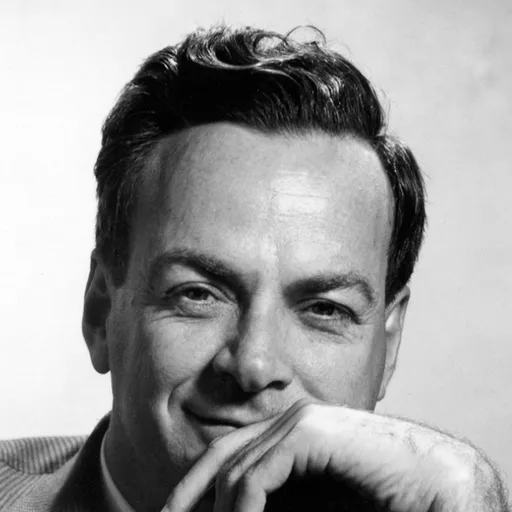
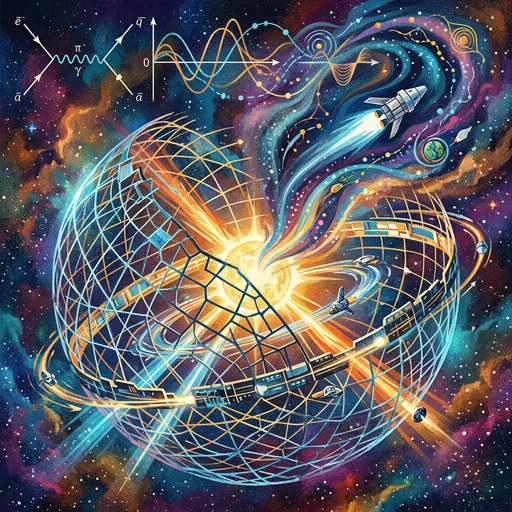
22Feynman developed quantum electrodynamics and path integrals, giving physicists the most precise theory ever tested. His diagrams turned abstract calculations into intuitive tools still used daily.
Lifespan: 1918-1988Nobel Laureate: ✓Signature Contribution: QED and Feynman diagramsImpact Rating: 9/10Key Discoveries: 3
- Most accurate theory in physics
- Created visual calculation method
- Limited work outside particle physics
- Controversial personal style
added by Yourlist EditorialRichard Feynman
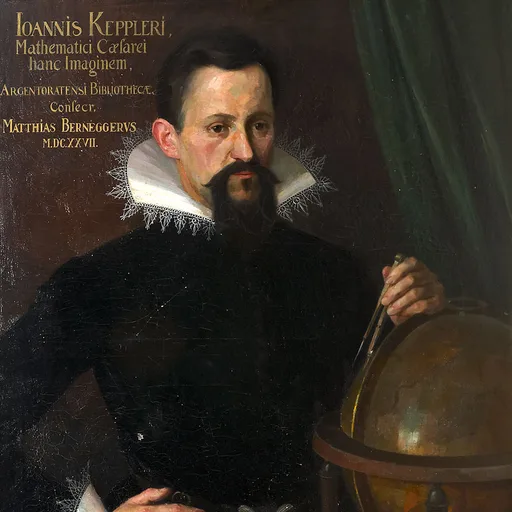
14Kepler derived the three laws of planetary motion from Tycho’s data, replacing circles with ellipses. His 1609 and 1619 laws gave Newton the empirical foundation for gravity.
Lifespan: 1571-1630Nobel Laureate: —Signature Contribution: Laws of planetary motionImpact Rating: 8/10Key Discoveries: 3
- First precise orbital laws
- Used real observational data
- No force explanation
- Mystical numerology
added by Yourlist EditorialJohannes Kepler
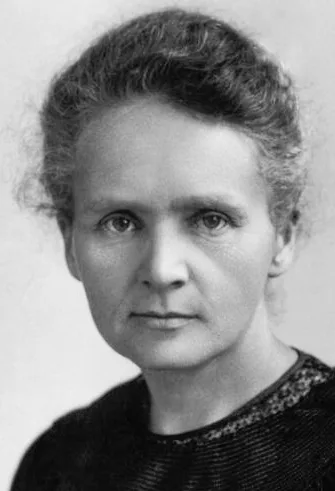
12Curie isolated radium and polonium, proving radioactivity as an atomic property and opening nuclear physics. She became the first person to win two Nobel Prizes in different sciences.
Lifespan: 1867-1934Nobel Laureate: ✓Signature Contribution: Radioactivity and radiumImpact Rating: 8/10Key Discoveries: 2
- Founded radioactivity field
- First double Nobel winner
- Died from radiation exposure
- Limited theoretical advances
added by Yourlist Editorialin 6 rankingsMarie Curie
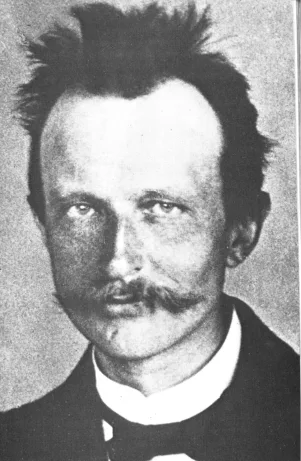
11Planck introduced energy quanta to resolve blackbody radiation, igniting the quantum revolution. His 1900 constant became the foundation for all subsequent quantum theory.
Lifespan: 1858-1947Nobel Laureate: ✓Signature Contribution: Quantum hypothesisImpact Rating: 9/10Key Discoveries: 1
- Started quantum era
- Precise constant still used
- Initially resisted quantum implications
- Few further contributions
added by Yourlist EditorialMax Planck
9Schrödinger created wave mechanics that gave quantum theory its mathematical backbone and the famous cat paradox. His equation remains the core of non-relativistic quantum physics.
Lifespan: 1887-1961Nobel Laureate: ✓Signature Contribution: Wave equationImpact Rating: 9/10Key Discoveries: 2
- Unified quantum formalism
- Enabled atomic calculations
- Opposed Copenhagen view
- Limited later impact
added by Yourlist EditorialErwin Schrödinger
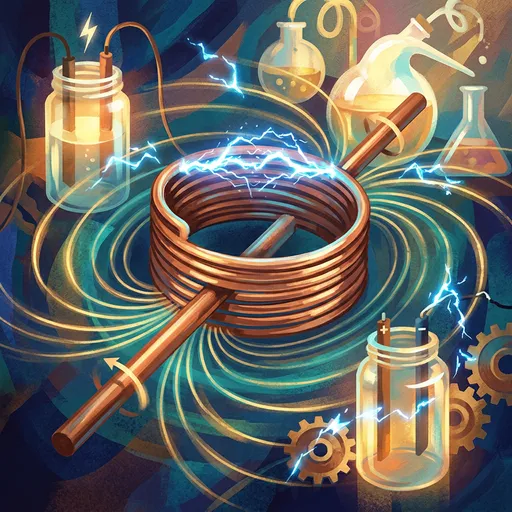
8Faraday discovered electromagnetic induction and invented the electric motor and generator concepts. His 1831 experiments turned abstract fields into practical power technology.
Lifespan: 1791-1867Nobel Laureate: —Signature Contribution: Electromagnetic inductionImpact Rating: 8/10Key Discoveries: 4
- Enabled electric power
- Discovered diamagnetism
- No mathematical theory
- Limited formal education
added by Yourlist Editorialin 2 rankingsMichael Faraday
4Rutherford discovered the atomic nucleus and pioneered nuclear reactions, splitting the atom. His 1911 gold-foil experiment and 1919 transmutation launched nuclear physics.
Lifespan: 1871-1937Nobel Laureate: ✓Signature Contribution: Nuclear atom and transmutationImpact Rating: 8/10Key Discoveries: 3
- Identified nucleus
- First artificial nuclear reaction
- No quantum explanation
- Classical model limitations
added by Yourlist EditorialErnest Rutherford
4Hawking proved black holes radiate and connected quantum effects to gravity, popularizing cosmology worldwide. His 1974 radiation result remains a benchmark for quantum gravity.
Lifespan: 1942-2018Nobel Laureate: —Signature Contribution: Black hole radiationImpact Rating: 8/10Key Discoveries: 2
- Linked quantum and gravity
- Popularized cosmology
- No Nobel despite impact
- Theoretical work untested
added by Yourlist Editorialin 3 rankingsStephen Hawking
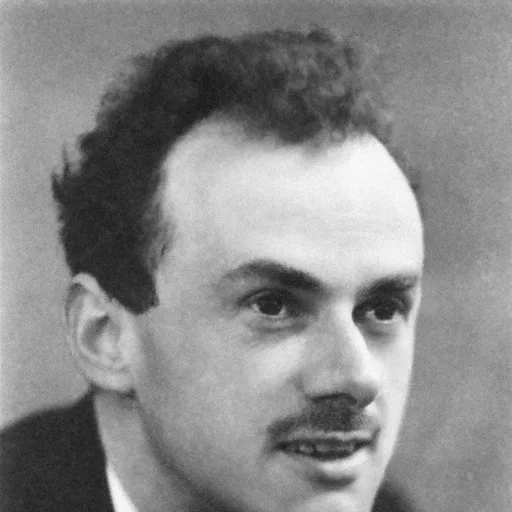
3Dirac predicted antimatter by merging quantum mechanics with relativity, discovering the positron equation. His work unified fields and influenced every subsequent particle theory.
Lifespan: 1902-1984Nobel Laureate: ✓Signature Contribution: Dirac equation and antimatterImpact Rating: 9/10Key Discoveries: 3
- Predicted positrons
- Elegant mathematical style
- Few experimental tests in lifetime
- Reclusive later years
added by Yourlist EditorialPaul Dirac
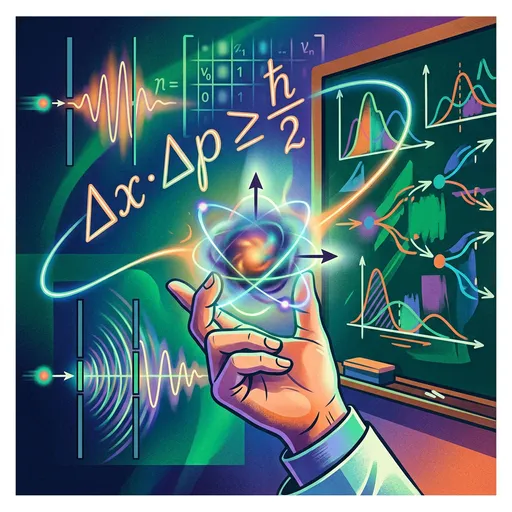
2Heisenberg formulated matrix mechanics and the uncertainty principle, defining the limits of quantum measurement. His 1925 work and 1927 principle became cornerstones of the theory.
Lifespan: 1901-1976Nobel Laureate: ✓Signature Contribution: Uncertainty principleImpact Rating: 9/10Key Discoveries: 2
- Defined quantum limits
- Led matrix mechanics
- Controversial wartime role
- Abstract formalism
added by Yourlist Editorialin 2 rankingsWerner Heisenberg
1Fermi built the first nuclear reactor and developed Fermi-Dirac statistics that describe half the particles in the universe. His reactor in 1942 launched the nuclear age.
Lifespan: 1901-1954Nobel Laureate: ✓Signature Contribution: Nuclear reactor and statisticsImpact Rating: 8/10Key Discoveries: 3
- Created controlled fission
- Unified particle statistics
- Led Manhattan Project bomb work
- Early death limited later output
added by Yourlist EditorialEnrico Fermi
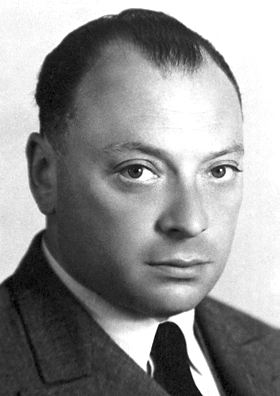
0Pauli formulated the exclusion principle that explains electron shells and matter stability. His 1925 principle became essential to chemistry and solid-state physics.
Lifespan: 1900-1958Nobel Laureate: ✓Signature Contribution: Exclusion principleImpact Rating: 8/10Key Discoveries: 2
- Explained periodic table
- Predicted neutrino
- Few experimental papers
- Critical of others' work
added by Yourlist EditorialWolfgang Pauli
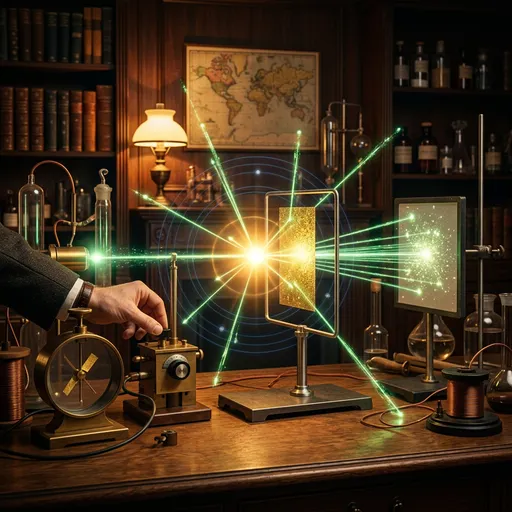
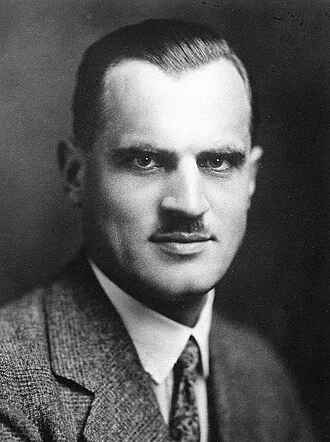
-1Compton showed X-rays scatter off electrons with wavelength shift, proving light quanta. His 1923 effect confirmed Einstein’s photon and earned the Nobel.
Lifespan: 1892-1962Nobel Laureate: ✓Signature Contribution: Compton effectImpact Rating: 7/10Key Discoveries: 1
- Confirmed photon existence
- Precise scattering data
- Narrow research focus
- Limited later contributions
added by Yourlist EditorialArthur Holly Compton
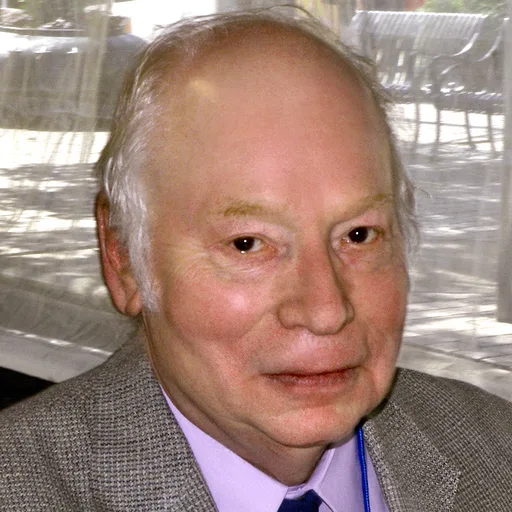
-3Weinberg unified electromagnetic and weak forces into electroweak theory, predicting W and Z bosons later discovered at CERN. His 1967 model became the core of the Standard Model.
Lifespan: 1933-2021Nobel Laureate: ✓Signature Contribution: Electroweak unificationImpact Rating: 8/10Key Discoveries: 2
- Predicted force carriers
- Foundation of Standard Model
- No gravity unification
- Theoretical only
added by Yourlist EditorialSteven Weinberg
-4Higgs proposed the symmetry-breaking field that gives particles mass, confirmed by the 2012 LHC discovery. His 1964 mechanism completed the Standard Model.
Lifespan: 1929-2024Nobel Laureate: ✓Signature Contribution: Higgs mechanismImpact Rating: 8/10Key Discoveries: 1
- Explained particle masses
- Experimentally verified decades later
- Single idea career
- Long wait for confirmation
added by Yourlist EditorialPeter Higgs
-4Van der Waals derived the equation of state for real gases, introducing molecular volume and attraction forces. His 1873 thesis enabled practical thermodynamics.
Lifespan: 1837-1923Nobel Laureate: ✓Signature Contribution: Real gas equationImpact Rating: 7/10Key Discoveries: 1
- Practical gas model
- Foundation for critical phenomena
- Empirical rather than fundamental
- Limited later influence
added by Yourlist EditorialJohannes Diderik van der Waals
-5Dyson unified QED calculations and proposed Dyson spheres as civilization signatures. His 1949 work on renormalization made Feynman’s theory practical.
Lifespan: 1923-2020Nobel Laureate: —Signature Contribution: QED renormalizationImpact Rating: 7/10Key Discoveries: 2
- Made QED usable
- Broad visionary ideas
- No Nobel recognition
- Speculative later work
added by Yourlist EditorialFreeman Dyson
-7Penrose proved singularities are inevitable in general relativity and developed twistor theory for quantum gravity. His 1965 theorem and later work on consciousness remain influential.
Lifespan: 1931-Nobel Laureate: ✓Signature Contribution: Singularity theoremsImpact Rating: 7/10Key Discoveries: 2
- Rigorous GR proofs
- Interdisciplinary ideas
- Unconventional later claims
- Twistor theory unproven
added by Yourlist EditorialRoger Penrose
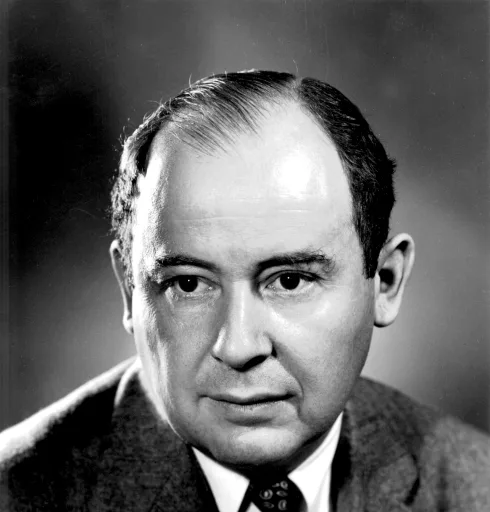
-9Von Neumann founded quantum logic and operator theory while advancing game theory and computing. His 1932 book on quantum foundations remains a standard reference.
Lifespan: 1903-1957Nobel Laureate: —Signature Contribution: Quantum operator theoryImpact Rating: 7/10Key Discoveries: 3
- Rigorous quantum math
- Pioneered computing
- Spread across fields
- No single physics breakthrough
added by Yourlist EditorialJohn von Neumann
-13Thomson discovered the electron and measured its charge-to-mass ratio, proving atoms are divisible. His 1897 cathode-ray work began the era of subatomic physics.
Lifespan: 1856-1940Nobel Laureate: ✓Signature Contribution: Discovery of the electronImpact Rating: 8/10Key Discoveries: 2
- Opened atomic structure
- Precise measurement technique
- Plum-pudding model wrong
- Resisted later quantum ideas
added by Yourlist EditorialJoseph John Thomson
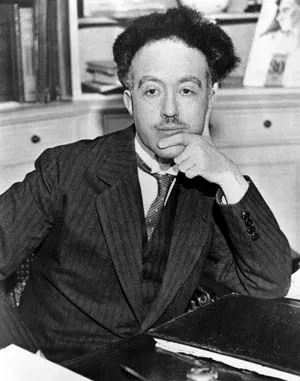
-14De Broglie proposed matter waves, extending wave-particle duality to electrons and enabling electron microscopy. His 1924 thesis earned him the Nobel and started wave mechanics.
Lifespan: 1892-1987Nobel Laureate: ✓Signature Contribution: Matter wavesImpact Rating: 7/10Key Discoveries: 1
- Unified wave-particle duality
- Enabled electron diffraction
- Single major idea
- Later work less influential
added by Yourlist EditorialLouis de Broglie
-15