Most influential scientists ever
Throughout history, a handful of scientists have fundamentally reshaped how humanity understands the universe, from the laws of motion to the structure of DNA. Their discoveries didn't just fill textbooks—they sparked revolutions in medicine, technology, and thought that still ripple through our daily lives. Who do you think left the deepest mark on science? Cast your vote and help settle the debate.
What counts: Seeded with approximate figures where shown — the crowd's votes decide the order.
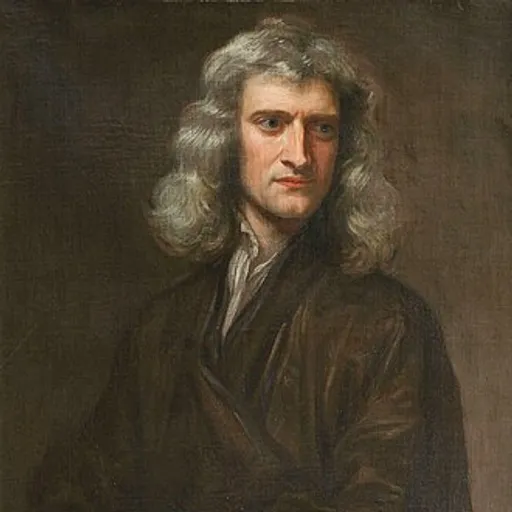
Isaac Newton▲ Rising
In 1687 he published the Principia and essentially invented modern physics in one stroke, showing that the same force pulling an apple down keeps the moon in orbit. He also co-invented calculus, built the first reflecting telescope, and gave science its operating language of universal laws — a framework that held unchallenged for over two centuries. Few humans have single-handedly reset the ceiling of what one mind could explain about the universe.
Era: 1600s
added by IJRin 4 rankings
32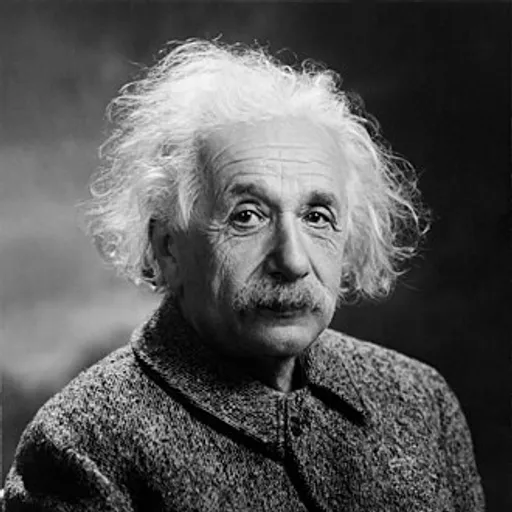
Albert Einstein▲ Rising
A patent clerk in 1905 quietly rewrote space, time, mass, and light in a handful of papers, then topped himself a decade later with general relativity, predicting that gravity bends starlight — confirmed spectacularly by the 1919 eclipse expedition that made him a global celebrity overnight. His equation E=mc² became the most famous formula in history and the theoretical seed of the nuclear age, cementing him as the popular face of genius itself.
Era: 1900s
added by IJRin 4 rankingsAlbert Einstein
27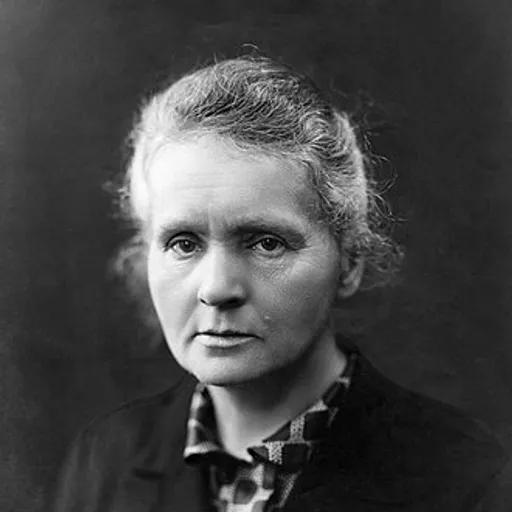
Marie Curie▲ Rising
Working in a leaky Paris shed, Curie isolated polonium and radium, coined the term 'radioactivity,' and became the first person to win Nobel Prizes in two different sciences. Her work cracked open the atomic era and launched radiation therapy for cancer, all achieved while battling the era's brutal sexism — she remains the archetype of scientific grit rewarded with paradigm-shifting discovery.
Era: 1900s
added by IJRin 5 rankingsMarie Curie
15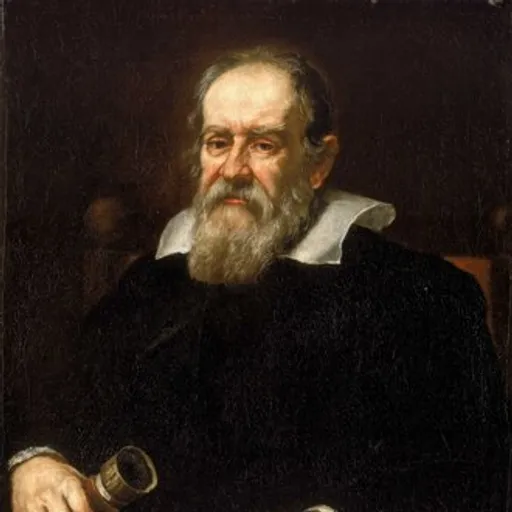
Galileo Galilei▲ Rising
Pointing a homemade telescope at Jupiter in 1610, Galileo spotted four moons circling a planet other than Earth, hard proof that not everything orbited us — a direct torpedo to Church-endorsed cosmology. He was tried by the Inquisition and forced to recant, but his insistence on testing ideas against observation rather than authority effectively founded the scientific method, making him the patron saint of empirical science.
Era: 1600s
added by IJRin 2 rankingsGalileo Galilei
14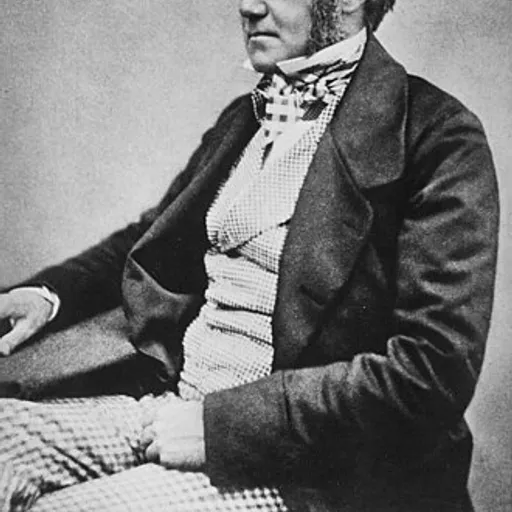
Charles Darwin▲ Rising
Five years aboard the Beagle, staring at finch beaks and tortoise shells in the Galápagos, gave Darwin the raw material for On the Origin of Species in 1859 — the idea of natural selection that explained the dazzling diversity of life without invoking design. It was arguably the single most disruptive idea in the history of science, reordering biology, philosophy, and humanity's self-image, and it still triggers cultural battles a century and a half later.
Era: 1800s
added by IJRin 3 rankings
13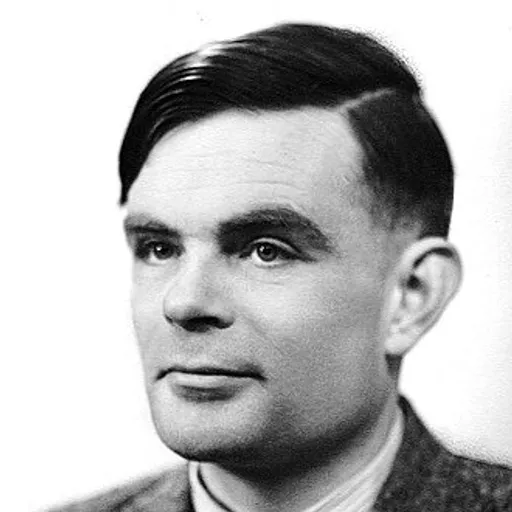
Turing's 1936 paper on an abstract 'universal machine' laid the theoretical foundation for every computer that exists today, and then he put that genius to brutal practical use at Bletchley Park, helping crack the Enigma code and shorten World War II. Persecuted and chemically castrated by the country he helped save, his posthumous vindication only sharpens the tragedy behind the man who essentially invented computer science.
Era: 1900s
added by IJRin 5 rankingsAlan Turing
-1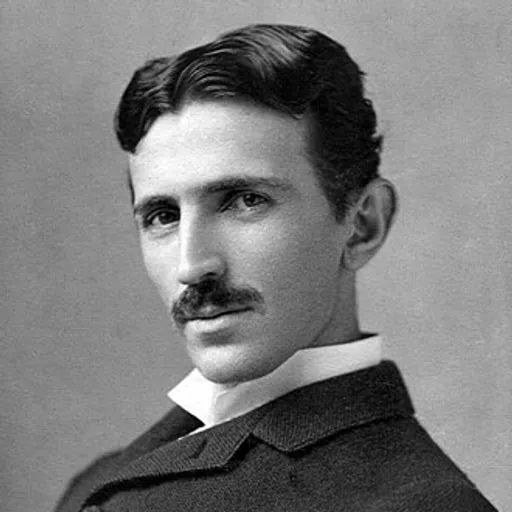
Nikola Tesla▼ Falling
Tesla's alternating current system, proven in the 'War of Currents' against Edison's DC, became the backbone of the world's electrical grid, and his wireless experiments at Wardenclyffe foreshadowed radio, radar, and remote control decades early. Chronically underfunded and overshadowed in his lifetime, he's since been resurrected as the visionary engineer whose inventions quietly power modern civilization every time you flip a switch.
Era: 1900s
added by IJRin 5 rankingsNikola Tesla
-4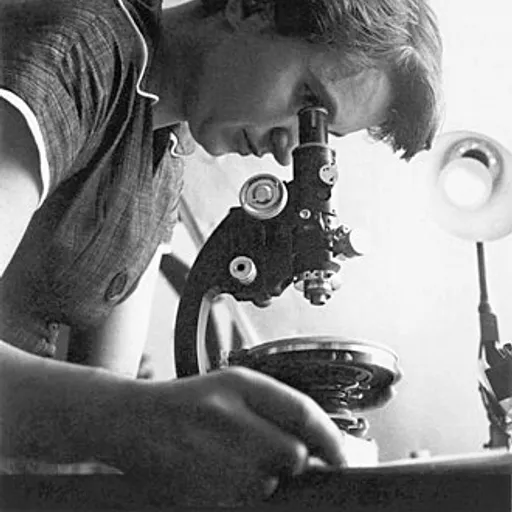
Rosalind Franklin▼ Falling
Franklin's Photo 51, an X-ray diffraction image she painstakingly produced in 1952, revealed the helical structure of DNA and was the critical evidence Watson and Crick used — largely without her knowledge or consent — to build their famous double-helix model. Dead of ovarian cancer before a Nobel could even consider her, she's the ranking's sharpest reminder that credit in science history often lags far behind actual contribution.
Era: 1900s
added by IJRin 2 rankingsRosalind Franklin
-10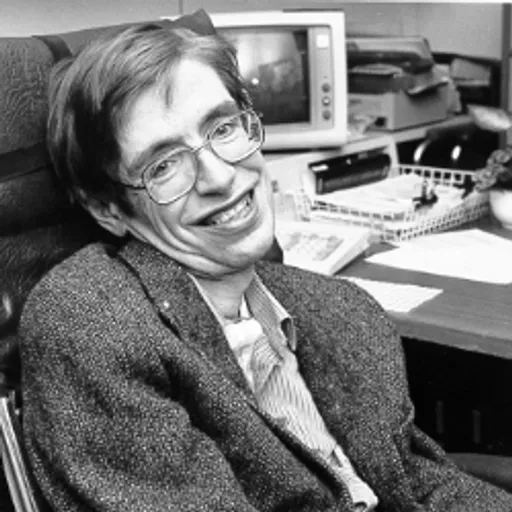
Stephen Hawking▼ Falling
Confined by ALS to a wheelchair and eventually a voice synthesizer, Hawking proved that black holes emit radiation and slowly evaporate, uniting quantum mechanics and gravity in a way that reshaped theoretical cosmology. He then became science's most recognizable public communicator with A Brief History of Time, proving that profound physics and mass appeal weren't mutually exclusive.
Era: 1900s
added by IJRin 2 rankingsStephen Hawking
-14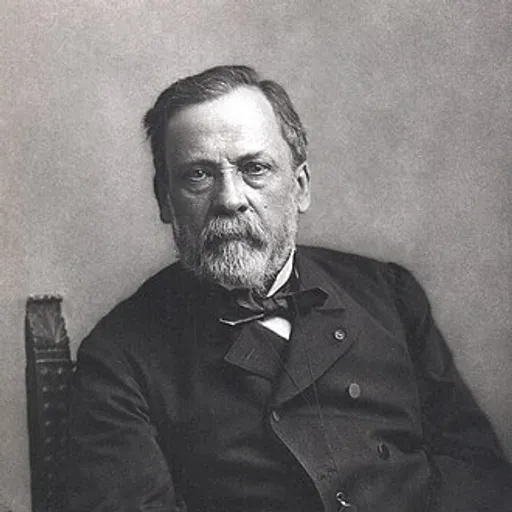
Louis Pasteur▼ Falling
Pasteur proved that invisible microbes, not spontaneous generation, caused disease and fermentation, then translated that insight into pasteurization and life-saving vaccines for anthrax and rabies. His germ theory didn't just cure specific illnesses — it rewired medicine, sanitation, food safety, and surgery worldwide, arguably saving more human lives than any other scientist on this list.
Era: 1800s
added by IJRin 3 rankingsLouis Pasteur
-18
Keep ranking
Comments (7)
Free account · your comment posts right after signup
The crowd is sleeping on the bottom half of this list.
- OOscar PatelJul 29, 2026
This order is closer to right than any editor would've gotten.
- XXimena NovakJul 29, 2026
Voted — and the gap between #1 and #2 should be bigger.
- HHugo ReyesJul 29, 2026
Exactly the kind of argument the internet was built for.