Greatest mathematicians ever
From ancient geometers to modern theorists, mathematics has been shaped by a rare breed of thinkers who bent the rules of logic and imagination to reveal the hidden order of the universe. Debates over who truly deserves the title of 'greatest' have sparked centuries of admiration and rivalry among scholars and enthusiasts alike. Now it's your turn — cast your vote and help crown the ultimate mathematical genius!
What counts: Seeded with approximate figures where shown — the crowd's votes decide the order.
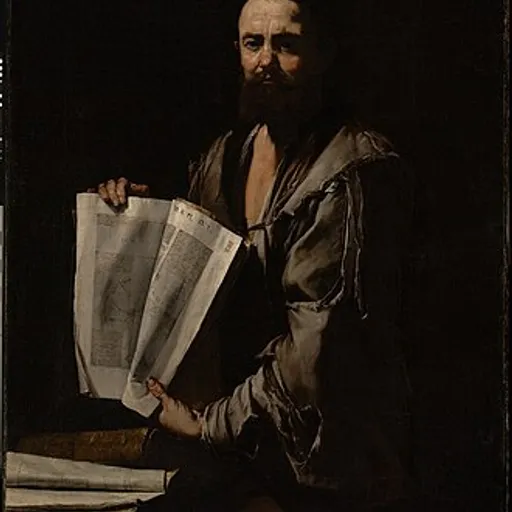
Euclid▲ Rising
Around 300 BCE he assembled 'Elements,' a thirteen-book edifice of axioms and proofs that became the most reproduced textbook in history, still shaping how geometry is taught more than two millennia later. He didn't just compile results; he invented the very grammar of mathematical proof, the axiomatic method that every rigorous field since has borrowed. No list of greats works without the man who taught the rest of them how to argue.
Era: 300s BC
added by IJREuclid
35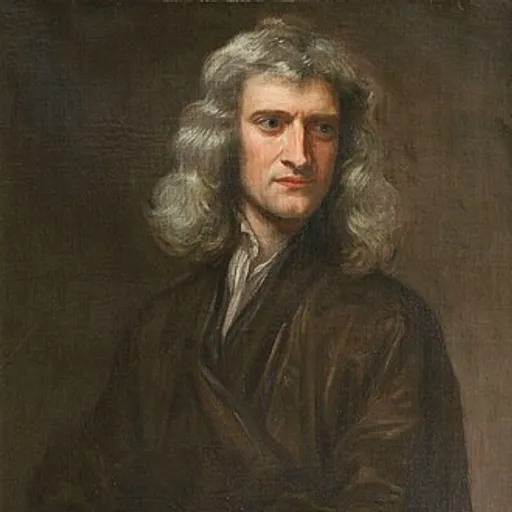
Isaac Newton▲ Rising
Locked away from plague-ridden Cambridge, he invented calculus, formulated the laws of motion and universal gravitation, and wrote the 'Principia,' arguably the single most consequential scientific book ever published. He turned mathematics into the language physics speaks, showing that the same law that drops an apple also holds the moon in orbit. Genius, secrecy, and a bitter priority feud with Leibniz over calculus only add to the legend of a mind that reshaped how humanity understands the universe.
Era: 1600s
added by IJRin 4 rankings
27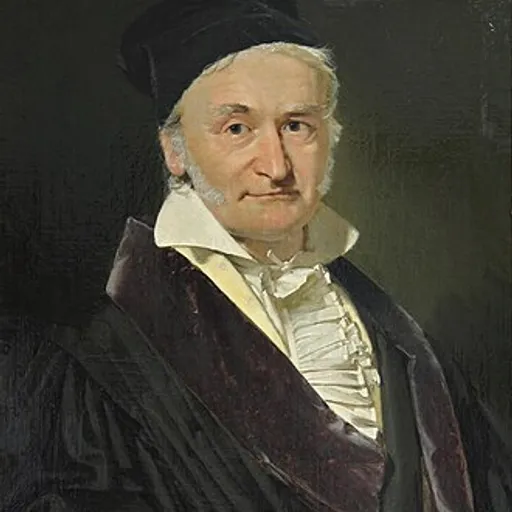
Carl Friedrich Gauss▲ Rising
He allegedly summed 1 to 100 in seconds as a schoolboy, then spent a lifetime proving he was no fluke — nailing down the fundamental theorem of algebra, revolutionizing number theory with 'Disquisitiones Arithmeticae,' and predicting the orbit of Ceres with methods that birthed least squares. Called 'Princeps Mathematicorum' by his peers, he touched nearly every branch of the field and left fragments in his notebooks that other mathematicians spent decades rediscovering. Few humans have ever been this comprehensively, terrifyingly good at one thing.
Era: 1800s
added by IJRCarl Friedrich Gauss
9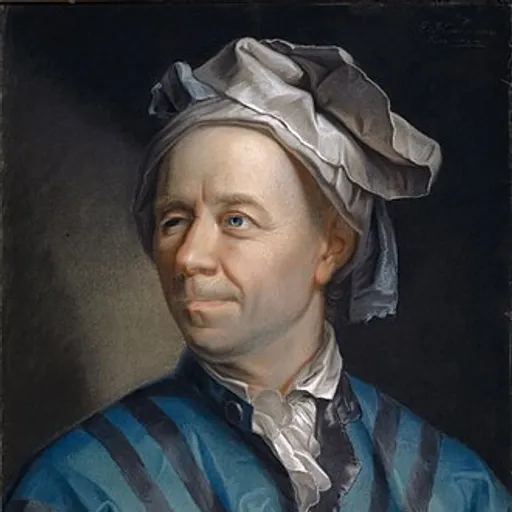
Leonhard Euler▲ Rising
Blind in one eye and later both, he still produced more mathematics than almost anyone in history, filling 866 works and giving us e, i, pi's modern notation, and the identity e^(iπ)+1=0 that unites five fundamental constants in a single line. He founded graph theory by walking the bridges of Königsberg in his head, and his textbooks set the standard notation mathematicians still use today. Sheer, sustained, universe-spanning output — that's the case for Euler, full stop.
Era: 1700s
added by IJRLeonhard Euler
7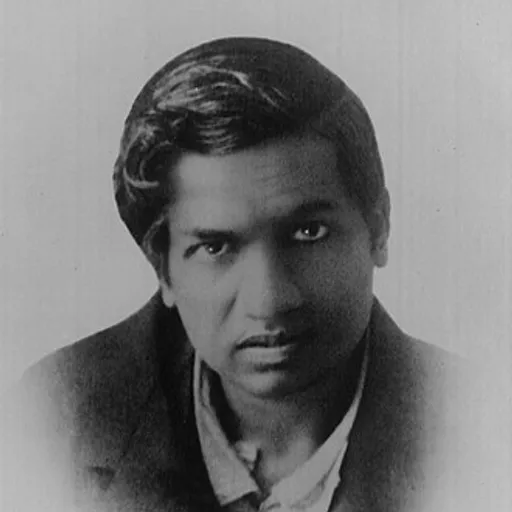
A self-taught clerk in Madras filled notebooks with thousands of wildly original formulas — on partitions, infinite series, and modular forms — many arriving to him, by his own account, in dreams and visions. G.H. Hardy, stunned by a letter of unproven claims, brought him to Cambridge, where their partnership produced results still being mined by mathematicians and physicists today, including in string theory. He died at 32, but the depth and strangeness of his intuition, unmatched by any formal training, make him math's great cosmic outlier.
Era: 1900s
added by IJRSrinivasa Ramanujan
5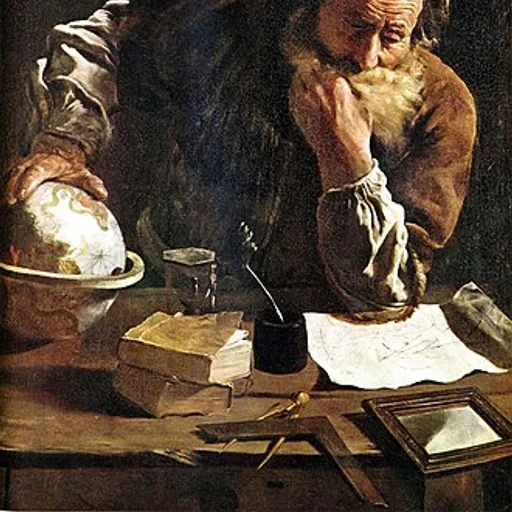
Archimedes▲ Rising
He ran naked through the streets shouting 'Eureka' after figuring out buoyancy in his bathtub, but his real legacy is rigorous: he calculated pi to stunning precision, worked out the volume of a sphere, and anticipated integral calculus nearly two thousand years before Newton and Leibniz with his method of exhaustion. He also turned math into weaponry, engineering war machines that held off Roman sieges of Syracuse. Killed by a soldier while reportedly absorbed in a geometry problem, he remains the ancient world's most complete mathematician-physicist-engineer.
Era: 200s BC
added by IJRin 3 rankingsArchimedes
2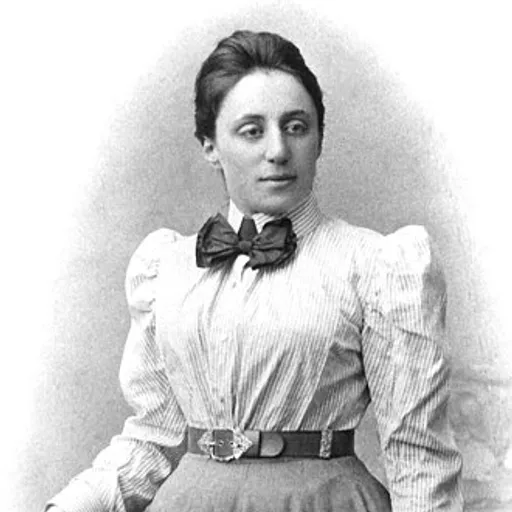
Emmy Noether▼ Falling
Barred from paid professorships for years simply for being a woman, she nonetheless produced Noether's theorem, the result linking every conservation law in physics — energy, momentum, charge — to an underlying symmetry, a discovery Einstein called essential to general relativity. She then essentially built modern abstract algebra, turning rings, ideals, and modules into the backbone of 20th-century mathematics. Hilbert fought the Göttingen faculty on her behalf with the line 'this is a university, not a bathhouse' — a fitting epitaph for someone who forced the field to reckon with pure intell
Era: 1900s
added by IJREmmy Noether
-7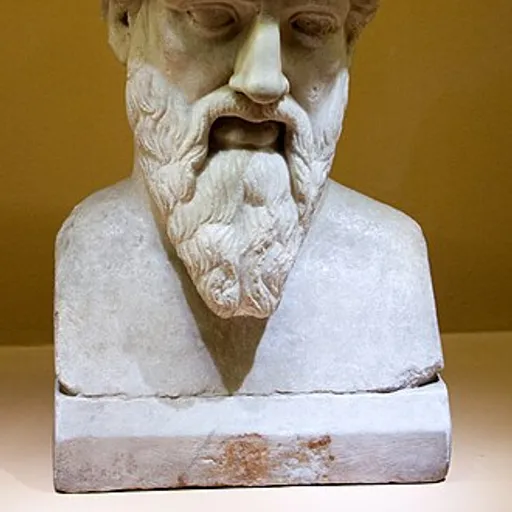
Pythagoras▼ Falling
Half mystic, half mathematician, he led a secretive brotherhood in ancient Croton that treated numbers as the hidden key to reality itself, and his name is forever stamped on the theorem relating the sides of a right triangle — a^2+b^2=c^2 — even though it was likely known before him. What earns him a spot is the idea, not just the equation: that the cosmos is fundamentally numerical and knowable through mathematics, a belief that quietly underwrites every scientific theory that followed. He's less a rigorous prover than the founding myth of mathematics as a way of seeing the world.
Era: 500s BC
added by IJR
-14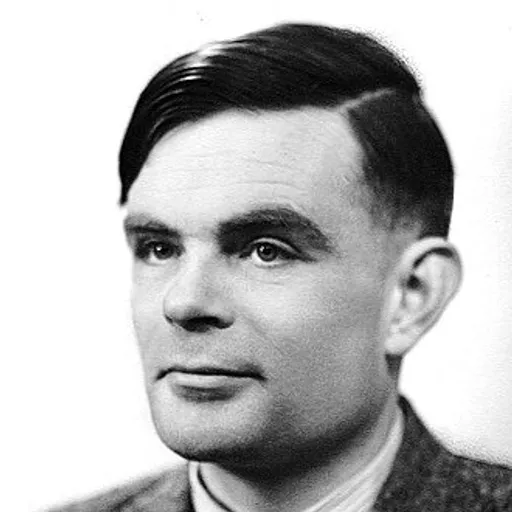
Alan Turing▼ Falling
In 1936 he defined the theoretical limits of computation with the 'Turing machine,' inventing the abstract blueprint for every computer that followed before a single transistor existed. He then applied that same relentless logic at Bletchley Park, helping crack the Enigma cipher and shortening World War II by an estimated years, only to be prosecuted by his own government for his sexuality and dead by suicide at 41. He belongs on this list not for volume of theorems but for single-handedly conjuring the mathematical idea that became the digital age.
Era: 1900s
added by IJRin 5 rankingsAlan Turing
-15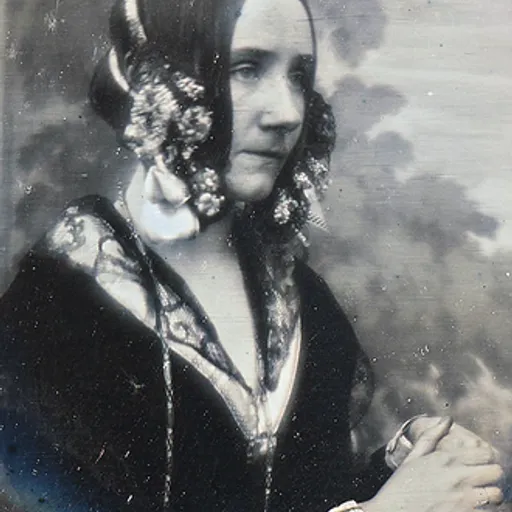
Ada Lovelace▼ Falling
Working from Charles Babbage's unbuilt Analytical Engine in the 1840s, she wrote what's recognized as the first computer program — an algorithm to compute Bernoulli numbers — and, more remarkably, saw further than Babbage himself, envisioning machines that could manipulate symbols and even compose music, not just crunch numbers. Her notes on the Engine are longer and more visionary than the invention they describe, imagining general-purpose computing a century before it existed. She earns her place not for a body of proofs but for being the first person to glimpse the true, universal potential
Era: 1800s
added by IJRAda Lovelace
-23
Keep ranking
Comments (12)
Free account · your comment posts right after signup
This order is closer to right than any editor would've gotten.
Exactly the kind of argument the internet was built for.
Voted — and the gap between #1 and #2 should be bigger.
The crowd is sleeping on the bottom half of this list.