Most Influential Scientists of All Time
Throughout history, a handful of brilliant minds have fundamentally reshaped how humanity understands the universe, from the laws of gravity to the structure of DNA. Their discoveries didn't just fill textbooks—they sparked revolutions in medicine, technology, and thought that still ripple through our daily lives. Who do you think left the deepest mark on science? Cast your vote and help settle the debate.
What counts: Ranking reflects breadth and depth of scientific influence, longevity of impact, and how much modern science and technology rests on their work. Birth/death years and field are approximate for historical figures; ratings are subjective community estimates.
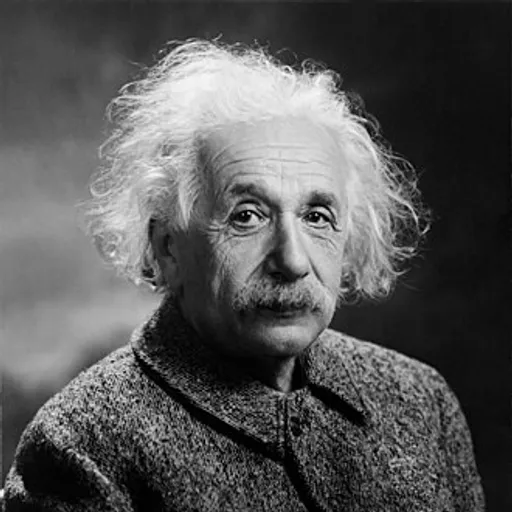
In 1905 alone, a Swiss patent clerk rewrote space, time, and matter in three papers, then a decade later delivered general relativity, predicting a bending universe that a 1919 eclipse expedition confirmed and made him a global icon overnight. GPS satellites correct for his time dilation every second of every day, and E=mc² underwrites both nuclear power plants and nuclear dread — few minds have ever reshaped both physics and the popular imagination this completely.
Lifespan: 1879–1955Primary Field: PhysicsKey Contribution: Theory of relativityInfluence Rating: 10/10Nobel Prize: ✓
added by IJRin 4 rankingsAlbert Einstein
0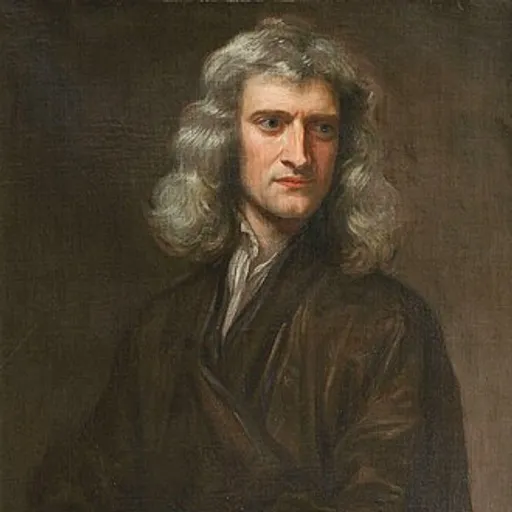
Isaac Newton
Locked away from plague-ravaged Cambridge, Newton invented calculus, decomposed white light into color, and in the Principia laid down laws of motion and universal gravitation that would run the physical world's operating system for over 200 years. Every rocket trajectory, every bridge, every pendulum clock still obeys his equations — he didn't just discover laws of nature, he invented the very template for what a scientific law looks like.
Lifespan: 1643–1727Primary Field: Physics/MathematicsKey Contribution: Laws of motion & universal gravitationInfluence Rating: 10/10Nobel Prize: —
added by IJRin 4 rankings
0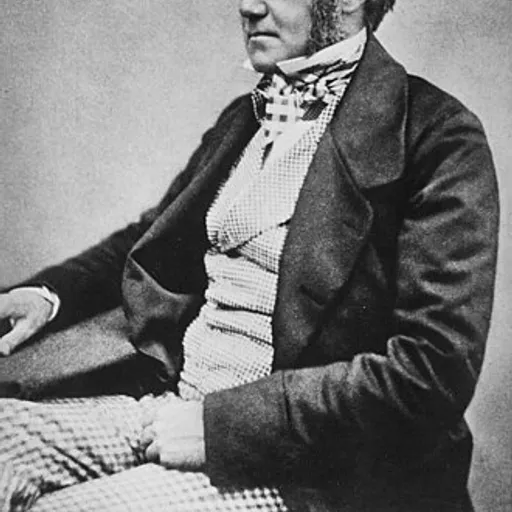
Charles Darwin
Five years aboard the Beagle watching finch beaks and tortoise shells culminated in 1859's On the Origin of Species, a book so dangerous he sat on it for two decades before Alfred Russel Wallace forced his hand. Natural selection remains the unifying theory of all biology, the reason a virus mutates, a species adapts, and humans share ancestry with every living thing — arguably the single most consequential idea one person has ever had.
Lifespan: 1809–1882Primary Field: BiologyKey Contribution: Theory of evolution by natural selectionInfluence Rating: 10/10Nobel Prize: —
added by IJRin 3 rankings
0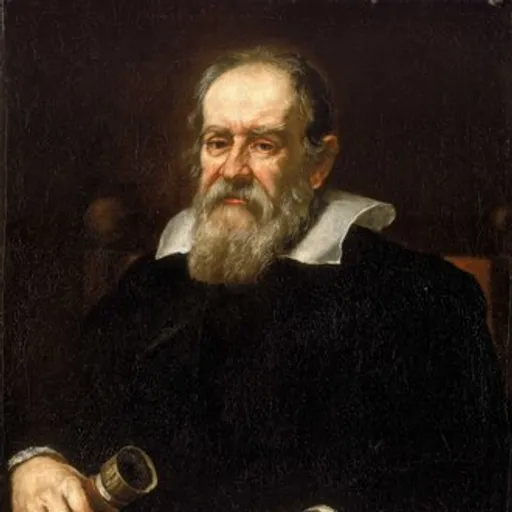
He pointed a homemade telescope at Jupiter in 1610 and found four moons that had no business orbiting anything but Earth according to church doctrine, then spent his final years under house arrest for insisting the planet moved anyway. He didn't just support Copernicus — he invented the experimental method itself, rolling balls down inclined planes to prove that ideas about nature must bow to measurement, not authority.
Lifespan: 1564–1642Primary Field: Astronomy/PhysicsKey Contribution: Telescopic astronomy, heliocentrism supportInfluence Rating: 9/10Nobel Prize: —
added by IJRin 2 rankingsGalileo Galilei
0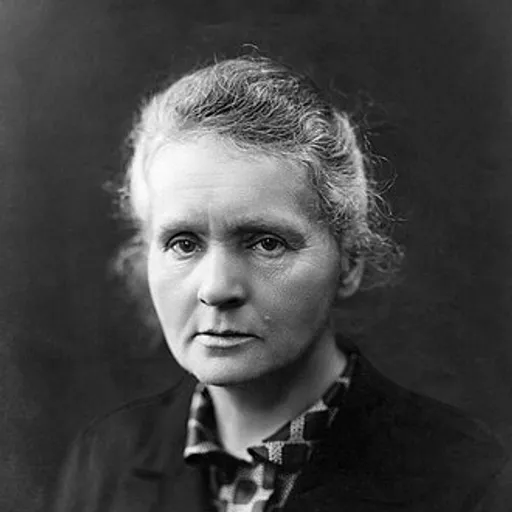
Working in a leaky shed with tons of pitchblende, she isolated polonium and radium, coined the word 'radioactivity,' and became the only person ever to win Nobel Prizes in two different sciences. Her research opened the atomic age and birthed radiation therapy for cancer, paid for ultimately with her own life — a martyr to a field she invented almost single-handedly as a woman when laboratories barely tolerated her presence.
Lifespan: 1867–1934Primary Field: Physics/ChemistryKey Contribution: Discovery of radioactivity, polonium & radiumInfluence Rating: 9/10Nobel Prize: ✓
added by IJRin 5 rankingsMarie Curie
0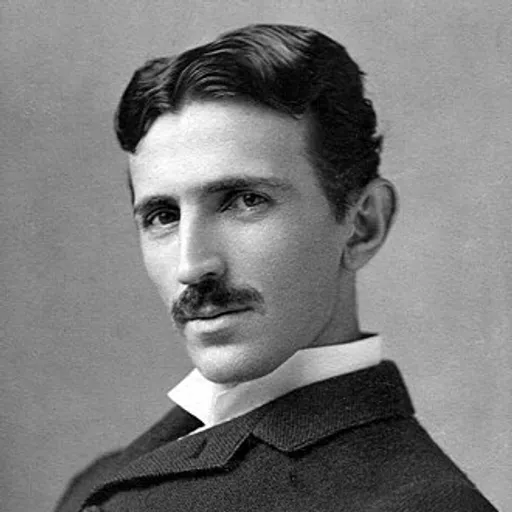
He out-designed Edison's direct current with alternating current, then lit the 1893 World's Fair and harnessed Niagara Falls to prove it, wiring the electrical grid that still powers the modern world. Eccentric, underfunded, and often uncredited in his lifetime, Tesla's wireless transmission dreams anticipated radio, radar, and remote control — a visionary engineer whose fingerprints are on every AC motor humming on Earth today.
Lifespan: 1856–1943Primary Field: Electrical EngineeringKey Contribution: AC power system, wireless technologyInfluence Rating: 8/10Nobel Prize: —
added by IJRin 5 rankingsNikola Tesla
0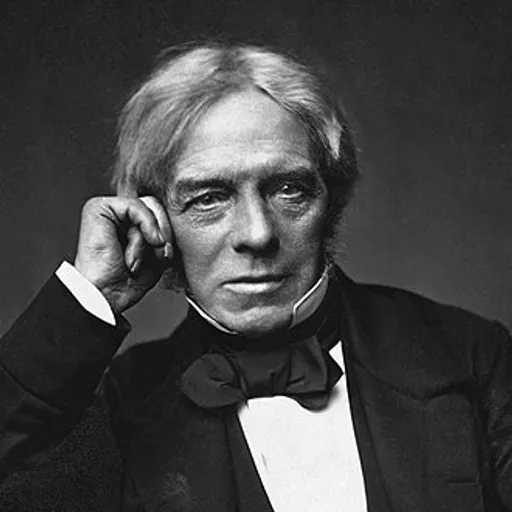
A bookbinder's apprentice with no formal mathematics, Faraday nonetheless discovered electromagnetic induction in 1831, spinning a copper disk between magnets to generate continuous electric current — the principle behind every generator and transformer since. His experimental genius handed James Clerk Maxwell the raw material for electromagnetic theory, making Faraday the quiet, self-taught craftsman who essentially built the electrical civilization we live in.
Lifespan: 1791–1867Primary Field: Physics/ChemistryKey Contribution: Electromagnetic inductionInfluence Rating: 8/10Nobel Prize: —
added by IJRMichael Faraday
0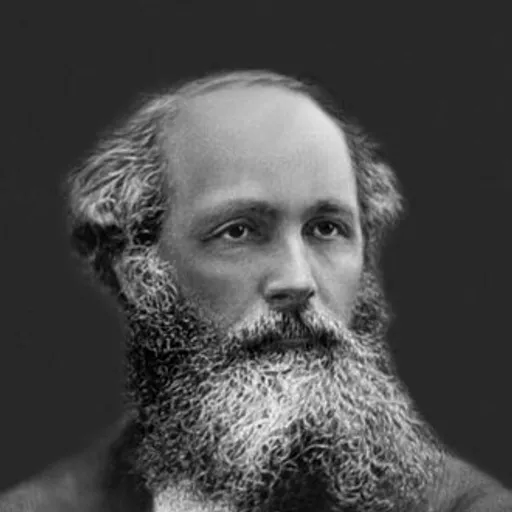
In four elegant equations published in the 1860s, Maxwell unified electricity, magnetism, and light into a single electromagnetic theory, predicting radio waves decades before Marconi ever built an antenna. Einstein kept a photo of Maxwell on his study wall and called his work 'the most profound and the most fruitful' since Newton — the quiet mathematical scaffolding underneath every wireless signal and every smartphone today.
Lifespan: 1831–1879Primary Field: PhysicsKey Contribution: Electromagnetic theoryInfluence Rating: 9/10Nobel Prize: —
added by IJRJames Clerk Maxwell
0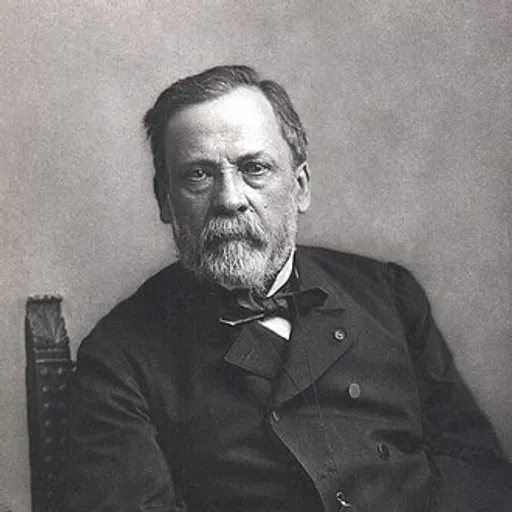
He proved that invisible germs, not spontaneous generation, caused disease and fermentation, then in 1885 injected a rabies-bitten boy with an experimental vaccine and watched him live. Pasteurization now sits in every carton of milk, and germ theory alone is arguably responsible for more lives saved than any single discovery in human history — modern medicine's founding myth begins in his laboratory.
Lifespan: 1822–1895Primary Field: Microbiology/ChemistryKey Contribution: Germ theory of disease, vaccinationInfluence Rating: 9/10Nobel Prize: —
added by IJRin 3 rankingsLouis Pasteur
0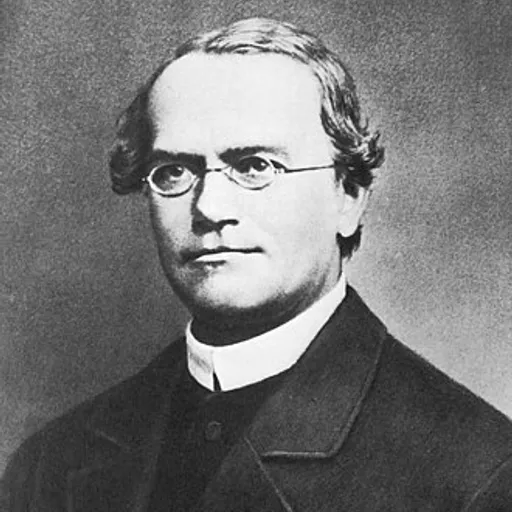
A monk quietly cross-breeding pea plants in a monastery garden in the 1860s stumbled onto the mathematical laws of inheritance, publishing results so far ahead of his time that they were ignored for 35 years until three scientists rediscovered them independently. Every gene, every Punnett square, every conversation about DNA inheritance traces back to this obscure friar's patient counting of wrinkled versus smooth peas.
Lifespan: 1822–1884Primary Field: GeneticsKey Contribution: Laws of inheritanceInfluence Rating: 8/10Nobel Prize: —
added by IJRGregor Mendel
0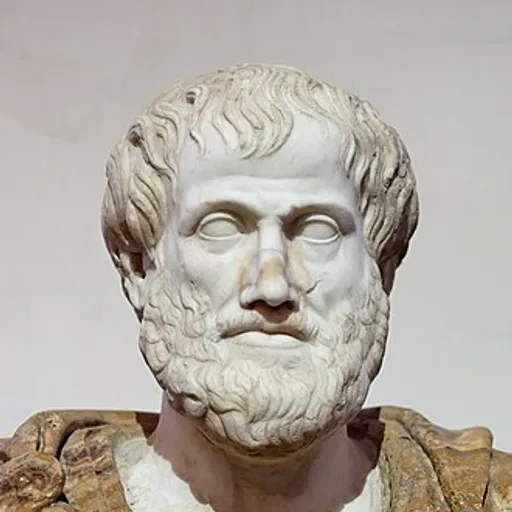
Tutor to Alexander the Great and founder of systematic biology, logic, and physics, Aristotle's framework for classifying and reasoning about the natural world dominated Western and Islamic scholarship for nearly 2,000 years, right or wrong. His geocentric cosmos was eventually demolished by Copernicus and Galileo, but the very idea that nature could be studied, categorized, and reasoned about systematically — rather than left to myth — was his invention.
Lifespan: 384–322 BCPrimary Field: Natural PhilosophyKey Contribution: Foundations of logic and biologyInfluence Rating: 8/10Nobel Prize: —
added by IJRin 3 rankingsAristotle
0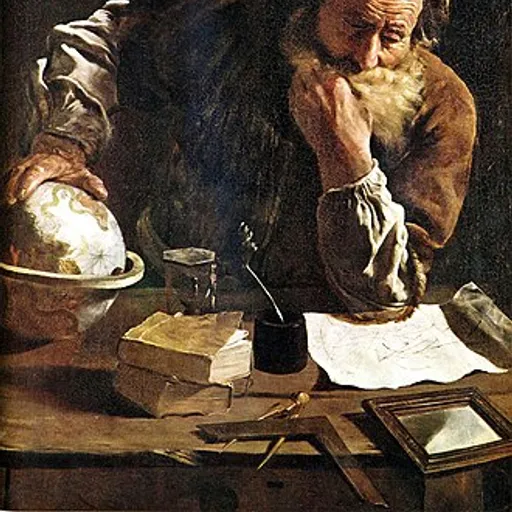
Legend has him leaping from a bathtub shouting 'Eureka' after solving a problem of density and displacement, but his real legacy is more staggering: he calculated pi with startling precision, invented the mathematics of levers and buoyancy, and designed war machines and the Archimedes screw still used for irrigation today. Killed by a Roman soldier while reportedly absorbed in a geometry diagram, he stands as antiquity's supreme fusion of pure mathematics and hands-on engineering.
Lifespan: 287–212 BCPrimary Field: Mathematics/PhysicsKey Contribution: Principles of buoyancy, levers, early calculusInfluence Rating: 8/10Nobel Prize: —
added by IJRin 3 rankingsArchimedes
0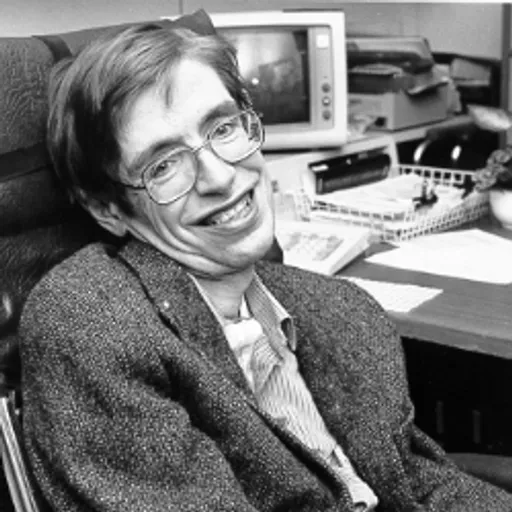
Diagnosed with ALS at 21 and given two years to live, Hawking instead spent five decades proving that black holes emit radiation and slowly evaporate, unifying general relativity with quantum mechanics in a way that reshaped theoretical cosmology. A Brief History of Time turned esoteric physics into a global bestseller, making him science's most recognizable public face even as his body betrayed him completely.
Lifespan: 1942–2018Primary Field: Physics/CosmologyKey Contribution: Black hole radiation, cosmologyInfluence Rating: 8/10Nobel Prize: —
added by IJRin 2 rankingsStephen Hawking
0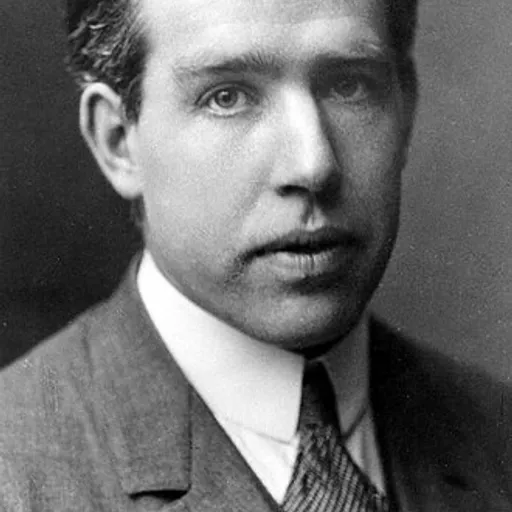
Bohr's 1913 model of the atom, with electrons leaping between fixed orbits, cracked open quantum mechanics and won him a Nobel Prize, and his Copenhagen interpretation became the dominant, if endlessly argued-over, philosophy of quantum reality. He later mentored a generation of physicists who split the atom, then spent his final years anxiously warning world leaders about the very nuclear weapons his physics had made possible.
Lifespan: 1885–1962Primary Field: PhysicsKey Contribution: Atomic structure, quantum theoryInfluence Rating: 8/10Nobel Prize: ✓
added by IJRNiels Bohr
0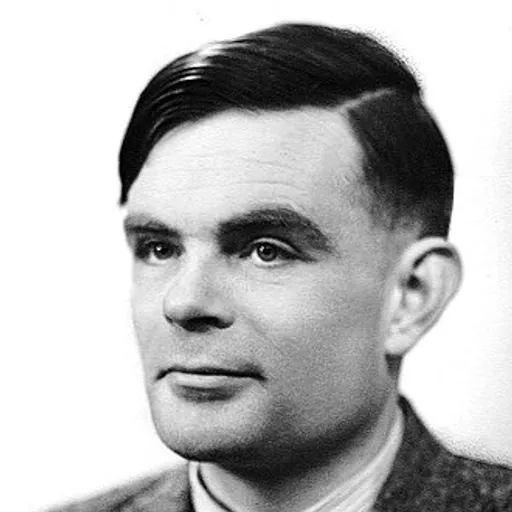
He formalized the very idea of computation with an imaginary machine in 1936, then during WWII led the team that cracked the Nazi Enigma cipher at Bletchley Park, an achievement historians credit with shortening the war by years. Hounded to death by the same government he helped save, for the crime of being gay, Turing is now recognized as the founding theorist of computer science and artificial intelligence — every algorithm running today descends from his machine.
Lifespan: 1912–1954Primary Field: Mathematics/Computer ScienceKey Contribution: Theory of computation, codebreakingInfluence Rating: 9/10Nobel Prize: —
added by IJRin 5 rankingsAlan Turing
0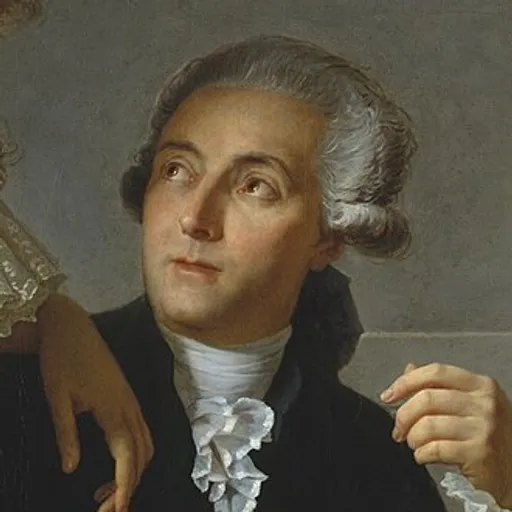
Guillotined during the French Revolution's Terror, Lavoisier had already overthrown the phlogiston theory, identified oxygen's role in combustion, and established the law of conservation of mass, effectively inventing modern chemistry as a quantitative science. 'It took them only an instant to cut off that head,' a colleague lamented, 'and a hundred years may not produce another like it' — a fair epitaph for the man who gave chemistry its rigor.
Lifespan: 1743–1794Primary Field: ChemistryKey Contribution: Law of conservation of mass, modern chemistryInfluence Rating: 8/10Nobel Prize: —
added by IJRAntoine Lavoisier
0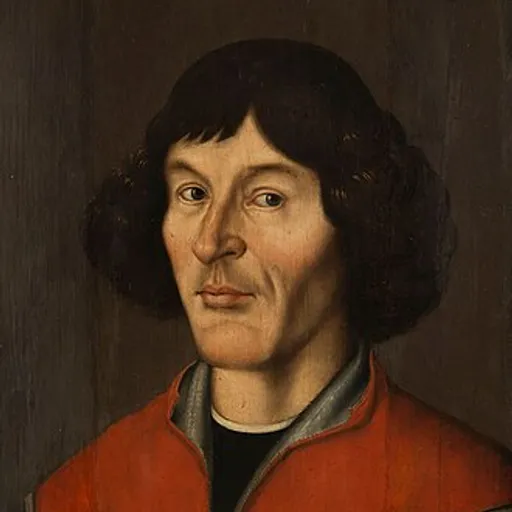
Nikolaus Copernicus
A Polish canon working in near-total obscurity published, on his deathbed in 1543, a book placing the sun rather than the Earth at the center of the cosmos, quietly detonating a worldview that had stood for over a millennium. He didn't live to see the fallout — that fell to Galileo and Kepler — but the Copernican Revolution is the very origin point of modern science's willingness to overturn common sense for evidence.
Lifespan: 1473–1543Primary Field: AstronomyKey Contribution: Heliocentric model of the solar systemInfluence Rating: 9/10Nobel Prize: —
added by IJR
0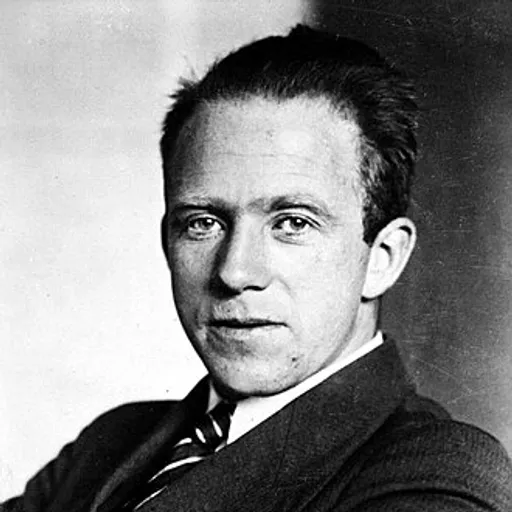
At 23, Heisenberg formulated matrix mechanics and soon after the uncertainty principle, declaring that nature itself forbids knowing a particle's position and momentum simultaneously — a philosophical earthquake as much as a physical one. His wartime leadership of Germany's nuclear program remains controversial and murky, but his quantum mechanics underpins every semiconductor, laser, and MRI machine built since.
Lifespan: 1901–1976Primary Field: PhysicsKey Contribution: Uncertainty principle, quantum mechanicsInfluence Rating: 7/10Nobel Prize: ✓
added by IJRWerner Heisenberg
0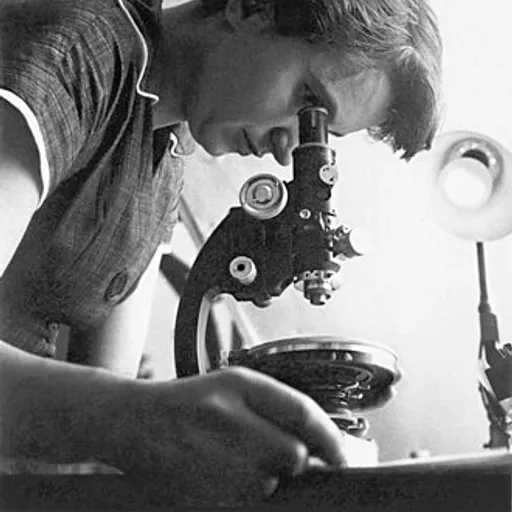
Her painstaking X-ray diffraction work produced Photograph 51, the razor-sharp image of DNA's double helix that Watson and Crick used — without her permission — to build their famous model and claim a Nobel Prize she never lived to be denied, dying of cancer at 37. Belatedly recognized as indispensable rather than incidental, she stands as proof that the foundation of modern genetics was laid as much in a photography darkroom as in any theoretical leap.
Lifespan: 1920–1958Primary Field: Chemistry/BiophysicsKey Contribution: X-ray diffraction images of DNAInfluence Rating: 7/10Nobel Prize: —
added by IJRin 2 rankingsRosalind Franklin
0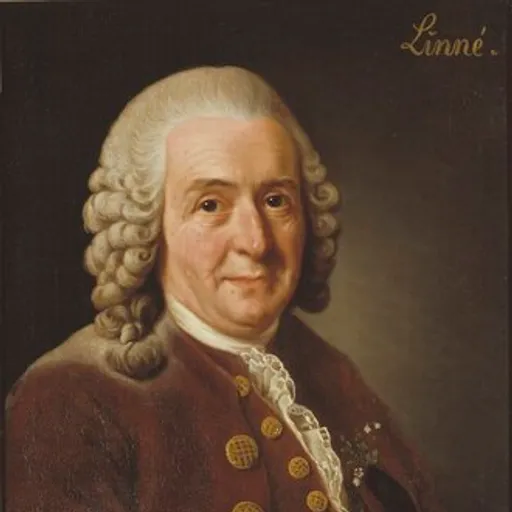
An 18th-century Swedish botanist looked at the chaos of species names across regional languages and imposed order with binomial nomenclature — Homo sapiens, Canis lupus — a filing system so useful that biologists still use his genus-species format for every organism discovered today. Linnaeus didn't just name creatures, he built the taxonomic scaffolding that Darwin, geneticists, and every field biologist since has hung their work on.
Lifespan: 1707–1778Primary Field: BiologyKey Contribution: Binomial nomenclature, taxonomyInfluence Rating: 7/10Nobel Prize: —
added by IJRCarl Linnaeus
0
Keep ranking
Comments
Free account · your comment posts right after signup