Greatest dynasties of China
For over two thousand years, a succession of imperial dynasties shaped China's borders, culture, technology, and place in the world — from the unifying might of the Qin to the golden ages of the Tang and Song, and the vast territorial reach of the Yuan and Qing. Each left behind monuments, innovations, and legacies that still echo today, but which truly deserves the title of greatest? Cast your vote and help rank China's most legendary dynasties.
What counts: Seeded with approximate figures where shown — the crowd's votes decide the order.

Tang▲ Rising
The dynasty that made cosmopolitanism a policy, with Chang'an ballooning into a million-strong metropolis where Persian merchants, Nestorian monks, and Japanese students all rubbed shoulders. Under Taizong and the brief but consequential reign of Wu Zetian, China's only female emperor, poetry (Li Bai, Du Fu) and Buddhist art hit heights rarely matched, before the An Lushan Rebellion cracked the golden age wide open. It's the dynasty foreigners still name China after—'Tang people'—and that alone earns it a top slot.
Era: 618–907
added by IJRTang
43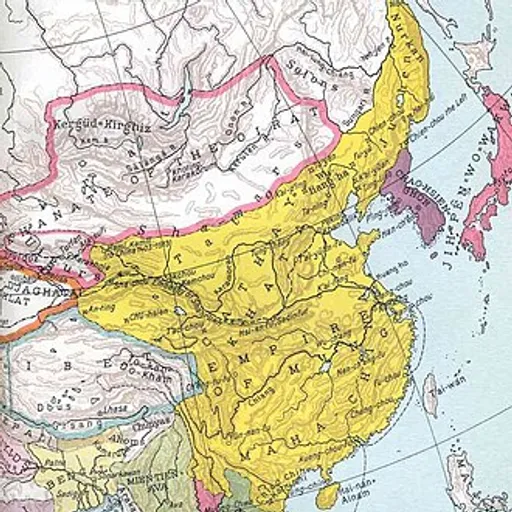
Ming▲ Rising
Ming rebuilt Chinese rule from scratch after Mongol occupation, and then went spectacular with it: the Forbidden City rose, the Great Wall got its iconic brick facing, and Zheng He's treasure fleets sailed ships bigger than anything Europe would build for centuries. It curdled into paranoid isolationism and eunuch-dominated court intrigue by the end, but for sheer architectural and naval swagger, no dynasty flexed harder in its prime.
Era: 1368–1644
added by IJR
25.png?width=512)
Han▲ Rising
Han is the dynasty that literally named the Chinese people, stretching from 206 BCE to 220 CE and turning a post-Qin power vacuum into a 400-year template for empire. Emperor Wu's armies punched the Xiongnu back and opened the Silk Road, while Confucian bureaucracy got baked into governance for the next two millennia. Its collapse into the Three Kingdoms is one of history's great tragic sequels, but the brand—'Han Chinese'—never faded.
Era: 206 BC–220
added by IJRHan
13
Song
Song lost the north to steppe rivals and never fielded the biggest army, but it quietly invented the modern world—gunpowder weapons, movable-type printing, paper money, and a compass-guided navy, all while GDP per capita outpaced medieval Europe by miles. Its cities like Kaifeng were commercial marvels with restaurants open all night, a taste of urban modernity a thousand years early. Militarily humbled by Jin and then Mongols, it's the dynasty that proves greatness isn't only measured in conquest.
Era: 960–1279
added by IJR
9Qin
Qin lasted barely 15 years but did more world-building than dynasties that lasted centuries: Qin Shi Huang smashed the Warring States, standardized script, currency, and axle widths, and started stitching together the Great Wall while an army of 8,000 terracotta soldiers stood guard over his tomb. Ruthless legalism and forced labor burned it out fast, but it handed China its very name and its first blueprint for unified empire. Short reign, permanent architecture—literally and politically.
Era: 221–206 BC
added by IJR
7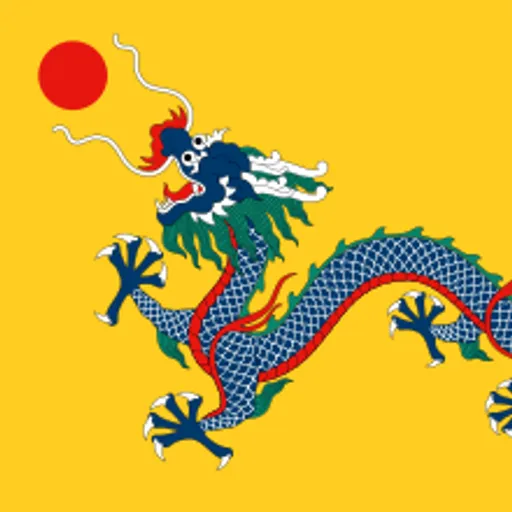
Qing▲ Rising
The last dynasty, built by Manchu conquerors, presided over China's largest-ever territorial footprint and a population boom past 400 million under Kangxi and Qianlong's long, glittering 18th century. Then came the Opium Wars, unequal treaties, and the Taiping Rebellion's staggering death toll, a slow-motion collapse that ended imperial rule altogether in 1912. It's the dynasty of maximum extent and maximum humiliation—both huge, both undeniable.
Era: 1644–1912
added by IJR
5Sui
Sui is the dynasty that did the unglamorous, brutal work of reunifying China after centuries of division, then built the Grand Canal—a 1,100-mile engineering feat still moving goods today—on the backs of millions of conscripted laborers. It burned through its own population with megaprojects and disastrous Korean campaigns, collapsing after just 37 years, but it handed the Tang a stitched-together empire ready to flourish. History's classic case of one dynasty doing the dying so another gets the glory.
Era: 581–618
added by IJR
-8Zhou▼ Falling
Zhou ran for roughly 790 years, the longest dynasty in Chinese history, and gave the empire its founding philosophical operating system—Confucius and Laozi both walked its fracturing later years, the Spring and Autumn and Warring States periods that read like a masterclass in political chaos. It invented the Mandate of Heaven, the idea that legitimacy is conditional and rulers can lose it, a concept every subsequent dynasty on this list had to answer to. Less a single golden age than the deep root system everything else grew from.
Era: 1046–256 BC
added by IJR
-38
Keep ranking
Comments (5)
Free account · your comment posts right after signup
Exactly the kind of argument the internet was built for.
- WWill OkaforJul 27, 2026
The crowd is sleeping on the bottom half of this list.
- DDiego NovakJul 29, 2026
Voted — and the gap between #1 and #2 should be bigger.