Greatest libraries and archives ever
From ancient scrolls stacked in candle-lit halls to vast modern archives safeguarding humanity's knowledge, the world's greatest libraries are more than buildings—they are the memory of civilization itself. Behind their grand facades lie centuries of stories, rare manuscripts, and the quiet power of ideas that shaped history. Which of these temples of knowledge deserves the top spot? Cast your vote and help crown the greatest library or archive of all time.
What counts: Seeded with approximate figures where shown — the crowd's votes decide the order.
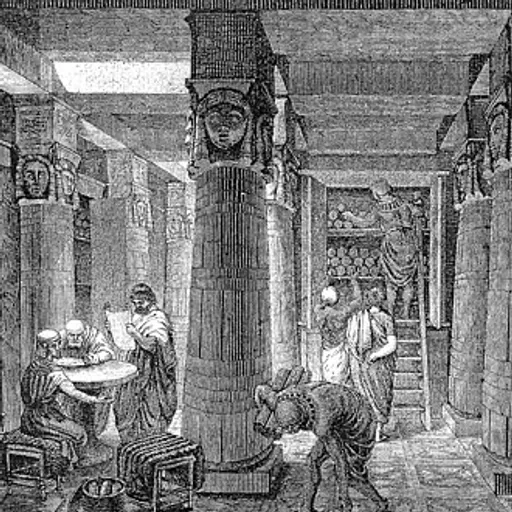
Library of Alexandria▲ Rising
Ptolemaic Egypt's obsession made flesh: ships docked in the harbor and had their scrolls confiscated for copying, returned as duplicates while the originals stayed shelved. It became the ancient world's supercomputer, where Eratosthenes measured the Earth and Euclid systematized geometry, before fire, funding cuts, and centuries of neglect erased it into legend. Nothing else on this list has to carry the weight of being a symbol for knowledge itself lost — that's the whole argument for the top spot.
Era: Ancient
added by IJR
32House of Wisdom, Baghdad▲ Rising
Under the Abbasid caliphs, especially al-Ma'mun, Baghdad became the place where Greek, Persian, and Indian science got translated, argued over, and pushed forward — al-Khwarizmi cooked up algebra here, quite literally naming the field. It was less a quiet reading room than an engine of translation and invention that piped classical knowledge into the medieval world and eventually back into Europe. Its destruction in the 1258 Mongol sack, with the apocryphal image of the Tigris running black with ink, makes it the House of Wisdom's tragic bookend and cements its legendary status.
Era: 800s
added by IJR
25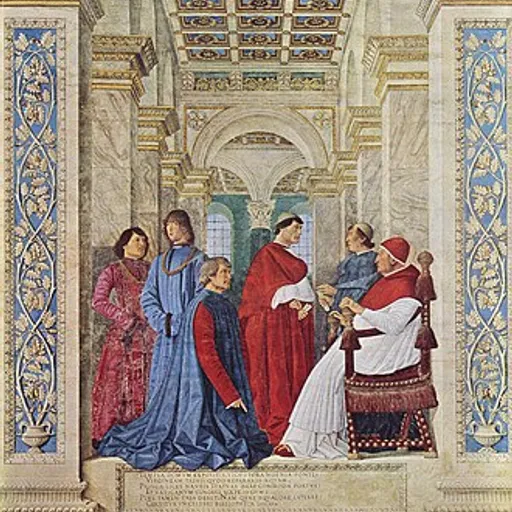
Vatican Library▲ Rising
Founded formally in 1475 by Pope Sixtus IV but stocked with manuscripts going back centuries, this is the library that quietly held onto classical texts through the chaos of the Middle Ages while monasteries elsewhere let pages rot. Its vaults contain everything from Roman literary treasures to correspondence that shaped the course of church history, guarded by scholars and secrecy in equal measure. It earns its place as the ultimate institutional survivor — proof that sometimes the best way to save knowledge is to lock it away and refuse to let go.
Era: 1475
added by IJR
13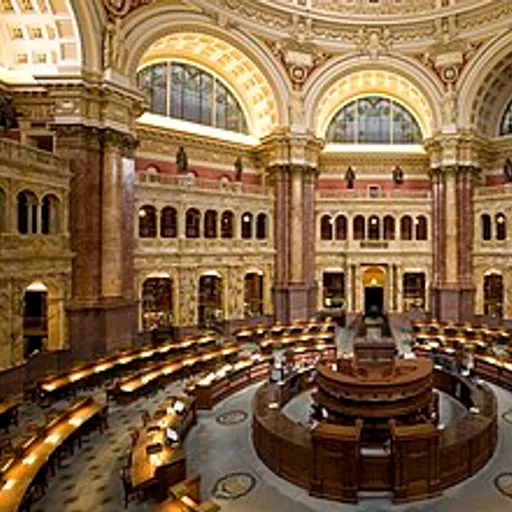
Library of Congress▲ Rising
Burned by the British in 1814, it was rebuilt on the spine of Thomas Jefferson's own personal library, which he sold to the nation on the theory that a democracy needs to know everything, not just what's convenient. It grew into the largest library on Earth by shelf space, a copyright-deposit machine that vacuums up practically every book, map, and recording made in America. Its claim to greatness is sheer, democratic maximalism — the idea that a republic's memory should be complete.
Era: 1800
added by IJR
4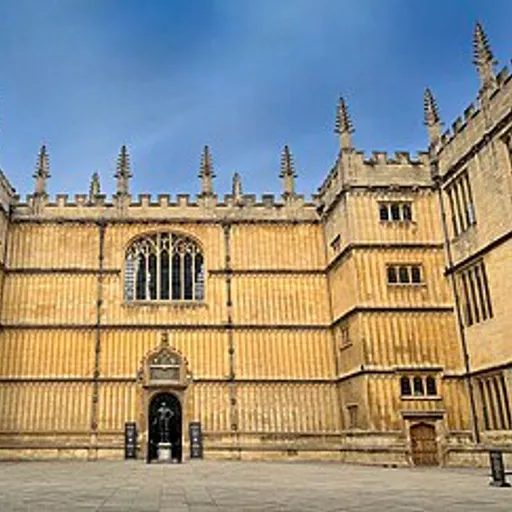
Bodleian Library
Sir Thomas Bodley relaunched Oxford's library in 1602 with one killer condition baked into its DNA: no book leaves the building, not even for a king — Charles I was famously refused a loan. That stubbornness, paired with a legal deposit agreement dating to 1610, turned it into an unbroken chain of British printed history spanning over four centuries. It's the argument that permanence beats convenience: nothing gets borrowed, so nothing gets lost.
Era: 1602
added by IJR
2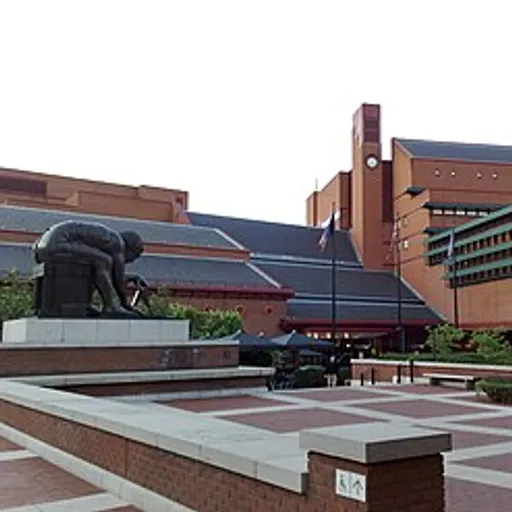
British Library▼ Falling
Split off from the British Museum in 1973 but carrying centuries of accumulated hoarding — including the Magna Carta, Shakespeare's First Folio, and Beatles lyrics scrawled on scraps — it's the library that treats legal deposit as a national sport, still claiming a copy of every UK book published. Its King's Library tower, a glass-encased column of George III's books, is basically a monument to the idea that a nation's library should double as its trophy case. It belongs on this list for turning imperial acquisitiveness into the most comprehensive documentary record of a single culture anywher
Era: 1753
added by IJR
-16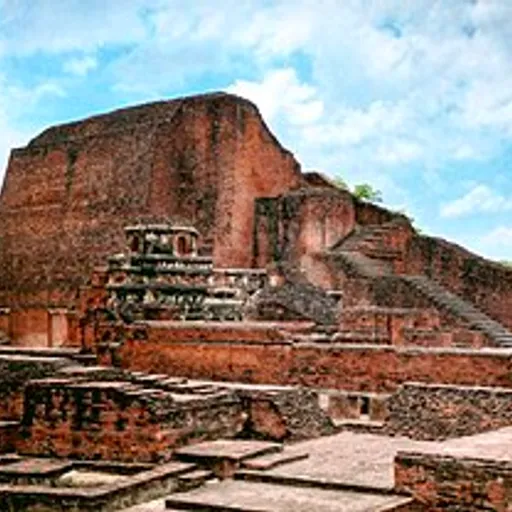
Nalanda▼ Falling
A Buddhist mahavihara in India that from the 5th century onward pulled in thousands of monks and scholars from as far as China and Tibet, its library complex reportedly so vast that when it was torched by invaders in the 1190s, it burned for months. Xuanzang himself studied there, part of a knowledge network that shaped Buddhist philosophy across Asia for seven centuries. Its ranking here rests on scale and reach rarely matched before the modern era — a university-library hybrid that made India a intellectual capital of the medieval world.
Era: 400s
added by IJR
-27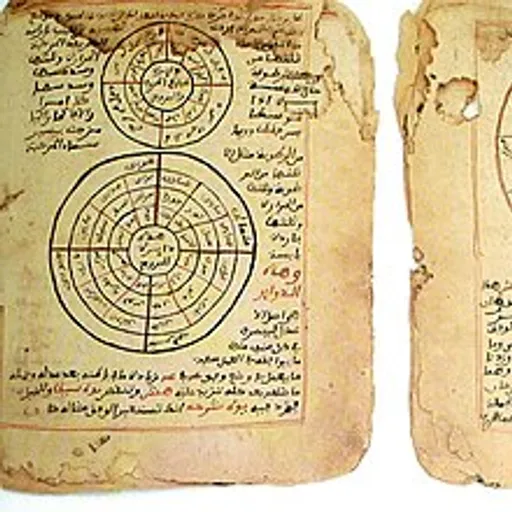
Timbuktu manuscripts▼ Falling
Hundreds of thousands of manuscripts on astronomy, law, medicine, and poetry, hidden for centuries in private family libraries across a Saharan trading city that colonial-era scholars assumed was illiterate — until the manuscripts proved West Africa had a thriving written intellectual tradition centuries deep. In 2012, when jihadist militants threatened to burn them, local librarians smuggled tens of thousands out of Timbuktu in metal trunks and canoes under cover of night. That real-life heist to save a written history the world almost forgot existed is exactly the kind of story that earns a
Era: 1300s
added by IJR
-28
Keep ranking
Comments (8)
Free account · your comment posts right after signup
Exactly the kind of argument the internet was built for.
Voted — and the gap between #1 and #2 should be bigger.
- FFelix TanakaJul 28, 2026
This order is closer to right than any editor would've gotten.
- AAndre IvanovJul 27, 2026
The crowd is sleeping on the bottom half of this list.